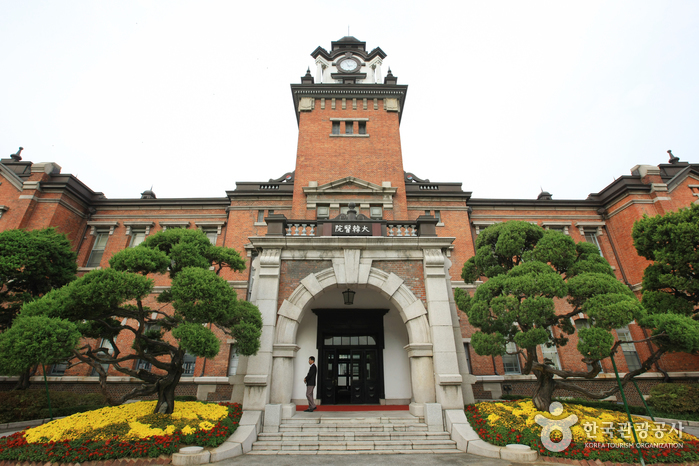
Seoul Daehan Hospital (서울 대한의원)
2.5Km 2021-12-23
101, Daehak-ro, Jongno-gu, Seoul
+82-2-2148-1842
Daehanuiwon (Daehan Medical Center) is an antique two-story brick building within the grounds of Seoul National University Hospital. It was established under the direct administration of the Uijeongbu (State Council), combining the Gwangjewon (under the Home Ministry), Gyeongseong Medical School and the Korean Red Cross Hospital (under the Royal Household).
Built in the Madubong Hill area, this location where Hamchunwon, the outer garden of Changgyeonggung Palace, once stood in 1484 (15th year of King Seongjong), was also once the site of Gyeongmogung Palace, where King Jeongjo enshrined the mortuary tablet of his birth father Crown Prince Sado Seja in 1776 (the year King Jeongjo ascended to the throne).
These places that held importance for the royal family were destroyed as the Japanese built Gyeongseong Empire University in its place. In 1907, with the announcement of the plan to establish Daehan Medical Center, construction began on the main building, seven wards and affiliated buildings. Construction was completed in November 1908.
The Daehan Medical Center opened in Gwangjewon, but upon Japanese colonization in 1910, its name was changed to the Japanese Viceroyalty Hospital. In 1926, it was included as a part of Gyeongseongjeguk University to become a university hospital. Since the liberation of Korea in 1945, it has been a hospital affiliated with Seoul National University.

GS25 - Dongdaemun Fashion Branch [Tax Refund Shop] (GS25동대문패션점)
2.5Km 2024-06-27
#101, 254, Eulji-ro, Jung-gu, Seoul
-
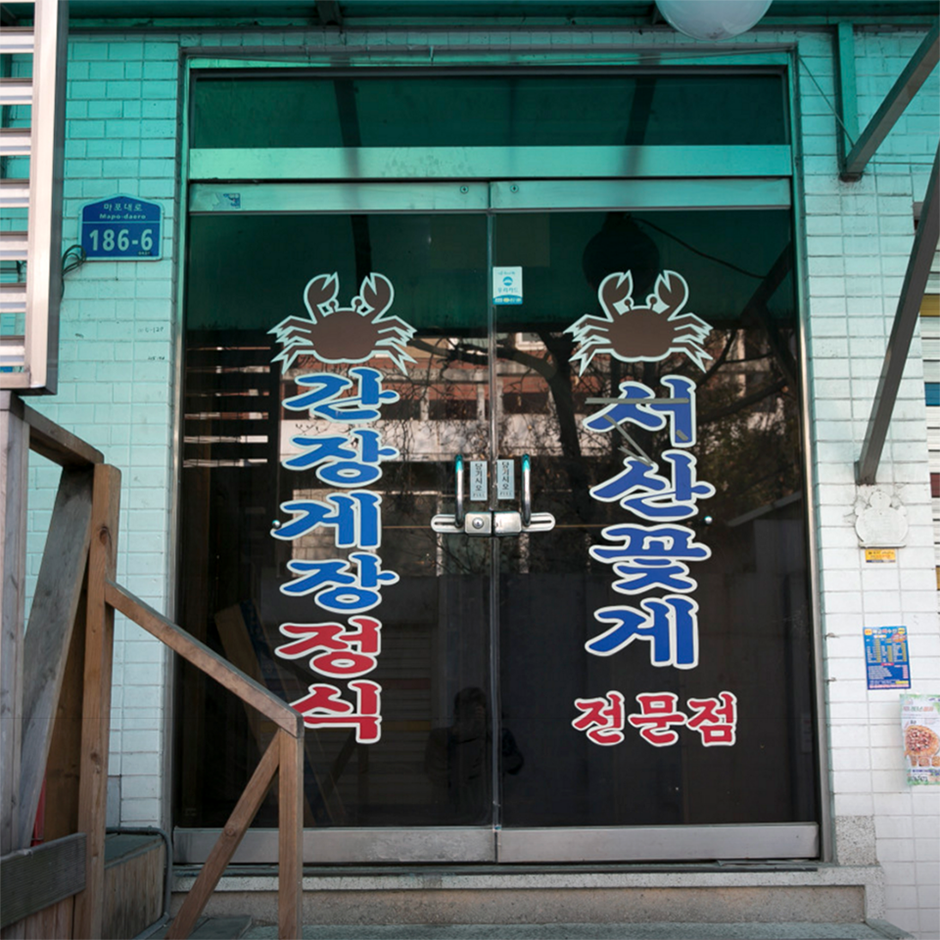
Jinmi Sikdang (진미식당)
2.5Km 2024-02-27
186-6 Mapo-daero, Mapo-gu, Seoul
Jinmi Sikdang is a specialty restaurant known for its exclusive focus on gejang (marinated crab), using only the finest blue crabs from the Seohae Coast. The restaurant prides itself on preparing only the amount of crab needed for the day, ensuring freshness, so it's advisable to make reservations before visiting, especially during peak hours. Known for its consistent quality and unwavering taste, Jinmi Sikdang continues to receive steady love from its customers.
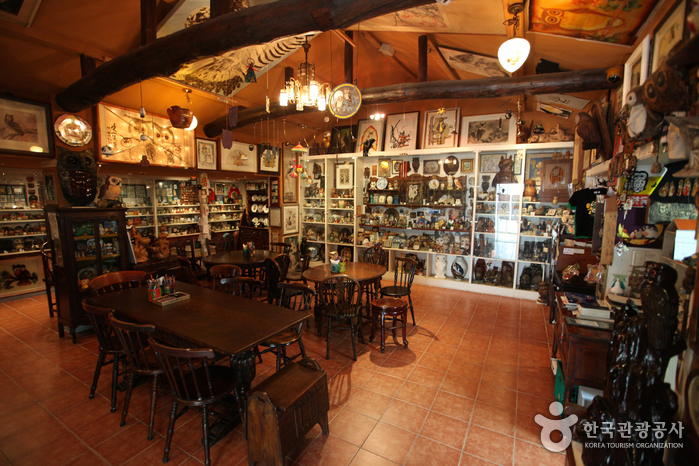
Owl Museum (부엉이박물관)
2.5Km 2022-09-19
143, Bukchon-ro, Jongno-gu, Seoul
+82-2-3210-2902
The Owl Museum is filled with over 2,000 pieces of owl-themed arts and crafts collected from all over the world by the owner. Renovated from a house, the museum has a feel of an antique café as the owner offers a cup of coffee or tea to visitors. Located near the city, those interested in owls should stop for a view and a drink. Various stories of how the collection was gathered as well as information on owls are also interesting.
![Sujeong Pharmacy [Tax Refund Shop] (수정약국)](http://tong.visitkorea.or.kr/cms/resource/57/2878757_image2_1.jpg)
Sujeong Pharmacy [Tax Refund Shop] (수정약국)
2.5Km 2024-04-22
1F, 195, Jangchungdan-ro, Jung-gu, Seoul
-
Seoul Hyochang Park (서울 효창공원)
2.5Km 2024-07-09
177-18 Hyochangwon-ro, Yongsan-gu, Seoul
+82-2-2199-7608
Hyochang Park covers 122,245 square meters spanning across Hyochang-dong and Cheongpa 2-dong. It is a historic landmark that once contained several royal tombs, and was known at that time as Hyochangwon. The cemeteries that were originally located in Hyochangwon belonged to Crown Prince Munhyo, King Jeongjo’s first son who died at the age of five; Royal Noble Consort Uibin of the Seong Clan, King Jeongjo’s royal concubine and Crown Prince Munhyo’s mother; Royal Noble Consort Sugui of the Park Clan, King Sunjo’s royal concubine; and her daughter Princess Yeongon. The royal tombs were moved to Seooreung Tombs in the waning months of the Japanese colonial period. The Japanese empire began the development of Hyochangwon into a park in 1924, and the Japanese governor-general officially assigned the site as a park in 1940.
Presently, several of Korea’s greatest leaders are buried in Hyochang Park. The remains mostly belong to independence activists including Yoon Bong-gil, Lee Bong-chang, and Baek Jeong-gi, whose graves are collectively known as Samuisa Tomb. A statue of Lee Bong-chang has been built in the graveyard. Among the other patriotic martyrs who are interred in the park are Kim Gu and some of the key figures of the provisional government such as Lee Dong-nyeong, Cha I-seok, and Cho Seong-hwan. An ancestral shrine named Uiyeolsa has been built along the main gate and holds the portraits of the deceased independence activists.
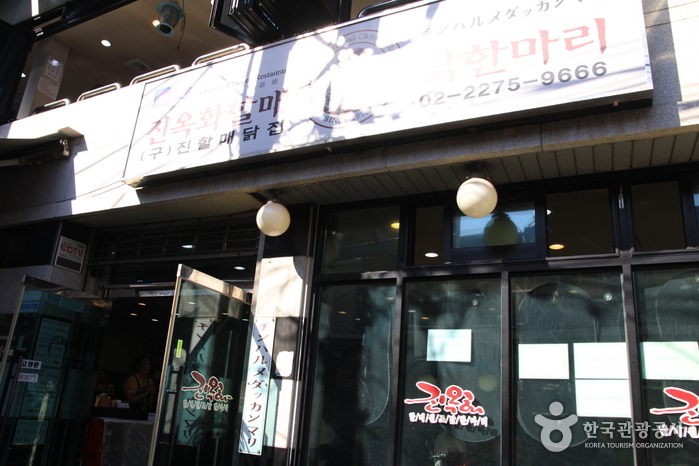
Jinokhwa Halmae Wonjo Dakhanmari (진옥화할매원조닭한마리)
2.5Km 2024-03-04
18 Jong-ro 40ga-gil, Jongno-gu, Seoul
+82-2-2275-9666
Jinokhwa Halmae Wonjo Dakhanmari is a renowned restaurant located in the alley of whole chicken soup near Dongdaemun Market, operating since 1978. Its specialty is dakhanmari (whole chicken soup), a whole chicken boiled in savory and rich broth. Adding finely chopped green onions enhances its refreshing flavor. The chewy rice cakes dipped in the seasoned sauce are also delightful. Additionally, it's customary to enjoy the remaining broth by mixing it with seasoning sauce and noodles, creating a delicious kalguksu (noodle soup).
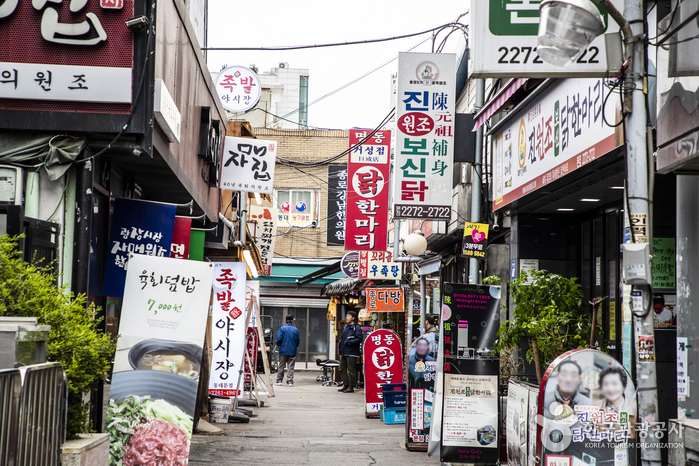
Dongdaemun Dak Hanmari Alley (서울 동대문 닭한마리 골목)
2.6Km 2024-03-04
37-7, Jongno 5(o)-ga, Jongno-gu, Seoul
+82-2-2236-9135
Located near the Dongdaemun Market, Dongdaemun Dak Hanmari Alley gets its name from the restaurants serving dak hanmari (whole chicken soup) that line the alley. Dak hanmari (whole chicken soup), literally “one whole chicken” in Korean, is a dish where a whole chicken is boiled in a soup and served with the alley’s special sauce. After the diners eat the meat, the broth is used to make kalguksu (noodle soup). Because the area is home to large-scale apparel and fashion material markets of the Dongdaemun Market, the district is always lively and bustling.
HANAMPIG Dongdaemoon (하남돼지집 동대문)
2.6Km 2024-03-11
9, Eulji-ro, 43-gil, Jung-gu, Seoul
+82-2-2266-3030
Located near Dongdaemun Design Plaza , HANAMPIG specializes in grilled pork. When pre-grilled meat is served, the staff cuts it into pieces and puts it on the grill to cook. The recommended combination is to grill kimchi or mushrooms together to enhance the savory flavor. In the vicinity, one can explore Dongdaemun fashion malls, enriching the experience of the area.
![CheongKwanJang - Dongdaemun Market Branch [Tax Refund Shop] (정관장 동대문시장)](http://tong.visitkorea.or.kr/cms/resource/33/2878233_image2_1.jpg)
CheongKwanJang - Dongdaemun Market Branch [Tax Refund Shop] (정관장 동대문시장)
2.6Km 2024-04-19
252, Jong-ro, Jongno-gu, Seoul
-
 English
 한국어
한국어 日本語
日本語 中文(简体)
 Deutsch
 Français
 Español
 Русский


