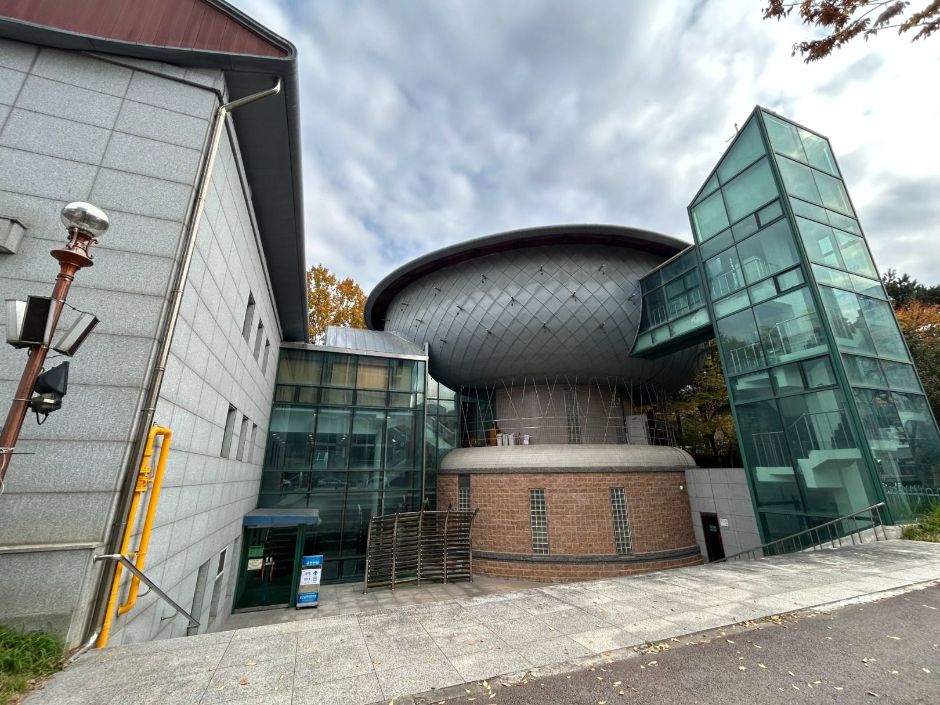
Bitgoeul Korea Traditional Classical Music Instruction Hall (빛고을국악전수관)
17.9Km 2024-12-17
182 Punggeum-ro, Seo-gu, Gwangju
Bitgoeul Korea Traditional Classical Music Instruction Hall offers various programs throughout the year. Since 2002, classes on traditional instruments are available, as well as separate children gugak classes. Special exhibition on the second floor has various instruments that visitors can actually try. The permanent exhibition on the third floor has 45 different gugak instruments as well as videos to further provide detailed information. The main area is the performance hall on B1-B2F, with 137 seats, that offers performances every Thursday for free from traditional gugak to fusion music.
![Aritaum - Gwangju Jinwol Branch [Tax Refund Shop] (아리따움 광주진월점)](http://tong.visitkorea.or.kr/cms/resource/07/2886907_image2_1.jpg)
Aritaum - Gwangju Jinwol Branch [Tax Refund Shop] (아리따움 광주진월점)
17.9Km 2024-04-23
687, Seomun-daero, Nam-gu, Gwangju
-
![E-Mart - Gwangsan Branch [Tax Refund Shop] (이마트 광산)](http://tong.visitkorea.or.kr/cms/resource/86/2886986_image2_1.jpg)
E-Mart - Gwangsan Branch [Tax Refund Shop] (이마트 광산)
17.9Km 2024-04-22
172, Saam-ro, Gwangsan-gu, Gwangju
-
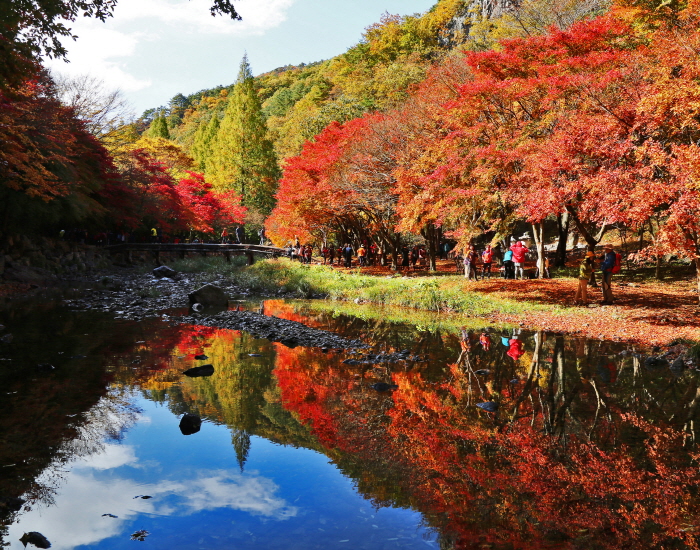
Gangcheonsan County Park (강천산 군립공원)
18.1Km 2024-04-07
97, Gangcheonsan-gil, Sunchang-gun, Jeonbuk-do
+82-63-650-1672
Gangcheonsan Mountain is surrounded by Gwangcheonsan Gwangjubong Peak (583.7 meters above sea level), Gwangdeoksan Seonnyeobong Peak (578 meters), and Sanseongsan Yeondaebong Peak (603 meters above sea level) in the area of 996beonji, Cheonggye-ri, Sunchang-gun, Jeollabuk-do. It is divided into small canyons and has an outstanding view with rocky mountains on all sides. The valley was called Gangcheon Valley because clean and clear water flows like a spring on the hard rocks, and all the mountains around it were called Gangcheonsan Mountain. It is said that in the past it was called Yongcheonsan Mountain, named after the shape of two dragons waving their tails toward the sky and ascending to heaven.
Following the Noryeong Mountain Range to Chuwolsan Mountain, it forms Gwangdeoksan Mountain and Yongcheonsan Mountain. On Sanseongsan Mountain (two dragons from the eastern sky to the western sky) that towers high in the sky, two dragons run east side by side. There are numerous peaks, some famous ones are, Yeondaebong, Undaebong, Suyeongbong, Cheonjabong, Gitdaebong, Gwangjubong, Gyeonjebong, and Songrakbong peaks. Between these two mountains is a very deep valley. Some of the famous valleys are, Yeondaegyegok Valley, Seonnyeogyegok Valley (Jeobujegol), Wondeunggyegok Valley (Yongdaeamgol), Buntonggol Pass, Jijigol Valley, Somokgol Valley, Samindaegyegok Valley (Hwangwoojegol), Giwoojegol Valley, Senyanggol Valley, Multonggol Valley, Chodanggol Valley, Ujakgol Valley, Dongmakgol Valley, Geumganggyegok Valley (Tapsanggol), Seungbanggol Valley, Byeondugol Valley, etc. The clear water flowing from every valley joins into one and the sound of the water crashing against the rocks and stones echoes throughout the valley and enters Gangcheonho Lake.
When spring comes, willows bloom, and when the forsythia and azaleas are in full bloom, wild cherry blossoms reach full bloom on every mountain peak. The clear and clean water flows continuously between the gravel along the valley. Visitors can cool off the heat in this river that does not collect moss either because it is too cold or clean. On Gangcheonsan Mountain, there are beautiful shrubs and maple trees, and the baby maples and baby squirrels announce the arrival of autumn among the seven different types of maple trees. The multiple trails on the mountain are not steep or too dangerous, making it popular regardless of age. It is also ideal for mountaineering and mountain-loving hikers. The scenery of the river with white snow and icicles attracts painters who want to capture the moment on a canvas. Gangcheonsan Mountain has four distinct seasons making it a popular destination all year round.
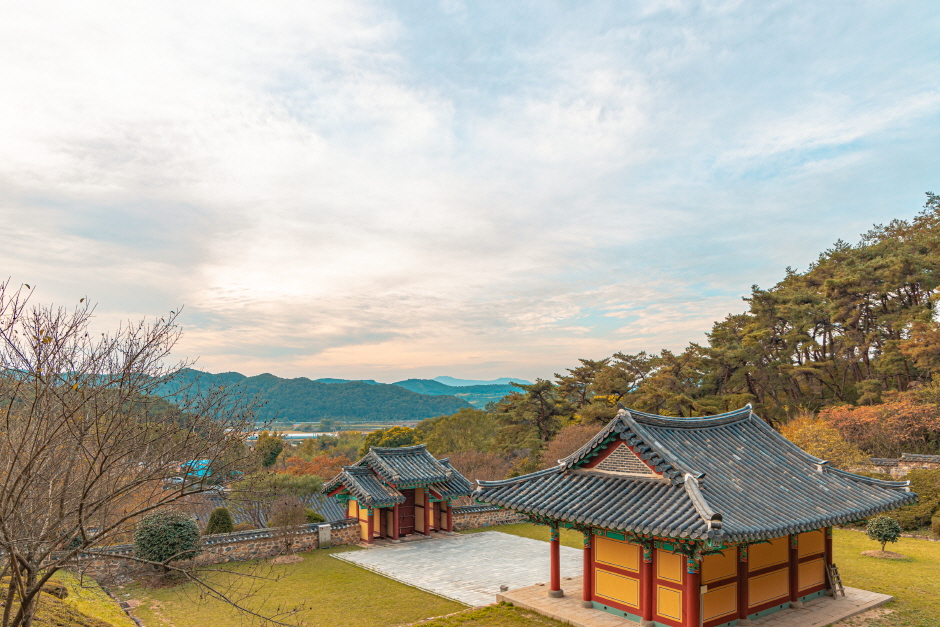
Wolbongseowon Confucian Academy (월봉서원)
18.5Km 2021-07-06
133, Gwanggok-gil, Gwangsan-gu, Gwangju
+82-62-960-8253
Wolbongseowon Confucian Academy, built in 1578, was established by Kim Gyehwi and other confucian scholars to honor Ki Daeseung's study and virtue through Mangcheonsa Shrine. The location of the academy was moved to its current site in 1646, and the name Wolbong was given by King Hyojong in 1654. In 1671, Bak Sang and Bak Sun's shrines were moved from Deoksansa Shrine by the suggestion of Song Siyeol. Also, Kim Jangsaeng and Kim Jip's shrines were additionally placed in 1673. Unfortunately, the confucian academy was abolished due to the abolition policy of Daewongun in 1868. Later, Bingwoldang Hall was built by Jeollanam-do's Confucian scholars in 1938, followed by Gojiksa Shrine in 1972, Jangpangak Pavilion and Oesammun Gate in 1978, Sau in 1980 and Naesammun Gate in 1981. Bingwoldang is designated as Gwangju Monument No. 9 and woodblocks of Gobongjip are preserved in Jangpangak Pavilion.
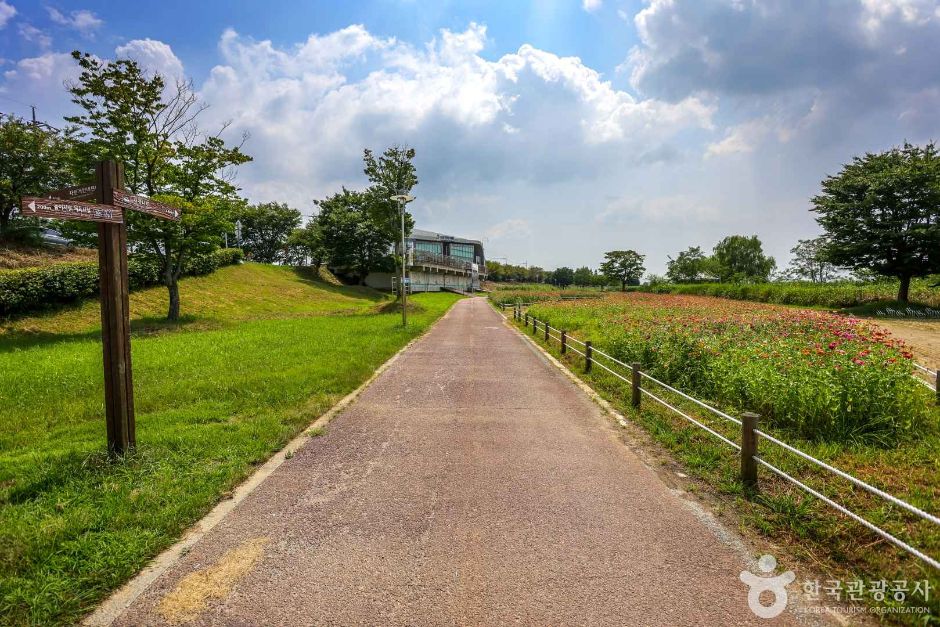
Yeongsangang River Bike Road (영산강 자전거길)
18.7Km 2025-08-12
377 Seochangduk-gil, Seo-gu, Gwangju
The Yeongsangang River Bike Road, stretching 133 kilometers along the Yeongsangang River in Gwangju, offers a scenic route. It winds past notable landmarks including the Seungchonbo Reservoir, Najudaegyo Bridge, Yeongsanpo Port, Hwangpo sailboat, Natural Dyeing Culture Center, and Naru Village. Along the path, riders can enjoy five of the most picturesque spots in Yeongsan. The starting point of the route, the Yeongsangang River Bike Road Information Center, provides free bicycle rentals and bike safety training.

Gyubongam Hermitage (Hwasun) (규봉암(화순))
18.8Km 2024-02-20
40-28 Dowon-gil, Iseo-myeon, Hwasun-gun, Jeollanam-do
Gyubongam Hermitage is a small hermitage located on Mudeungsan Mountain. It is believed to have been established during the Silla dynasty (B.C. 57-A.D. 935) and underwent renovations in 1959 to attain its current appearance. Renowned for its picturesque scenery, Gyubongam Hermitage is said to be a must-visit spot for those climbing Mudeungsan Mountain. It is particularly famous for its vibrant autumn foliage, and the area around the hermitage is abundant with rocky cliffs.
Baegyangsa Temple (백양사)
19.0Km 2025-03-15
1239 Baegyang-ro, Bukha-myeon, Jangseong-gun, Jeollanam-do
+82-61-392-7502
Baegyangsa Temple is a historic temple built in the 6th century located on Baegamsan Mountain. Walking through the forest path, visitors are greeted by a serene lake overlooked by Ssanggyeru Pavilion at the entrance of Baegyangsa Temple, creating a picturesque scene especially during autumn with its vibrant foliage. Surrounding the temple are over 5,000 torreyas, some over 500 years old, lending a lush ambiance to the area. Baegyangsa Temple is picturesque in every season and offers temple stay programs for visitors seeking a serene retreat.
Samhwa Gwangwang Nongwon (삼화관광농원)
19.7Km 2024-03-04
208 Immyeon-ro, Gyeom-myeon, Gokseong-gun, Jeollanam-do
061-362-8586,7
Samhwa Gwangwang Nongwon is a Korean restaurant specializing in duck dishes. Its signature menu is the ori jeongol (duck hot pot). The rich broth, boiled with ample duck meat, vegetables, and perilla seeds, is exceptionally flavorful. Another popular dish is the ori jumulleok (spicy stir-fried marinated duck), where tender meat seasoned with spicy yet sweet sauce pairs perfectly with steamed white rice.
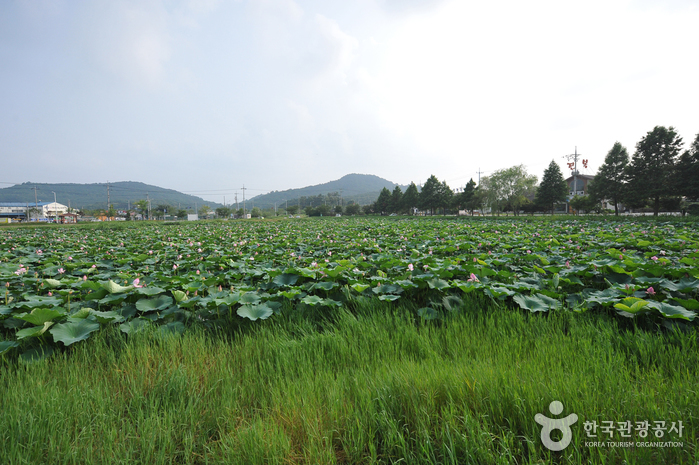
Jeonpyeongje Reservoir (전평제)
20.0Km 2021-04-29
9, Jeonpyeong-gil, Seo-gu, Gwangju
+82-62-365-4114
Jeonpyeongje Reservoir was built in 1943 to supply water for agricultural purposes to farms in the Maewol-dong and Byeokjin-dong regions as well as to prevent both floods and droughts. Starting in 1999, the reservoir was changed to a rest area, with a wooden deck crossing the reservoir to the man-made island in the middle. The area now serves as a waterside relaxation and eco-exploration space for family visitors.
 English
 한국어
한국어 日本語
日本語 中文(简体)
 Deutsch
 Français
 Español
 Русский


