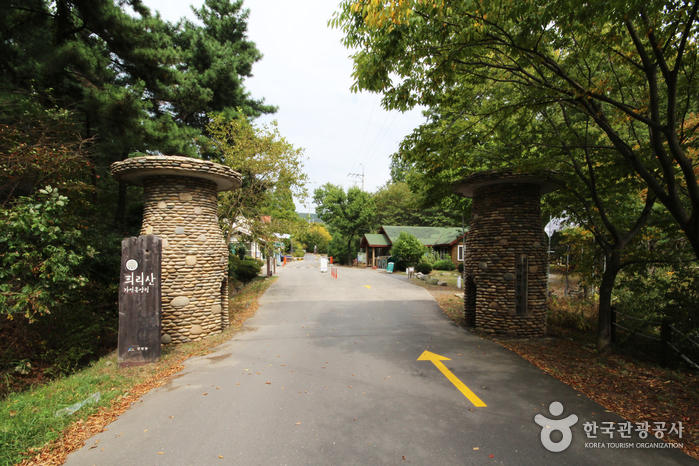
Huirisan Pine Tree Recreational Forest (국립 희리산해송자연휴양림)
4.4Km 2022-07-22
Surrounded by majestic pine trees, Huirisan Mountain boasts an outstanding landscape; there is a reservoir at the foot of the mountain. Upon climbing to the top of the mountain, visitor can overlook the scenic West Sea. There are also numerous attractions near Huirisan: Chunjangdae Beach, Geumgang River Banks, and Hansan Mosi Town (“Mosi” referring to “Ramie,” the predominant fabric used for traditional Korean clothing)
The top of the mountain (329m in x_height) is called Munsubong (or Munsu Peak). To the northwest of the Huirisan Pine Tree Recreational Forest is Saindae. Legend goes that four generals used to play there. Indeed, there is a cliff (140m in x_height) just below Saindae where they were believed to do chin-ups. Naturally, people call the area Teokgeolijang (Chin-Up Spot). Traces of Munsusa Temple still remain below Munsubong although it was said to have been destroyed by a huge number of bedbugs. 500m from Munsubong to the south, horse riding trails of the four generals are dotted along the ridge; Malttongbawi (Horse Dung Rock), resembling horse droppings, is 500m from the peak to the southeast.
Below Munsubong are four large peaks where the four generals lived and 100 small rocks beneath them that were home to low ranking men commanded by the generals. Because of their unique shapes, those rocks form a scenic sight while hiking in Huirisan.

Gunsan Port (군산항)
9.8Km 2024-04-07
442 Imhae-ro, Gunsan-si, Jeonbuk-do
Gunsan Port, established in 1899, is the port of Gunsan. During the Japanese colonial period, Gunsan prospered as a trading port. Modern buildings from that era still remain around Gunsan Port, creating a nostalgic atmosphere often referred to as a "time-travel village." Nearby attractions include the Gunsan Modern History Museum and the Sinheung-dong Japanese-style House Street.
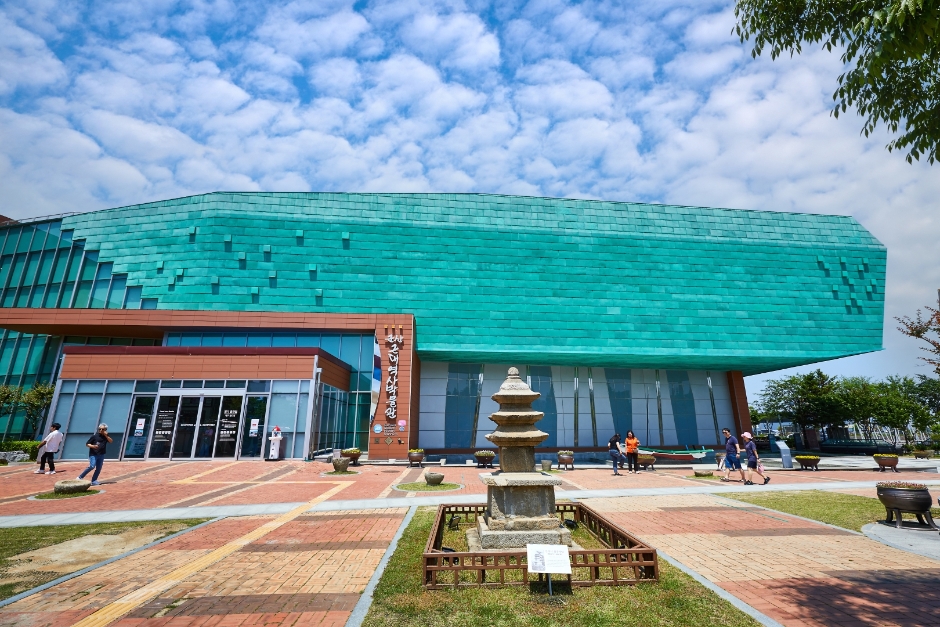
Gunsan Modern History Street (군산 근대화 거리)
10.1Km 2024-04-07
41, Jangmi 1-gil, Gunsan-si, Jeonbuk-do
Gunsan was historically an important trading port. Because of that, it often served as the landing point of new culture in Korea. One such example is the modern culture during the Japanese colonial period, which traces of that time can still be found today. At Gunsan Modern History Street, you will find Gunsan Modern History Museum, Old Gunsan Customs Office, Gunsan Modern Art Museum, Gunsan Modern Architecture Hall, and the former Joseon Bank building standing in a row. If you want to see Gunsan’s past and present, a visit to the museum is recommended. The area between Leesungdang and this area is the old city center of Gunsan, home to shops and cafes that build upon Gunsan’s uniquely retro aesthetics.
Yubudo Island (유부도)
11.9Km 2024-02-21
Yubudo-gil, Janghang-eup, Seocheon-gun, Chungcheongnam-do
Yubudo Island is a small island in front of Seocheon's coastline, accessible by ferry from Janghang Port in about 30 minutes. The island boasts extensive tidal flats and saltern developed with embankment. It is a place where saltwater and freshwater mix, making it abundant in fish like grey mullet and shrimp. Yubudo Island is also known as a resting spot for over 100 species of migratory birds.
Donggunsan Hospital (의료법인 오성의료재단 동군산병원)
11.9Km 2025-10-23
149 Jochon-ro, Gunsan-si, Jeonbuk-do
Donggunsan Hospital is a general hospital equipped with advanced medical equipment and system, ensuring high accuracy in tests and diagnoses, and providing high-quality treatment and medical services.
The hospital aims to become a genuinely good, patient-centered institution. It focuses on fostering Health Promotion Center, Gastrointestinal Endoscopy Center as well as areas of vascular surgery, cosmetic procedures, varicose vein surgery, dental cosmetics, minimally invasive spinal surgery to offer top-tier medical care and preventive services. Additionally, with the establishment of an International Medical Center and dedicated patient rooms, Donggunsan Hospital is well-prepared for treating international patients, paving the way for its evolution into a global hospital.
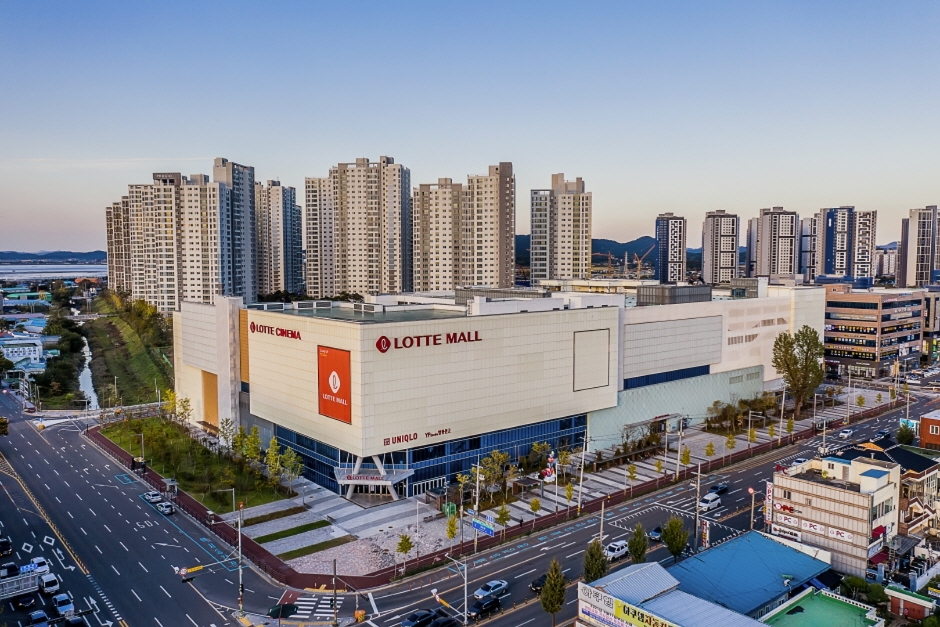
LOTTE Shopping Mall – Gunsan Branch (롯데몰 군산점)
12.1Km 2024-04-06
130 Jochon-ro, Gunsan-si, Jeonbuk-do
It is a shopping town where visitors can enjoy shopping, culture, and entertainment together, and it is the largest and first complex shopping mall in Jeonbuk State.
LOTTE Shopping Mall Gunsan Branch is full of fun 365 days with various events and performances for children.
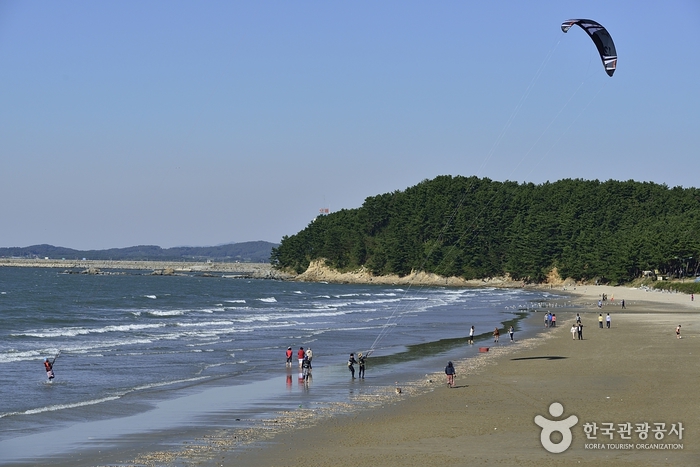
Chunjangdae Beach (춘장대해수욕장)
17.3Km 2022-08-03
20, Chunjangdae-gil, Seocheon-gun, Chungcheongnam-do
Chunjangdae Beach offers a gentle 1.5-degree slope and a thick grove of pine and acacia trees, making it popular as a summer vacation destination. A meeting plaza is located at the midpoint of the beach, and walking paths connect to nearby islands. At low tide, visitors can catch shellfish and flatfish in the mudflat. Nearby attractions include the Busa Sea Wall, Hongwonhang Port, and Camellia Grove in Maryang-ri.
Seocheon Maryang-ri Camellia Forest (서천 마량리 동백나무 숲)
18.5Km 2022-12-26
103, Seoin-ro 235beon-gil, Seocheon-gun, Chungcheongnam-do
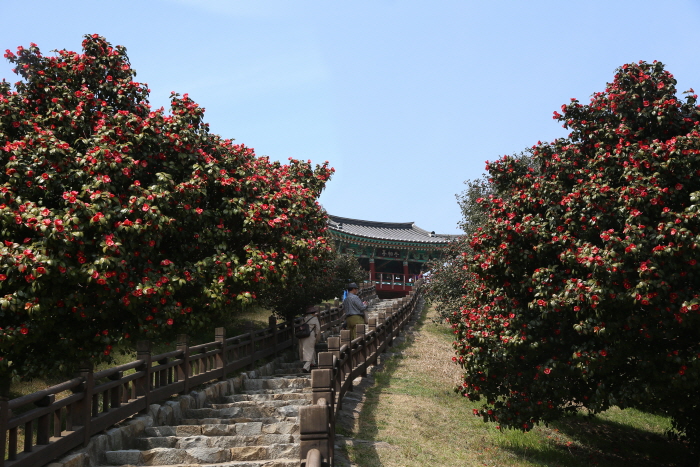
One of the eight scenic views of Seocheon, Maryang-ri Camellia Forest is designated as a Natural Monument. The lush forest covers an area of 8,265 ㎡ with the trees being nearly 500 years old. The best time to enjoy the camellias is from late March to early May. Dongbaekjeong Pavilion standing at the peak of the hill offers a beautiful view of the nearby Oryeokdo Island in the blue sea and is also a prime spot for taking in the sunset.
The western side of the forest has few remaining trees, but the eastern side is still lush with over 70 trees. While camellia trees typically grow to be 7 meters tall, the strong sea breeze has caused the trees in this forest to have a stunted growth of just 2 meters, as well as growing at a slant.
Hongwonhang Port (홍원항)
19.0Km 2021-08-12
130-3, Hongwon-gil, Seocheon-gun, Chungcheongnam-do
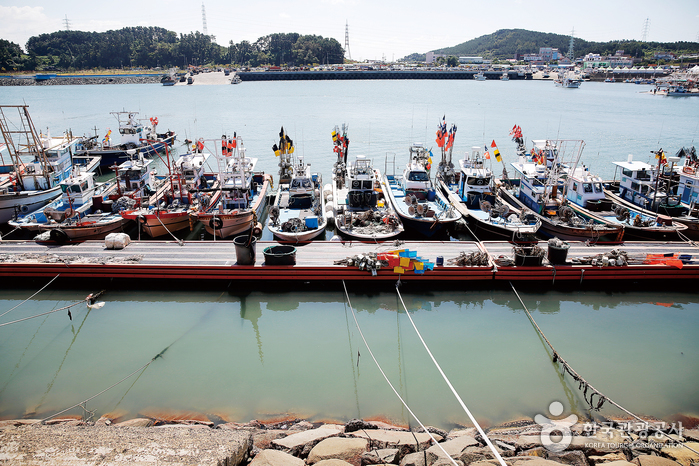
Hongwonhang Port, located near Chunjangdae Beach, is a popular place for enjoying sea fishing and delectable meals of fresh raw fish. In addition to its culinary appeal, the port offers the picturesque scene of long stretches of shoreline guarded by two beacons in red and white. Hongwonhang Port has many fishing boats thanks to its small tidal range, resulting in a lively atmosphere and cheap sashimi prices.
Hongwonhang Port, along with Gwangyanghang Port in Jeollanam-do, is the prime spot for gizzard shad. Each autumn the port holds the Gizzard Shad Festival, a festival that has plenty of events & delectable fish dishes. While at the festival, visitors are also encouraged to check out the Seocheon Museum of Marine & Natural History and Dongbaekjeong. The stuffed specimens at the museum are worth the visit and the view of Maryang Port from atop the museum is unbelievable.
Bieung Mapaji Trail (비응 마파지길)
19.8Km 2024-04-06
1331 Oehang-ro, Gunsan-si, Jeonbuk-do
Bieung Mapaji Trail is a deck walkway along the coast of Biungdo Island. "Mapaji" means a place where the maparam (south wind) blows in Korean, and visitors can enjoy a refreshing walk while feeling the cool breeze from the sea. While strolling along the coastal scenery, visitors come across observation decks. From these decks, they can enjoy panoramic views of Bieung Port and the expansive scenery of the Seohae Sea.
 English
 한국어
한국어 日本語
日本語 中文(简体)
 Deutsch
 Français
 Español
 Русский


