
Buan Guam-ri Dolmens (부안 구암리 지석묘군)
14.0Km 2024-04-07
Seoksang-ri, Buan-gun, Jeonbuk-do
Buan Guam-ri Dolmens, designated as Historical Site No. 103, is comprised of southern-style dolmens. Dolmen refers to a particular structure of a tomb created during the Bronze Age. Dolmen is largely classified into two groups – Southern-type that has small footstones supporting large top stone; and Northern-type which is shaped like a desk. In Guam-ri, there were originally 13 dolmens, but only 10 remain. Most of the dolmens have 8 small footstones propping up one large top stone, compared to the dolmens in other regions which normally have 4 footstones.
Dongho Beach (동호해수욕장)
16.1Km 2025-01-08
Dongho-ri, Gochang-gun, Jeonbuk-do
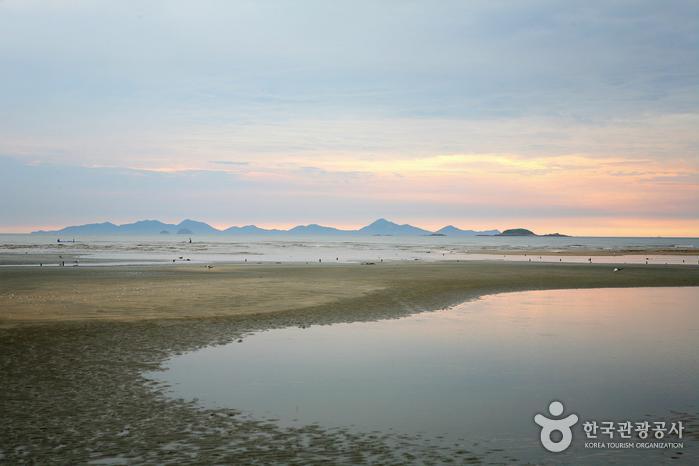
Dongho Beach is located south of Gomsoman Bay, between the Byeonsan Peninsula of Buan and Gochang-gun, Jeollabuk-do. Skirting the 1-kilometer-long white sandy beach lies a green forest with pine trees hundreds of years old. The sunset viewed from the forest is particularly eye-catching as the soft pink from the falling sun covers the sky. The water just offshore is relatively shallow, varying in depth between 0.5 and 1.5 meters. The high salt content in the seawater makes it an ideal place for sea and sand bathing.
On the hill above the forest is Suseongdang, a shrine honoring the god of the seas, where the local fishermen gather each year to pray for big catches.
Midang Literary House (미당 서정주 시문학관)
16.7Km 2025-01-10
2-8, Jilmajae-ro, Gochang-gun, Jeonbuk-do
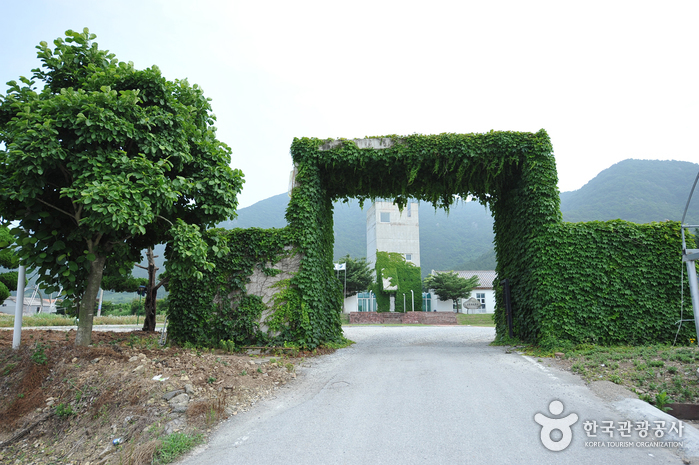
The Midang Literary House is a memorial center for the great poet Seo Jeong-Ju (penname ‘Midang’) built in Seonun-ri in Gochang-gun, Jeollabuk-do, where the poet was born and is buried. In the fall of 2001, a year after the poet’s death, the center opened on November 3rd on the anniversary of the Gwangju Student Movements (1929 and 1930), which took place while Midang attended Jungang High School. Located adjacent to the center are the poet’s birth house and grave.
Housed in a renovated branch of Seonun Elementary School, the Midang Literary House was structurally designed to convey the architectural concepts of 'eco-friendly' and 'learning.’
Munyeodo Island & Seonyudo Island (무녀도‧선유도)
17.8Km 2024-04-07
Okdo-myeon, Gunsan-si, Jeonbuk-do
Munyeodo Island is located approximately 50.8 kilometers southwest of Gunsan-si, and forms the Gogunsan Islands together with Seonyudo, Sinsido, Jangjado, and other islands. Its total area occupies 1.75 square kilometers and its coastline is 11.6 kilometers long. Today, with Seonyudo in the middle, there are bridges installed between Munyeodo and Seonyudo, Seonyudo and Jangjado, and Jangjado and Daejangdo, so visitors are able to walk around as if they are on a single island. Other than Munyeobong Peak (131 meters) on the southwestern part of the island, the region is vast but lacks any tall mountains.
Seonyudo Island is located in the center of the Gogunsan Islands, which consist of about 20 islands, and is approximately 50 kilometers away from Gunsan Port. It is also one of the most popular vacation spots on the entire West Coast.
The location that serves as a basecamp when travelling to Seonyudo and the nearby islands is Jin-ri Village on Seonyudo. It neighbors Seonyudo Beach, which is famously known as ""Myeongsasimni,"" and faces Mangjubong Peak that stands tall like Maisan mountain. The island is crowded with schools, inns, restaurants, bike rental shops, stores, karaokes and campgrounds, which is why the area is a bit boisterous during the vacation seasons. If you wish to escape from such noise, it would be a good idea to rent a bicycle and bike to Munyeodo, Jangjado or Jinwol-ri over Mangjubong Peak.
Seonyudo Island is the home of the 8 Scenic Spots of Seonyu, but the most gorgeous scenery of them all is Mangjubong Peak, which is practically the symbol of the island. Once you climb up to the top, the nearby islands and the sea come together in a cool panoramic view, which also includes the neatly sprawling Myeongsasimni Beach as well as Pyeongsanagan that resembles a seagull landing over the water. The splendid sunset on Seonyudo Island is incredible no matter where you are, whether it'll be atop Mangjubong Peak or Seonyudo Beach.
Sinsido Island Fishing Experience Village (신시도 어촌체험마을)
18.0Km 2025-01-10
83-7, Sinsido-gil, Gunsan-si, Jeonbuk-do
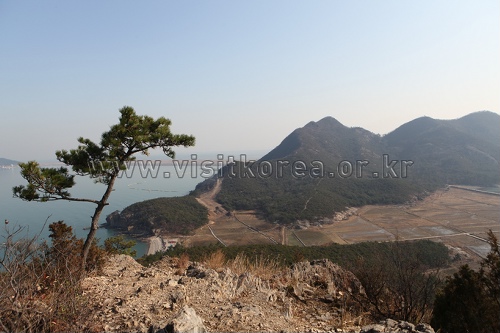
Sinsido Island is the largest of the 24 islands in the Gogunsan Island Cluster located 50 kilometers southwest of Gunsan. The highest point is Daegaksan Mountain (187 meters) on the northwest side and there is Sinchisan Mountain (142 meters) on the southeast side. Villagers tend to work in the fishing industry, catching shrimp, anchovies, hairtail, and mackerel. Farmers tend to grow rice, barley, sweet potato, chili, peas and more. The island can be reached by car and there are various activities available such as mud flats and fishing.
Seonyudo Island (선유도)
18.5Km 2024-04-07
34-22, Seonyunam-gil, Gunsan-si, Jeonbuk-do
Seonyudo Island, one of the most popular tourist destinations on the west coast during the summer, lies in the heart of the Gogunsan Archipelago. The island has an area of 2.12 ㎢, which is only about 1/4 of Yeouido in Seoul. The island's coastal shore is around 12.8 kilometers long and the highest point is Namaksan Mountain, which reaches about 155.6 meters in altitude. Seonyudo is the central point of Gogunsan Archipelago and has even served as the headquarters for the naval army during the Joseon dynasty. It played a vital role during the Imjin War as Admiral Yi spent days on the islands to prepare for the next battle after his victory in the Battle of Myeongnyang.
Visitors can enjoy the island in three ways. First is to look around the neighboring islands. Seonyudo, Munyeodo, Jangjado, and Daejangdo islands are all connected by a bridge, allowing one to move between the islands on foot or a bicycle. Other ways to enjoy the island is to take a walk along the Myeongsa-simni Shore, one of the Eight Scenes of Seonyudo, and to try the clam collecting program at a mudflat.
![Seonunsan Mountain [National Geopark] (선운산 (전북 서해안 국가지질공원))](http://tong.visitkorea.or.kr/cms/resource/64/2678864_image2_1.jpg)
Seonunsan Mountain [National Geopark] (선운산 (전북 서해안 국가지질공원))
19.0Km 2024-04-07
158-6, Seonunsa-ro, Gochang-gun, Jeonbuk-do
Seonunsan Mountain is famous for its sunrise views at Nakjodae Overlook and Cheonmabong Peak. The mountain is mostly comprised of hard volcanic rocks, creating a landscape of sharp cliffs softened by the forest vegetation.
Gochang Seonunsa Temple (선운사 (고창))
19.3Km 2024-04-07
250, Seonunsa-ro, Gochang-gun, Jeonbuk-do
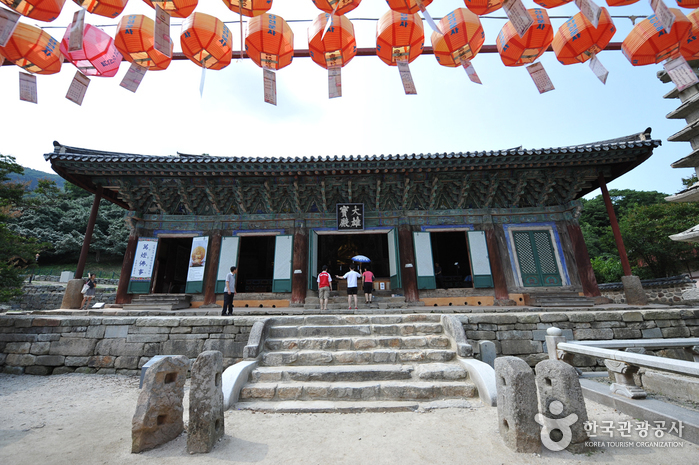
Seonunsa Temple is known to have been built in 577, the 24th year of King Wideok of the Baekje dynasty. It is the second head temple of Jogye Order in Jeollabuk-do. According to the temple's historical records, it was originally a very large temple with 89 hermitages and 3,000 monks. Today, only four hermitages remain: Dosoram, Chamdangam, Dongunam, and Seoksangam. In addition, the temple is home to 25 prestigious heritages, namely the Forest of Common Camellias, which is designated as ㅁ Natural Monument. A festival dedicated to this forest is held every April.
Dosolgyegok Valley (Seonunsan Mountain) (도솔계곡 (선운산))
19.3Km 2025-03-15
250, Seonunsa-ro, Gochang-gun, Jeonbuk-do
Dosolgyegok Valley is located in Seonunsan Mountain in the Gochang-gun district. Seonunsan Mountain, which is also called Dosolsan Mountain, is known for its thick forests and intriguing rock formations. Along the valley, there are many interesting sites such as Jinheungdonggul Cave, Yongmundonggul Cave, Nakjodae Overlook, and Cheonma peak. Dosolgyegok Valley is also famous for being very deep, where the mountain and water fight each other and whirl around in a yin & yang shape. The green forests in summer cover the valley beautifully, and the red leaves and white snow decorate the area in fall and winter.
Buan Sports Park (부안스포츠파크)
19.5Km 2024-04-07
31, Cheyukgongwon-gil, Buan-gun, Jeonbuk-do
Buan Sports Park spans over an area of 82,644 square meters. The park has a natural grass soccer field equipped with 6,700 seats, track and field made with natural rubbers, a torch holder, tennis courts, baseball field, basketball court, footsal field, an in-line skating track, an experience hall for children, a playground, and more, as well as lighting facilities for nighttime events. Other facilities include water fountain, grass performance hall, various types of trees and flowers, benches and rest areas. With accommodations nearby, the park is used as a training facility for teams from elementary school students to even professional athletes.
 English
 한국어
한국어 日本語
日本語 中文(简体)
 Deutsch
 Français
 Español
 Русский


