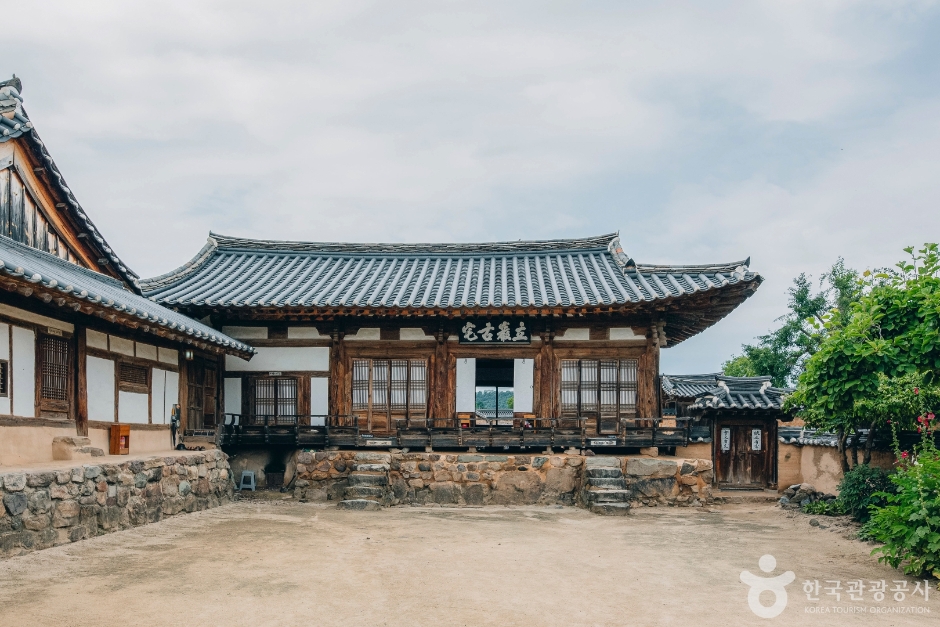
Yangjindang (하회 양진당)
18.3Km 2025-07-01
68, Hahoejongga-gil, Andong-si, Gyeongsangbuk-do
“Andonog Hahoe Yangjindang,” located in the Hahoe Folk Village, is Treasure No 306 and the residence of a family with the surname Pungsan Ryu. A tablet read Ipam Antique House, named after Ipam Ryu Jung Yeong (1515 - 1573), is hung on the entrance. Yangjindang is named after the nickname of Ryu Yeong (1687 - 1761), the sixth generation of Gyeongam Ryu Un Ryong, son of Ipam. The name means “nourishing well one's own nature.” The Hanok stands over the entrance, with a well-polished floor that is grand yet friendly. One of the characteristics of the house is that it includes Sarangcha or detached building, which reflects the architecture from the Goryeo period, and Anchae or main building in the architecture style from the Joseon period.
It is expected that such co-existence was made possible because of the repairs done after Imjin War. How fortiunate that the antique house has been preserved until now! The well-tended garden shows the commitment of the descendants to maintaining the space. Rooms are rather simple compared to the grand exterior of the house. Traditional mother-of-pearl furniture, tableware in the cupboard, randomly ceramics placed draw attention. The house resembles a small folk museum. Why not enjoy some traditional folk games during your stay? There is a variety of play tools such as yut, tuho, jegi, tops, and kites. Experience programs such as gayangju brewing, rice cake and traditional dessert making, and flower tea are conducted by the first daughter-in-law of the house, depending on the season.
 Español
 한국어
한국어 English
 日本語
日本語 中文(简体)
 Deutsch
 Français
 Русский


