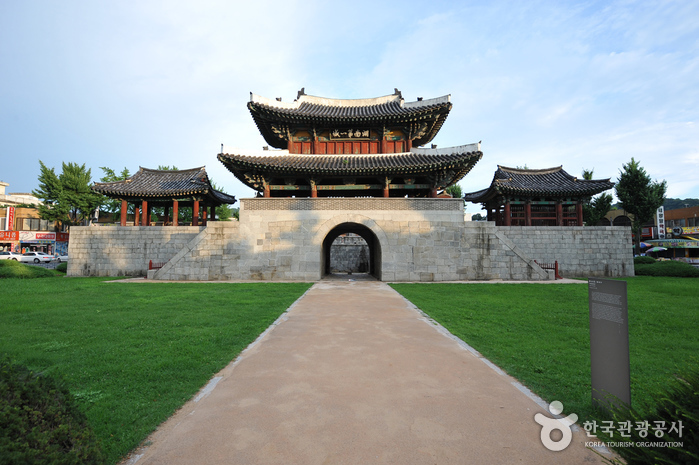
Puerta Pungnammun de Jeonju (전주 풍남문)
.0M 2024-04-07
Pungnammun 3-gil 1, Wansan-gu, Jeonju-si, Jeonbuk-do.
La puerta Pungnammun se ubica donde estaba la puerta sur de la antigua Fortaleza de Jeonju. Sus primeras construcciones datan de los años 1734 y 1768, y tras ser parcialmente desmantelada por tareas de planificación urbana, finalmente recuperó su forma original en 1978.
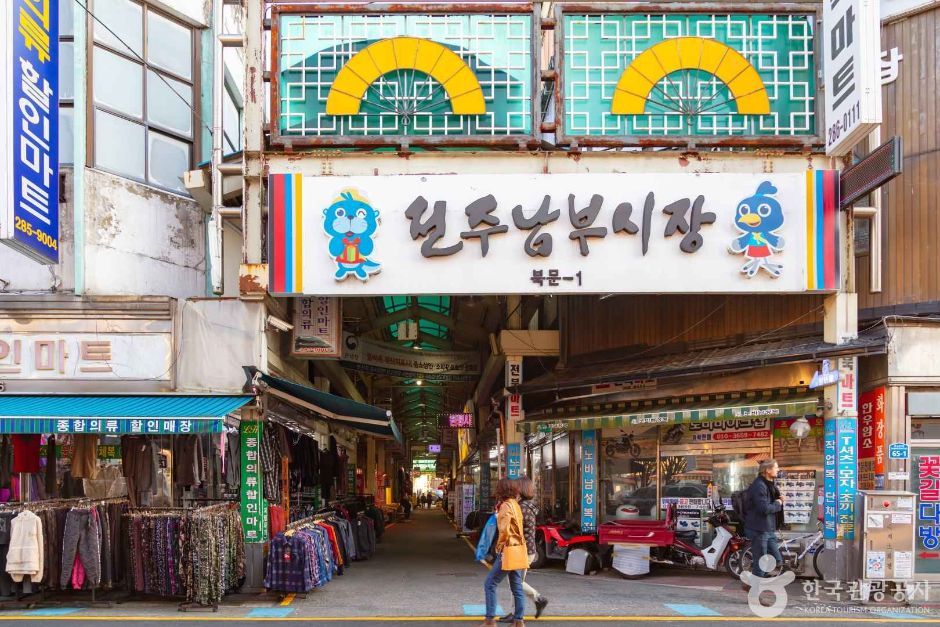
Mercado Nambu de Jeonju (전주 남부시장)
138.9M 2025-07-09
Pungnammun 1-gil 19-3, Wansan-gu, Jeonju-si, Jeonbuk-do
Establecido en 1905, el Mercado Nambu de Jeonju es hasta la actualidad un importante punto de comercio, de economía y de transporte para los habitantes de la ciudad de Jeonju. Desde finales de los 60 hasta los años 70, el precio del arroz en general se determinaba en este mercado, mostrando así su gran influencia en los mercados de Corea. Actualmente, unas 800 tiendas se encuentran en el predio. Todos los viernes y sábados hay un mercado nocturno donde se pueden probar platos para picar como morcillas, tortitas y rollitos.

Veteran Kalguksu (베테랑칼국수)
273.3M 2025-07-14
135, Gyeonggijeon-gil, Wansan-gu, Jeonju-si, Jeonbuk-do
Veteran Kalguksu, located in Jeonju Hanok Village, has been operating since 1977, attesting to the great taste of their broth, made using sesame, meal, and eggs. The noodles are also cut much thinner than other restaurants, while maintaining their chewy texture. Another popular menu at the restaurant is their kongguksu.
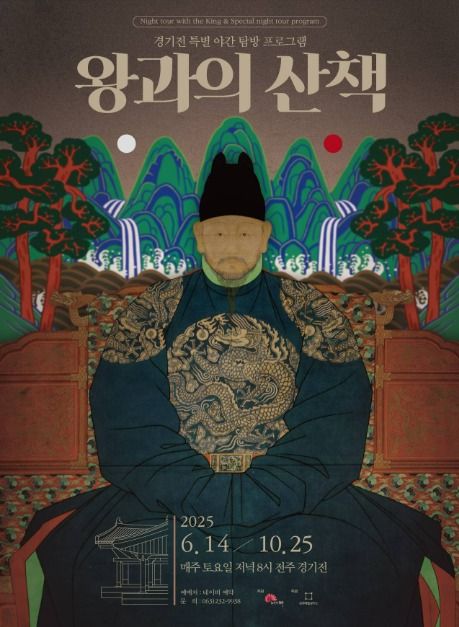
Paseo con el Rey por el Santuario Gyeonggijeon (경기전 왕과의 산책)
286.3M 2025-10-30
Taejo-ro 44, Wansan-gu, Jeonju-si, Jeonbuk-do
+82-63-232-9938
Se realiza el “Paseo con el Rey” todos los sábados en Jeonju. El recorrido de 100 personas incluye una vista especial del santuario Gyeonggijeon con música y té. Un guía turístico le llevará por la hermosa ciudad de Jeonju.
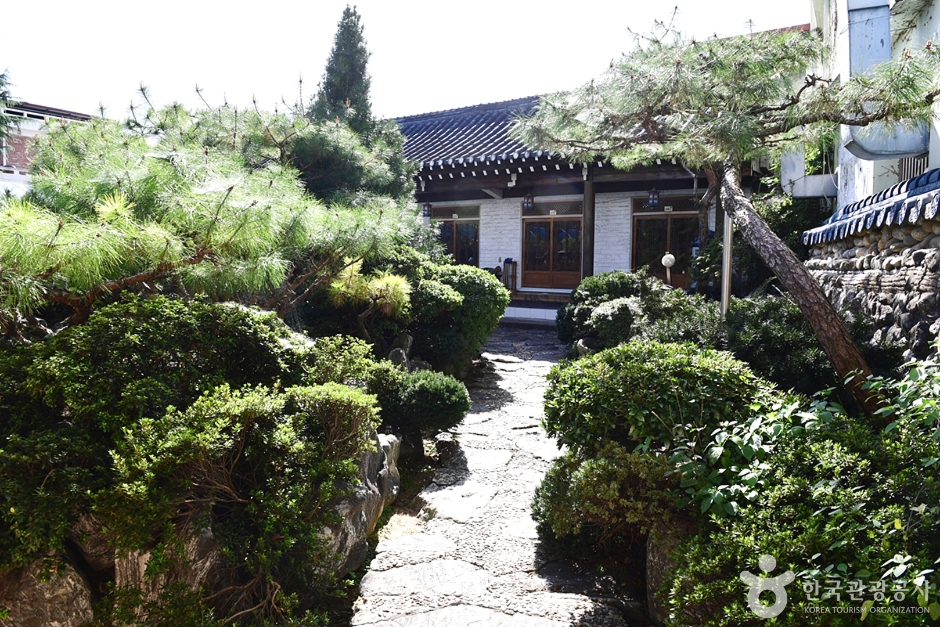
Hankookjib (한국집)
315.3M 2025-07-09
119, Eojin-gil, Wansan-gu, Jeonju-si, Jeonbuk-do
Hankookjib literally means 'Korean house.' The restaurant serves Jeonju bibimbap, kongnamul haejangguk (spicy bean sprout soup), sagol gomtang (thick beef bone soup), doenjang jjigae (soybean paste stew), and samgyetang (ginseng chicken soup). Many well-known figures, including former presidents of Korea, have been sited as enjoying the authentic Jeonju bibimbap here.
Siwon (시원)
344.0M 2025-07-18
45-41, Omokdae-gil, Wansan-gu, Jeonju-si, Jeonbuk-do
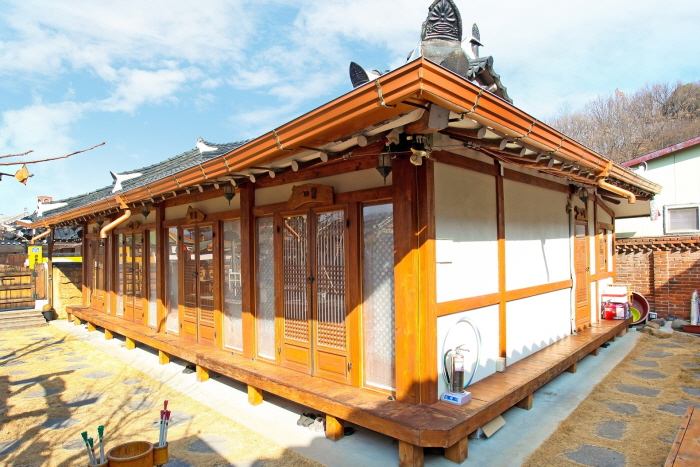
Siwon is a timber and clay-built hanok stay, part of Jeonju Hanok Village in Jeonbuk-do. It has four guestrooms, all but one with a small attic - so guests can have fun climbing up and down the ladder! The rooms have all been insulated and draft-proofed to keep visitors warm and comfortable. In the yard is a small garden and swing, and guests can play traditional games such as Tuho and Jegichagi - or even take part in a carpentry workshop. Must-see sites such as Gyeonggijeon, Jeondong Cathedral, Omokdae, and Nambu Market can all be reached on foot.
Hakindang (학인당)
348.4M 2025-07-18
45, Hyanggyo-gil, Wansan-gu, Jeonju-si, Jeonbuk-do
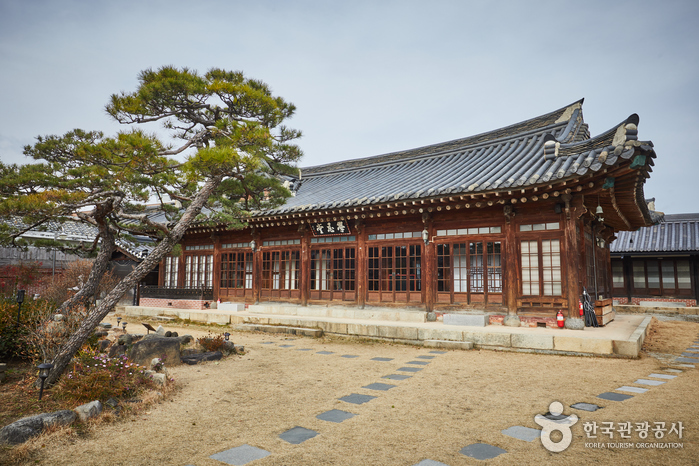
Hakindang - also known as Injae’s Old House - is the oldest house in Jeonju Hanok Village, and a designated Jeonbuk-do cultural treasure. The house was built in the royal architecture style by some of the best late Joseon artisans. The Sarangchae guestroom has two sleeping rooms and a living room, suitable for families; while the Byeoldangchae has three guestrooms, one with a tea room space. Guests can use the free minibar while contemplating the old house’s fine traditional garden.
Gyodonggaon / 교동가온
390.5M 2025-08-12
73-1, Eunhaeng-ro, Wansan-gu, Jeonju-si, Jeonbuk-do
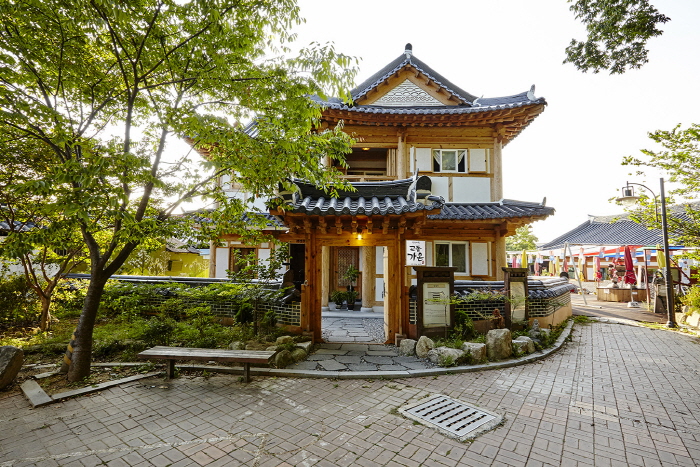
Gyodong Gaon is located right in the middle of the main street of Jeonju Hanok Village. The word "gaon" means "middle" in Korean. It's a two-story traditional Korean house that stands out among the rest of the traditional Korean houses in the alley leading to Omokdae. Just inside the gate is a yard with colorful flower trees, jars of sauces, and furnace. The mural on one of the walls is popular among the guests as a place to take photos.
The "numaru", or "loft" in Korean, overlooks the Hanok Village, and is one of the best places in the village to get a closer look at the 500 year old zelkova tree and the foot of the mountain nearby. Open to all the guests, the "numaru" is very popular during the winter as well as the summer. It's an open space with a wooden floor, so it's very cool during the summer, and it also serves as an observatory to enjoy the view of all the snow-covered trees and roofs in the Hanok Village during the winter while having a hot cup of tea.
The owner of the guesthouse has been living here for 37 years. He rebuilt his house and turned it into a hanok guesthouse in 2014 while making sure the rooms are well insulated and comfortable to stay.
He built a two-story building to make an efficient use of the space, and focused on making all the rooms look different. The house has five rooms, and only the “Meomulda Room” on the first floor is the only rooms with a living room separated from the bedroom. All you have to do is open the door to enjoy the view of the yard, Hanok Village, and Omokdae. The “Nanuda Room” on the second floor is the largest one that can accommodate more than five people, making it the most popular choice among families. The "Damda Room" and "Kkumkkuda Room" both have an attic that can be reached by a ladder. The attic is big enough to sleep two adults, and some guests actually sleep there for a unique experience. One of the walls of the attic is finished with cypress wood which has a pleasant scent. The “Geurida Room” has the best view through the two windows on the either side of the room, in addition to warm sunlight and cool wind that come through the window. Modern, not traditional, doors are installed in all the rooms for better sound proofing and insulation.
Gyodong Gaon offers a number of experience programs, such as traditional games like “gulleongsoe”, “tuho", and “Korean top”, As well as “sabang chigi”, “sampalseon”, and “ttangttameokgi”.
Many Korean adults are familiar with these games, while children and foreigners can find these games interesting. All these traditional Korean games are free to play.

Hanok Garden in Jeonju (전주한옥마당)
399.9M 2025-10-23
80-13, Jeonjucheondong-ro, Wansan-gu, Jeonju-si, Jeonbuk-do
Jeonju Hanok Madang is located in the Jeonju Hanok Village. Jeonjucheon Stream and Namcheongyo Bridge are only one block away, whereas Gangam Calligraphy Museum, Jeonjuhyangyo Confucian School, Jeonju Hanbyuk Culture Center, Nambu Market, and Markbu Market Youth Mall are nearby. Major attractions of the Jeonju Hanok Village such as Gyeonggijeon, Jeondong Catholic Cathdral, and Omokdae are also within walking distance.
The main building and servants’ quarters of Jeonju Hanok Madang were built in 1941. It was renovated to retain the original shape of the traditional hanok, yet cozy and comfortable enough for modern people to use. Porches are attached to every room while Faith Room and Hope Room have additional inner floors attached to it. Inside the rooms are rafters, beams, wooden pillars walled with Hanji wallpapers, and ribs of lattice doors. There is a clean bathroom in each room.
The yard is the place the owner couple cherishes the most. Guests can enjoy the yard in any room just by opening the door. It is a combination of jar stands, a small pine tree, and small potted plants. Different flowers bloom from spring through autumn. It is such a pleasure to sit on the porch and appreciate the scene. In autumn, the persimmon tree bears fruits and dried persimmons hang from the eaves.
Museo de Caligrafía Gangam (강암서예관)
433.6M 2024-04-07
Jeonjucheondong-ro 74, Wansan-gu, Jeonju-si, Jeonbuk-do.
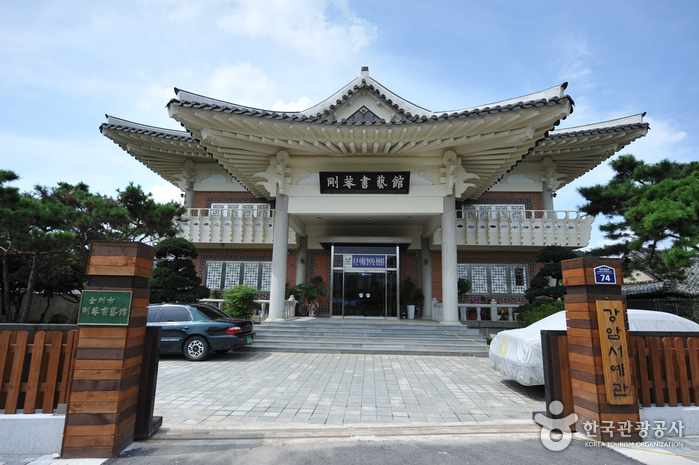
Jeonju es considerada como una de las ciudades de la cultura y el arte de Corea, pero si desea sentir su ambiente artístico más de cerca y profundamente, visite el museo de caligrafía Gangam, situado en los alrededores de la Aldea Tradicional. El museo fue inaugurado en el año 1995 y es visitado por una gran cantidad de personas que aman el arte. En sus cercanías se encuentran varios lugares turísticos, considerados como valiosos patrimonios del país, la puerta Pungnammun, el santuario Gyeonggijeon, y hacia el este, la Escuela Confuciana Jeonju Hyanggyo, junto con el monte Omokdae, etc.
Este museo fue fundado en conmemoración y homenaje al gran maestro Song Seong-yong, cuyo seudónimo era “Gangam”, quien fue un famoso calígrafo nacido en esta región. Siendo el único museo exclusivo de la caligrafía en el país, expone un total de 1.162 piezas artísticas de las siguientes figuras claves del ramo: Chusa Kim Jeong-hui, funcionario público y calígrafo de Joseon, Lee Sam-man (seudónimo Changam), Kim Hong-do (seudónimo Danwon), Jeong Yak-yong (seudónimo Dasan), famoso filósofo religioso de Joseon, etc.
Por otro lado, a 200 m de distancia de este museo se inauguró la Sala Conmemorativa de la Revolución Donghak, por lo tanto, también podrá aprovechar la ocasión para conocer la historia de esta revuelta campesina.
 Español
 한국어
한국어 English
 日本語
日本語 中文(简体)
 Deutsch
 Français
 Русский


