![Casa Mini Hotel [Korea Quality]까사미니호텔[한국관광 품질인증]](http://tong.visitkorea.or.kr/cms/resource/62/2949262_image2_1.jpg)
Casa Mini Hotel [Korea Quality]까사미니호텔[한국관광 품질인증]
9.1Km 2023-05-23
28, Geumseong-ro 259beon-gil, Gyeongju-si, Gyeongsangbuk-do
+82-54-777-3355
Casa Mini Hotel in downtown Gyeongju, Gyeongsangbuk-do, is a recently-renovated, clean and tidy hotel that’s well positioned for visits to Gyeongju’s historic sites and tourist attractions. Cheomseongdae Observatory, Donggung Palace and Wolji Pond, Woljeonggyo Bridge and Gyeongju National Museum are all within walking distance. Transport links are good too: Gyeongju Intercity Bus Terminal is a 3-minute walk away.
![Gyeongju Historic Area [UNESCO World Heritage] (경주역사유적지구 [유네스코 세계문화유산])](http://tong.visitkorea.or.kr/cms/resource/03/2656603_image2_1.jpg)
Gyeongju Historic Area [UNESCO World Heritage] (경주역사유적지구 [유네스코 세계문화유산])
9.1Km 2025-03-24
757 Taejong-ro, Gyeongju-si, Gyeongsangbuk-do
The Gyeongju Historic Area, registered as a UNESCO World Cultural Heritage on November 2000, is an area that embodies the time-honored history and culture of Gyeongju, the ancient capital of the Silla Kingdom (57 BC-AD 935).
The Gyeongju Historic Area can be divided into 5 major sections. The first section is the Namsan Area, a treasure trove of Buddhist art masterpieces dating back to the Silla Kingdom. Gyeongju Namsan Mountain (often referred to as an ‘outdoor museum’) is home to many historical heritage sites from the Silla Kingdom. Major attractions include: Poseokjeong Pavilion Site (Historic Site), Rock-carved Buddhas in Tapgok Valley (Treasure), Three-story Stone Pagoda in Cheollyongsa Temple Site (Treasure), Rock-carved Buddhas at Chilburam Hermitage (Treasure), Rock-carved Seated Buddha in Bulgok Valley (Treasure), and 37 other Buddhist relics
The second section is the Wolseong Area, one of the former palace sites of the Silla Kingdom. The area consists of Gyerim Forest (Historic Site); Donggung Palace and Wolji Pond (Historic Site), a Silla Royal Palace site; and Cheomseongdae Observatory (National Treasure), the oldest observatory in Asia.
Daereungwon Ancient Tomb Complex, the third area, features a cluster of the royal graves of the kings and queens of Silla. Also in the same area are Ancient Tombs in Nodong-ri (Historic Site), Ancient Tombs in Noseo-ri (Historic Site), Ancient Tombs in Hwangnam-ri (Historic Site), and Five Royal Tombs (Historic Site), among others. Archaeologists have discovered a number of invaluable relics and historic items in this area such as Geumgwan (golden crown), Cheonmado (a painting of flying horses), and numerous pottery pieces. These finds are perhaps the greatest clues into the life of the people of the Silla dynasty.
Area number four, the Hwangnyongsa Temple Site, is where the former site of the Hwangnyongsa Temple (Historic Site) and Bunhwangsa Stone Pagoda are located. Last is the Sanseong Area, housing remnants of the major defense system for the capital city. The site consists of Myeonghwalsanseong Fortress (Historic Site) which is estimated to be around 400 years old.
The Gyeongju Historic Area has a total of 52 designated cultural assets that are registered as World Cultural Heritages.
![Maison Mini Hotel [Korea Quality]메종미니호텔[한국관광 품질인증]](http://tong.visitkorea.or.kr/cms/resource/78/2949378_image2_1.jpg)
Maison Mini Hotel [Korea Quality]메종미니호텔[한국관광 품질인증]
9.1Km 2023-05-23
24 , Taejong-ro 699beon-gil, Gyeongju-si, Gyeongsangbuk-do
+82-54-745-3232, +82-10-3517-6319
The Maison Mini Hotel in Gyeongju, Gyeongsangbuk-do, is 10 minutes’ walk from both Gyeongju Express Bus Terminal and the famous Hwangnidan Street. Rooms are comfortable and clean - they’re inspected by a room manager before each booking - and bedding is changed every day. There is a luggage storage room and a shared kitchen on the first floor.
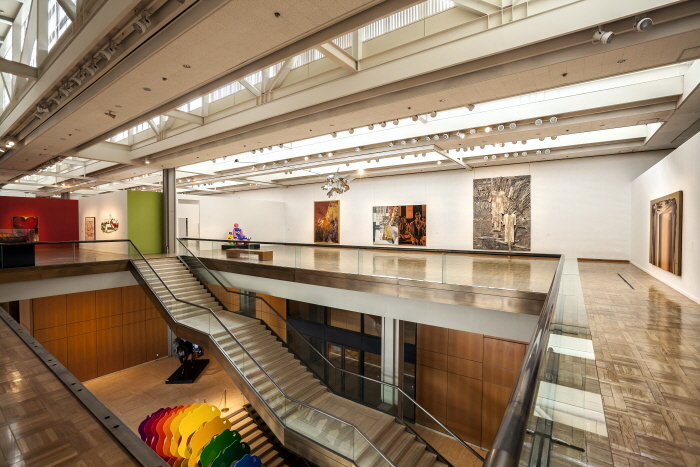
Wooyang Museum of Contemporary Art (우양미술관)
9.1Km 2025-06-12
484-7 Bomun-ro, Gyeongju-si, Gyeongsangbuk-do
Wooyang Museum of Contemporary Art, located in the Bomun Tourist Complex, is a private gallery of modern art established in 1991. The collections of major modern and contemporary artists are on display. The museum targets famous modern art collections and retrospective exhibitions of artists in the middle of their careers.
The place has also been showcasing modern and contemporary art from a historical perspective through a large-scale international exhibition, and plans to hold a special exhibition for renowned domestic and foreign artists in the middle of their careers who have suggested art trends ahead of their time. Furthermore, various lecture and exhibitions have been held to meet the diverse needs of local citizens, making the Museum a major cultural center in the community.
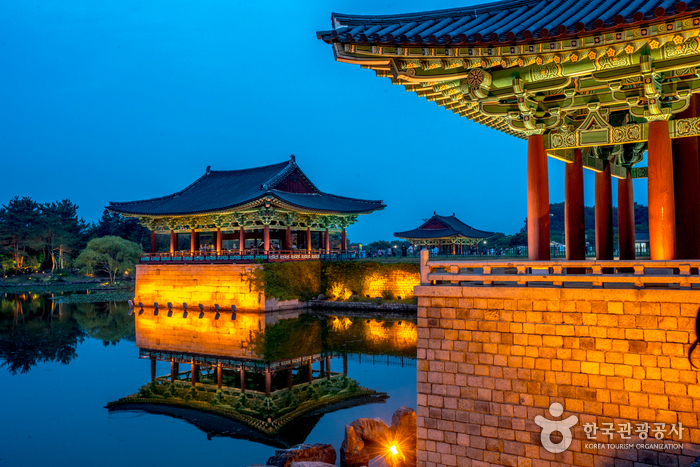
Donggung Palace and Wolji Pond (경주 동궁과 월지)
9.1Km 2025-10-23
102 Wonhwa-ro, Gyeongju-si, Gyeongsangbuk-do
+82-54-750-8655
Donggung Palace and Wolji Pond in Gyeongju are secondary palace sites of Silla. The palace, along with other secondary palaces, was used as the eastern palace where the prince lived, and banquets were held during auspicious events or to welcome important guests. It is also where King Gyeongsun of Silla invited King Wang Geon of Goryeo and had a feast to complain about the critical situation in 931 after being invaded by Gyeon Hwon. After unifying the three kingdoms, Silla's King Munmu dug a large pond in the 14th year of his reign (674), creating three islands in the center of the pond along with a 12-peaked mountain to the northeast. Beautiful flowers and trees were planted here, and rare birds and animals were raised. In the Samguksagi (History of the Three Kingdoms) from the Goryeo dynasty, there is only a record of Imhaejeon Hall and no mention of Anapji Pond. After Silla fell and the place fell into ruins during the Goryeo and Joseon dynasties, poets and calligraphers looked at the pond and recited a line of poetry that says, “The once splendid palace is gone, and only geese and ducks fly in.” That's why the place is called Anapji, using the letters 'an' for wild geese and 'ab' for ducks. In the 1980s, pottery fragments with the inscription "Wolji" were excavated, and it was confirmed that this area was originally called "Wolji," which means "a pond that reflects the moon." And the name Anapji was changed to Wolji Pond afterwards.
◎ Travel information to meet Hallyu’s charm - "The Beauty Inside"
Se-gye visits this place to refresh her mind after she argues with Do-jae over the contract. Being one of the most famous tourist sites in Gyeongju, the scenery here is enough to help you forget the argument that you’ve just had, especially at night.
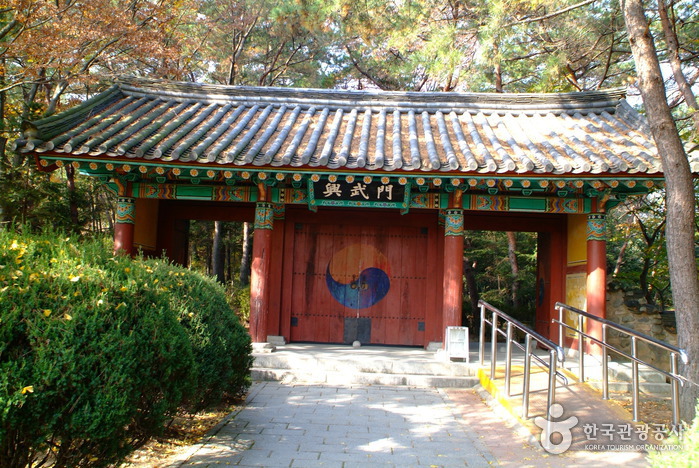
Gyeongju Tomb of Kim Yu-sin (경주 김유신묘)
9.1Km 2022-08-12
44-7, Chunghyo 2-gil, Gyeongju-si, Gyeongsangbuk-do
+82-54-749-6713
The tomb of General Kim Yu-sin (595-673) is located near the Gyeongju Express Bus Terminal at the end of a scenic lane, popular in spring for its walls of yellow forsythia and pink cherry blossom trees in bloom. The tomb itself is located in a scenic area thick with pine trees, on the eastern side of Songhwasan Mountain. The tomb of General Kim Yu-sin is a large tomb measuring roughly 30 meters in diameter, circled by a stone fence with 24 guard posts. The tomb base wall features relief carvings of the 12 Oriental zodiac gods standing guard over the tomb, brandishing weapons. The carvings are unique in that while their bodies face outwards, the heads are all turned to the right. The elaborately decorated tomb is second in grandeur only to those of royalty.
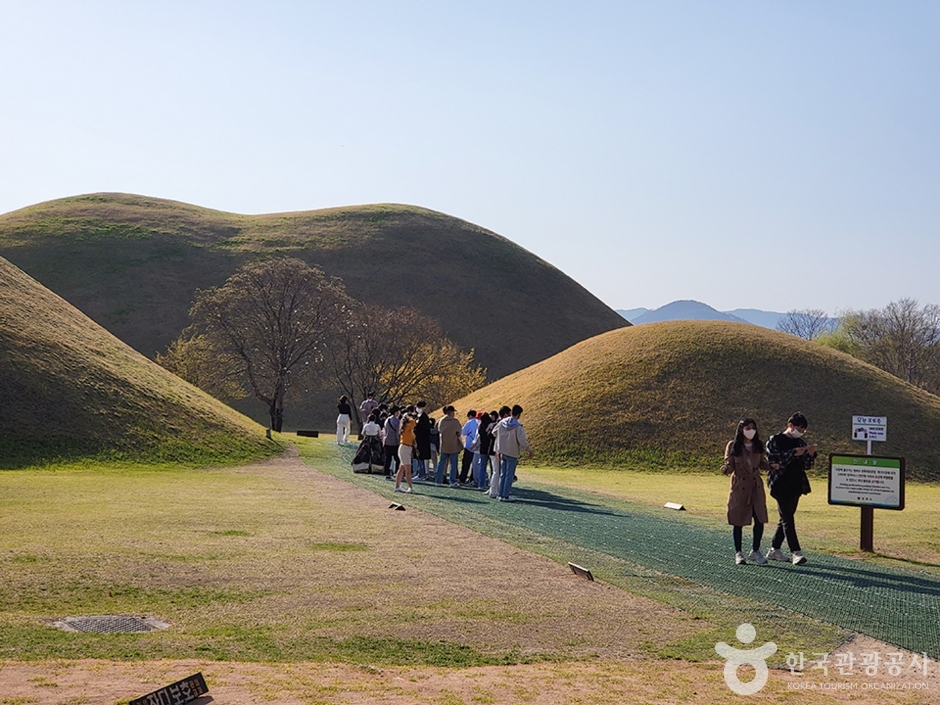
Cheonmachong Tomb (Daereungwon Ancient Tombs) (천마총(대릉원))
9.1Km 2025-05-21
9 Gyerim-ro, Gyeongju-si, Gyeongsangbuk-do
+82-54-743-1925
Daereungwon Ancient Tombs are one of the most well-known sights in Gyeongju, a history park home to 23 small and large ancient tombs. The area is dotted with tranquil trails among the tombs like the largest tomb in Hwangnam-dong, Hwangnamdaechong Tomb; Cheonmachong Tomb, the place where Cheonmado, a saddle flap painting, was excavated from; and the tomb of King Michu, nicknamed the “Tomb of the Bamboo Warrior.”
Cheonmachong Tomb, excavated in 1973, has a x_height of 12.7 meters and a diameter of 50 meters. Its excavation unearthed many artifacts, such as the famous Gold Crown from Cheonmachong Tomb. Its name comes from Cheonmado, a mudguard saddle flap with a painting of a heavenly horse. Cheonmachong Tomb is the only tomb in the Daereungwon Ancient Tombs to be opened to the public.
The tomb is thought to have been constructed between the late 5th century and early 6th century. Artifacts excavated from the tomb include a gold crown, gold cap, gold waist belt, gold diadem, and gilt-bronze shoes worn by the buried. The gold crown, in particular, is known as the largest and the most elaborate of all gold crowns unearthed in Korea. The artifacts themselves can be found in Gyeongju National Museum, so don’t miss the chance to see them in person.
Another must-visit site is the Daereungwon Magnolia Photo Area, a lone magnolia tree standing between the beautiful curves of ancient tombs.
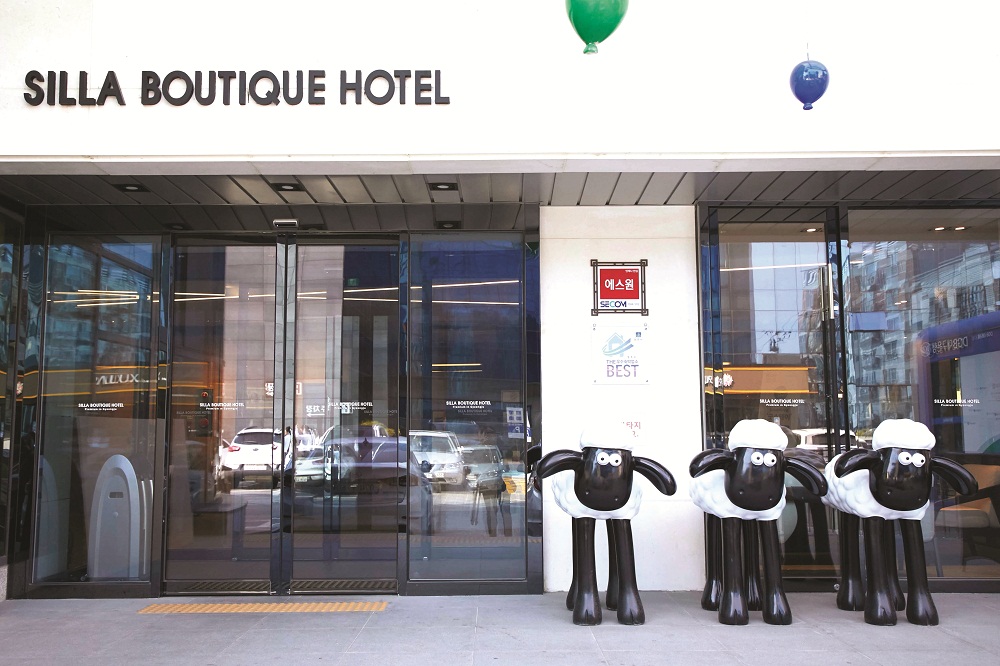
SILLA BOUTIQUE HOTEL PREMIUM (신라부티크호텔 프리미엄)
9.1Km 2024-08-22
200 , Gangbyeon-ro, Gyeongju-si, Gyeongsangbuk-do
+82-54-745-3500, +82-54-624-3366
Shilla Boutique Hotel Premium is a family-oriented hotel in Gyeongju, Gyeongsangbuk-do. Dedicated rooms for travellers with young children have low beds to prevent falls, and family customers are provided with free tickets to local playparks. For older guests, screen-golf discount coupons are provided. The hotel is a 5-minute walk from the Gyeongju bus terminal, a 20-minute bus ride from Singyeongju station, and an easy drive to most of the city’s tourist attractions.
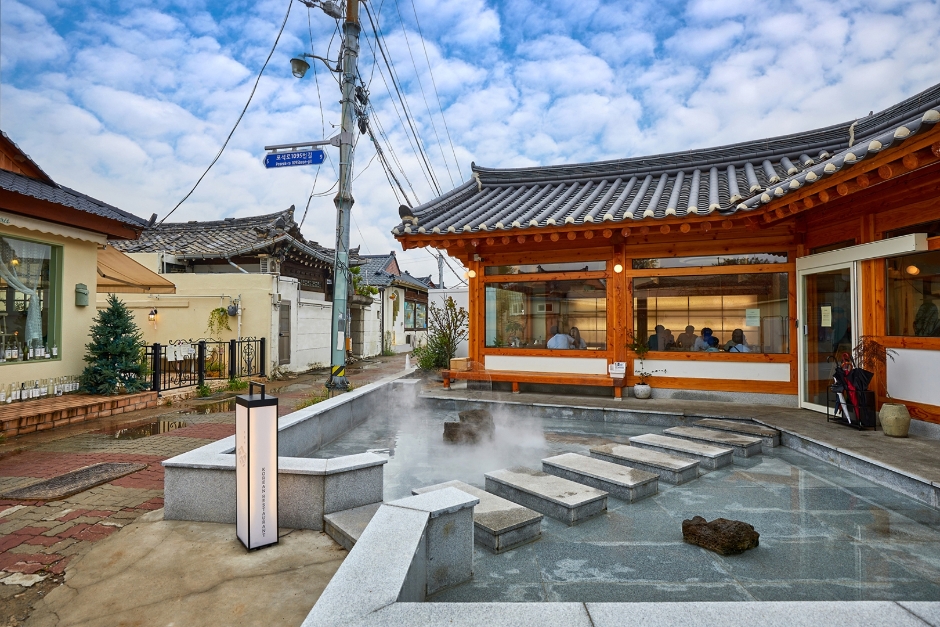
Sugyeongsa (수경사)
9.2Km 2024-04-08
25 Sajeong-ro 57beon-gil, Gyeongju-si, Gyeongsangbuk-do
Sugyeongsa is a fusion Korean food restaurant renovated from a temple and a pond. The entrance is paved with marble and stone, creating a mysterious yet neat atmosphere, and the interior is simple, preserving the original form of a hanok and using white tones. The signature dish here is beef bulgogi with lotus leaf rice. The soy sauce-seasoned Gyeongju beef bulgogi, and lotus leaf rice will work up an appetite. The lotus leaf rice is a combination of rice and mixed grains wrapped in lotus leaves and steamed for an even healthier taste. Seasonal vegetables and side dishes are also provided. Also on the menu are Daereungwon deep-fried cheese, made with cheese rind, and beef brisket japchae pasta with seven kinds of vegetables, perilla seeds, and lotus root chips. A delicious meal can be enjoyed by anyone thanks to the restaurant's reinterpretation of traditional Korean food.
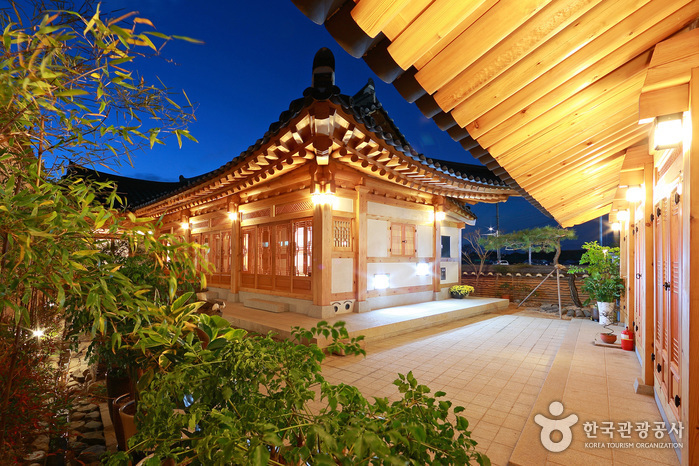
Wiyeonjae Hanok Stay (위연재)
9.2Km 2024-12-19
7 , Jjoksaem-gil, Gyeongju-si, Gyeongsangbuk-do
+82-10-9384-1000, +82-10-5694-2426
Wiyeonjae hanok stay stands on the edge of the Gyeongju Historic Area, so that from here Cheomseongdae, Daereungwon, Donggung Palace, Wolji Pond and the other historic sites can be reached on foot. It’s a place where Silla period relics were excavated during construction, and you can still feel the 1,000 year history of the Silla capital. All rooms are ondol-style, and all have bathrooms. One room, Munmu, has a numary(raised floor) which is a great spot for taking photos. A free breakfast is provided and parking space is available.
 English
 한국어
한국어 日本語
日本語 中文(简体)
 Deutsch
 Français
 Español
 Русский


