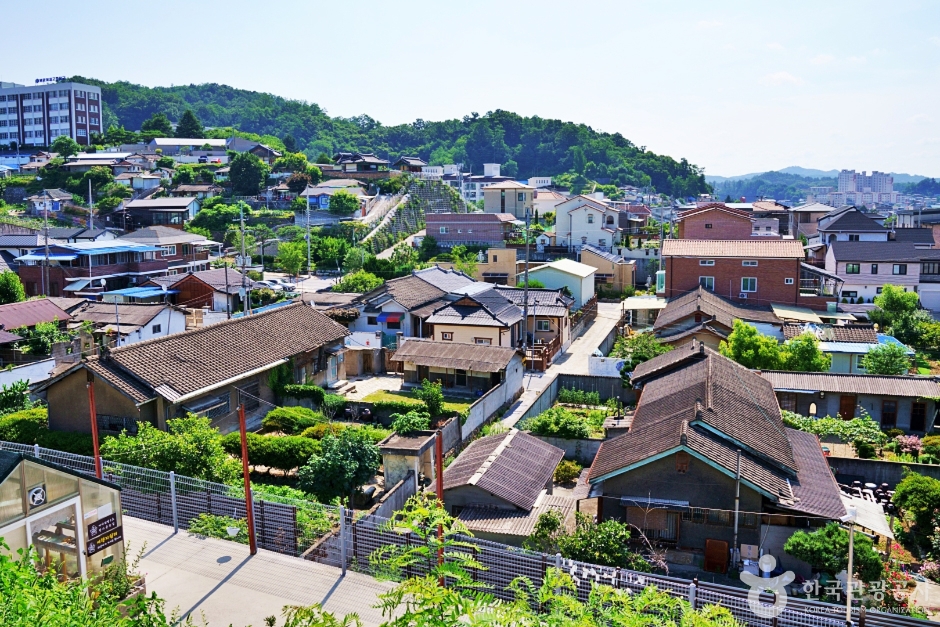
Yeongju Modern History & Culture Street (영주근대역사문화거리)
2.9Km 2024-02-23
Yeongju-dong, Yeongju-si, Gyeongsangbuk-do
Yeongju Modern History and Culture Street serves as a historical and cultural hub, encapsulating the life and times of early twentieth-century Yeongju. The street is dotted with cultural properties officially recognized by the Cultural Heritage Administration. Highlights include the preserved official residences No. 5 and No. 7 of Yeongju Station, once home to railway station employees. Additionally, visitors can explore the Pungguk Rice Mill, showcasing vintage rice milling machinery; Yeongju Jeil Church, a 1909-built structure exemplifying Gothic-style architecture; Yeongju-dong Modern Hanok, a subsidiary structure of an ancient residence; and the still-operating Yeonggwang Barber Shop, a testament to the area's enduring heritage.
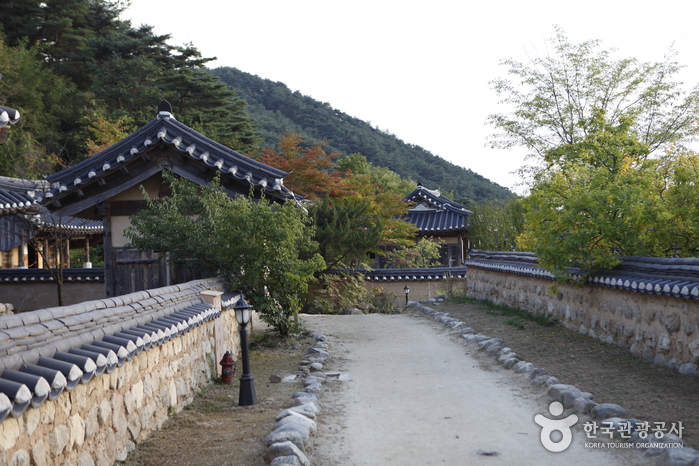
Seonbichon Village (선비촌)
9.1Km 2022-08-22
2796, Sobaek-ro, Yeongju-si, Gyeongsangbuk-do
Seonbichon Village in Yeongju, Gyeongsangbuk-do, the cradle of Korean Confucianism, is where the spirit and cultural heritage of Korea’s classical scholars are preserved. The village is the perfect place to learn about traditional Korea, and is famous for its classical scholars’ loyalty and filial piety.
Seonbichon village offers a variety of traditional activities for visitors, from pounding rice cake to hanging wish lanterns to attending a traditional wedding ceremony or playing folk games such as yutnori or jegichagi. Visitors can also enjoy traditional dining at Jeojatgeori Street and learn about history through the museum. Guests can also enjoy the unique experience of staying in a hanok house through the overnight program and participate in scholar programs.

Sobaeksan National Park (Gyeongsangbuk-do Region) (소백산국립공원(경북))
10.4Km 2023-02-17
Punggi-eup, Yeongju-si, Gyeongsangbuk-do
Sobaeksan National Park was designated as the 18th national park in December 1987. The features of Sobaeksan National Park include wildflowers and royal azaleas in spring and snowy scenery in winter. The mountain borders three provinces and four cities. Attractions include various peaks, temples, and waterfalls. The mountain is especially popular in May when royal azaleas are in full bloom and a natural forest tunnel is formed. Birobong Peak of the mountain is covered with snow six months of the year and is called the Alps of Korea.
![Sogang House [Korea Quality] / 소강고택 [한국관광 품질인증]](http://tong.visitkorea.or.kr/cms/resource/80/2803880_image2_1.jpeg)
Sogang House [Korea Quality] / 소강고택 [한국관광 품질인증]
11.1Km 2024-10-30
22, Baraemi-gil, Bonghwa-eup, Bonghwa-gun, Gyeongsangbuk-do
Located in Baraemi Village, Bonghwa, Gyeongsangbuk-do, Sogang House is a hanok that is over 100 years old. Baraemi Village, the Uiseong Kim clan village, has lots of old houses remaining, but Sogang House has an outstanding history and ambiance. The house was built around 1910 by Namho Kim Roi-sik, a renowned wealthy patriot in Gyeongsang-do, for his second son, Sogang Kim Chang-gi when he was married. Kim Roi-sik is a figure who donated the money secured on his whole possession when the Provisional Government of Korea in Shanghai was raising contributions, and received the Order of Merit for National Foundation. Sogang House is a D-shaped hanok with the adjoining sarangchae and anchae. Even the door frame of the house is built with the chunyang pine, showing the elaboration put in its building. As it is not easily twisted or rotten, chunyang pine is the best pine for architecture that was used for building the palace, the temple, and houses of aristocrats in the Joseon period. There are six guest rooms, including Sarangbang and Eosabang. Sarangbang contains two rooms and veranda, Seonbibang is the room that sunshine comes in the earliest in the morning, and Doryeongbang is the only ondol (floor-heated) room that is built with red clay. Every room has an air-conditioner and the lovely garden with a flower tree is seen through the open window.
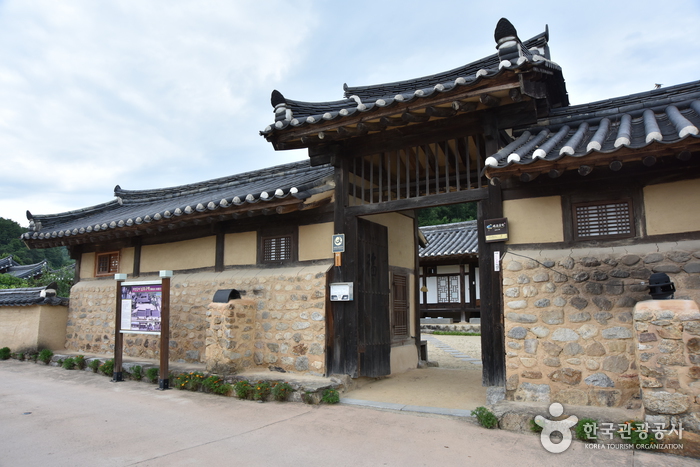
The Namho house (남호구택)
11.1Km 2024-12-19
21 , Baraemi-gil, Bonghwa-gun, Gyeongsangbuk-do
Bonghwa Namho Old House in Bonhwa-gun is a Gyeongsangbuk-do cultural treasure with a history going back 140 years - but the original materials were of such high-quality that the Old House has hardly detiorated at all. The toilet is shared, but has recently been renovated to a high standard. In the spacious yard you can enjoy traditional games such as Tuho, Neolttwigi, and Jegichagi. The house is convenient for transport, with Bonghwa Station (on the Yeongdong Line) just a 15-minute walk away, and a city bus stop in the village.
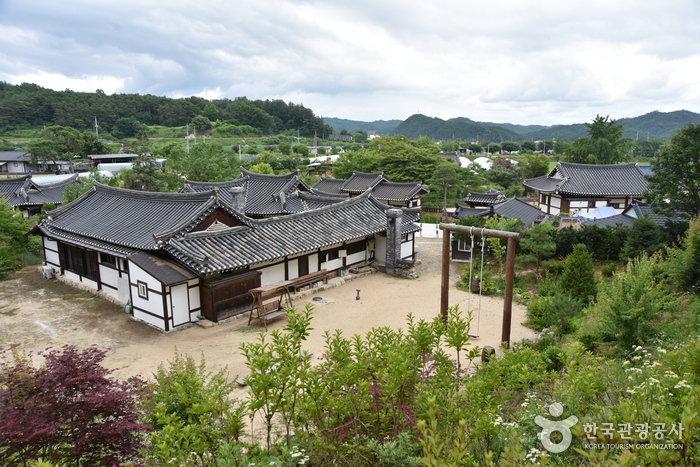
Tohyang traditional house (토향고택)
11.5Km 2024-12-19
43 , Baraemi 1-gil, Bonghwa-gun, Gyeongsangbuk-do
Tohyang Old House is a grand old house in Bonghwa, Gyeongsangbuk-do, formerly the home of eleven generations of the same family. The main house is estimated to be over 350 years old, and is a place where past and present harmonize. The garden contains flower beds, a lotus tree, a walking path, and a wood-fired pottery kiln, where you can take part in a traditional pottery experience.
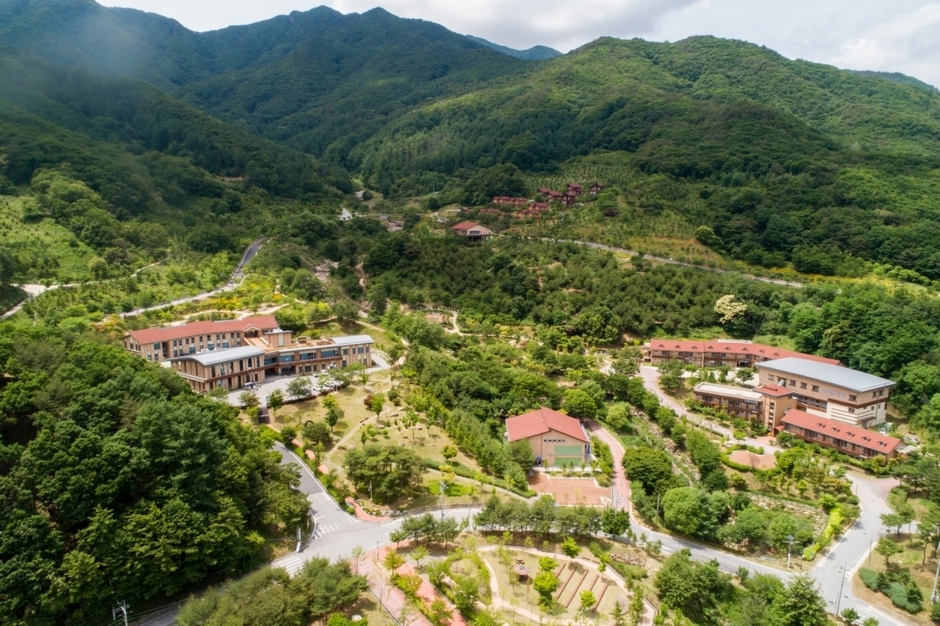
National Center for Forest Therapy (국립산림치유원)
11.5Km 2025-10-23
209 Therapy-ro, Bonghyeon-myeon, Yeongju-si, Gyeongsangbuk-do
The National Center for Forest Therapy is a forest-themed well-being complex created to promote public health and quality of life by leveraging the abundant forest resources of the Baekdudaegan Mountain Range. Forests have transformed into a destination for healing one's mind and body, as well as a place for recreation. The National Center for Forest Therapy provides guidelines for proper exercise and daily habit improvements aimed at relieving stress and promoting mental and physical balance by utilizing the healing properties of the forest. Furthermore, visitors can experience the effects of forest therapy here. The center has healing forest trails, recreational facilities, accommodation facilities, and others.
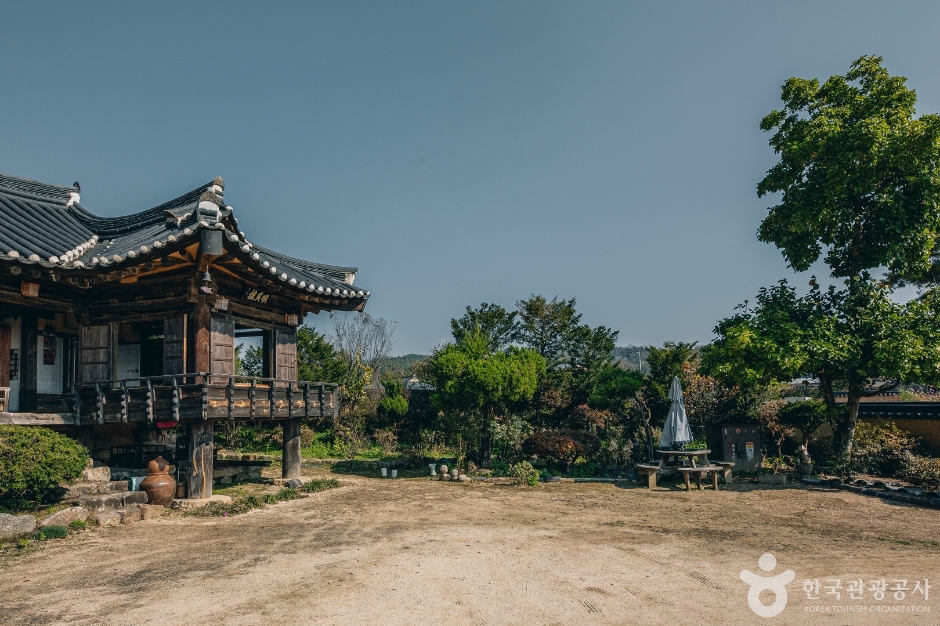
Manhoegotaek (만회고택)
11.5Km 2024-12-19
51 , Baraemi 1-gil, Bonghwa-gun, Gyeongsangbuk-do
The prestigious Manhoe Old House in Baraemi Village, Bonghwa, Gyeongsangbuk-do, is a nationally designated folk cultural asset, because of its 300 year history and its association with both Korean literature and the March 1st independence movement. It is said that a thousand poems were written in Myeongwolru, the Old House’s pavilion; and the 1919 Independence Petition was also written here. There are 7 guestrooms, one with an attic with exposed roofbeams, and most but not all rooms have individual toilets. Guests can take part in traditional activites such as folk games.
Sobaeksan Punggi Spa Resort (소백산풍기온천리조트)
11.8Km 2023-10-26
1400 Jungnyeong-ro, Yeongju-si, Gyeongsangbuk-do
Sobaeksan Punggi Spa Resort, which sits at the foot of Sobaeksan Mountain, has a wide variety of facilities and amenities, as well as a great view. The resort has an outdoor spa, a 25-square-meter outdoor swimming pool, Aqua Pool ride, a wading pool, a bade pool, and Yeonhwajeong, a great restaurant to enjoy delicious Korean food.
There is also a great spot to have an outdoor barbeque party with family and friends while enjoying the great taste of hanu (Korean beef). Sobaeksan Punggi Spa Resort aims to be the best spa resort for locals as well as tourists.
![Manjukjae House[Korea Quality] / 만죽재 고택[한국관광 품질인증]](http://tong.visitkorea.or.kr/cms/resource/55/3016955_image2_1.jpg)
Manjukjae House[Korea Quality] / 만죽재 고택[한국관광 품질인증]
13.0Km 2024-10-30
11-10 , Museom-ro 234beon-gil, Yeongju-si, Gyeongsangbuk-do
Manjukjae House is the oldest hanok in Museom Village, Yeongju, Gyeongsangbuk-do, with a history dating back 360 years. Originally built by Park Su to live the life of a reclusive gentleman after the Manchu Invasion of Korea, the house has been passed down from generation to generation through 13 generations. There are four guest rooms, Seomgye Chodang, Sarangchae (detached building), Anchae (main building), and Chaekbang (study), all of which can accommodate two people. Among them, Seomgye Chodang offers the best view, from where guests can enjoy the scenery of the log bridge in Museom Village, the Naeseongcheon Stream, and the white sandy beach. With the windows wide open, you can enjoy the cool breeze and the soothing sounds of nature.
 English
 한국어
한국어 日本語
日本語 中文(简体)
 Deutsch
 Français
 Español
 Русский


