
Omokdae and Imokdae Historic Sites (오목대와 이목대)
304.0M 2025-07-22
55 Girin-daero, Wansan-gu, Jeonju-si, Jeonbuk-do
+82-63-281-2114
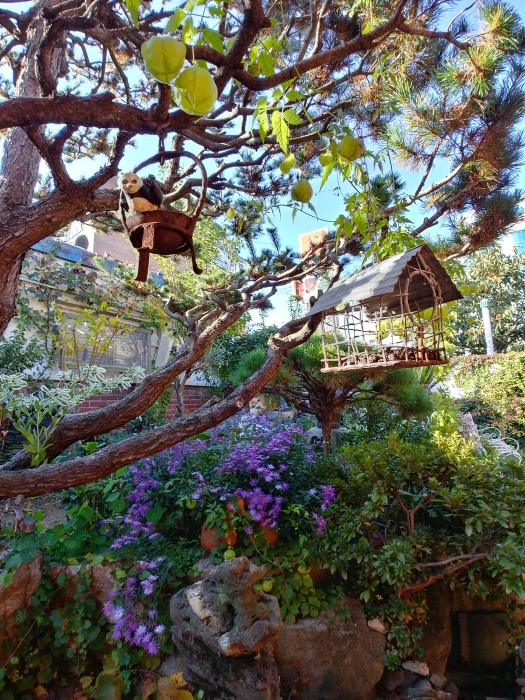
Omokdae Historic Site is located on top of a steep hill and is one of the places where Yi Seong-gye, who later became King Taejo, the first king of the Joseon dynasty, stopped to celebrate his victory on his way home from a war against the Japanese army at Unbong Peak of Hwangsan Mountain. Across the bridge from Omokdae is Imokdae Historic Site, situated at the foot of Seungamsan Mountain. Approximately 80 meters downhill from Imokdae are memorial stones and a building where Mokjo, the great-great-grandfather of King Taejo, once used to live. The engraved letters on the stones are the handwritings of Emperor Gojong. Mokjo moved to Hamgyeongdo as a result of a dispute with the then minister of Jeonju, an incident which King Taejo believed to have laid the foundation for him to shape the Joseon dynasty.
Fine day (좋은날)
379.3M 2024-12-23
37-7 , Jeondongseongdang-gil, Wansan-gu, Jeonju-si, Jeonbuk-do
+82-10-2607-3326
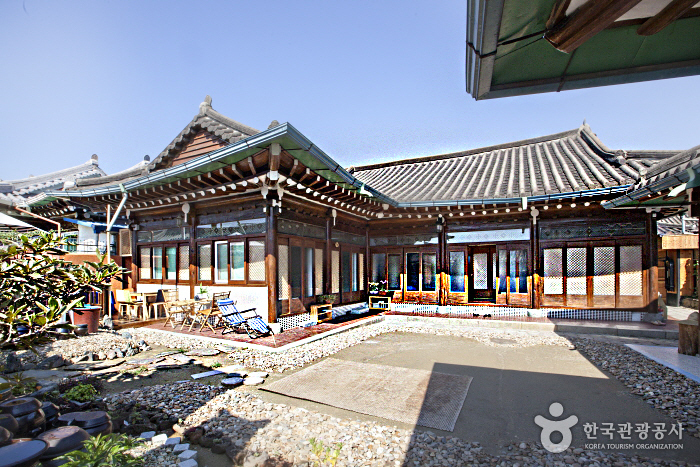
A Fine Day is a hanok stay on Jeondong Cathedral Street, Jeonju, Jeollabuk-do, which combines hanok tradition with modern convenience. The wood floor and red clay-lined walls and ceilings are a pleasure to wake up to. The rooms are well heated and have toilets, shower booths and bidets. From the wooden porch guests can enjoy a beautiful sunny garden planted with wildflowers and trees. Nearby attractions include Gyeonggijeon, Omokdae, Jeondong Cathedral and Nambu Market (great for food!).
The Hanok (더 한옥)
380.3M 2024-12-23
68-15 , Eunhaeng-ro, Wansan-gu, Jeonju-si, Jeonbuk-do
+82-10-2189-4002
The Hanok, located in Jeonju, Jeollabuk-do, is a large hanok guesthouse built of beautiful tradition materials - cypress wood, red clay, and traditional hanji paper. The largest of the 7 rooms (Gwibin - ‘Special Guest’) has a king-size bed, ondol underfloor heating, and a massage bed, making it suitable for two families. One room has an attic, one has an red clay bed, and one has a bunk bed made of re-used traditional materials. In the spacious yard, guests can enjoy delightful moonlight tea parties.
Royal Portrait Museum (어진박물관)
383.2M 2024-04-07
44, Taejo-ro, Wansan-gu, Jeonju-si, Jeonbuk-do
+82- 63-231-0090
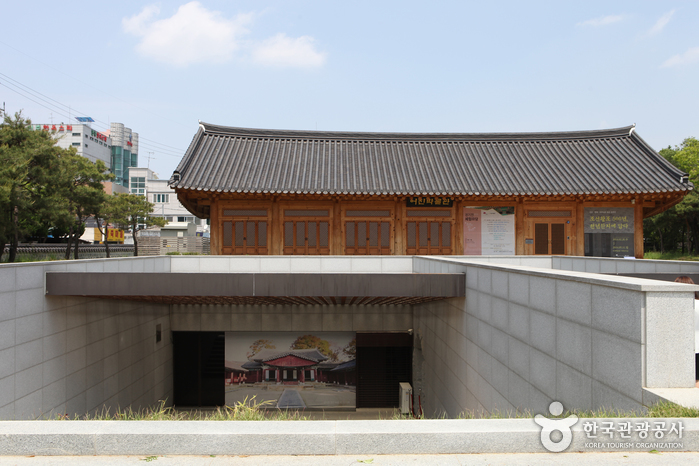
Opened on November 6, 2010, the Royal Portrait Museum is one of the newest attractions of Jeonju, located within the Gyeonggijeon Shrine. Royal Portrait Museum is a valuable museum as a new tourism resource of Jeonju as well as Gyeonggijeon Shrine and the Portrait of King Taejo, as well as other various high-class exhibitions to preserve, manage, and enhance the glorious cultural assets of Joseon royal family. The museum is comprised of one above-ground level and one underground level with an area of 1,193.71 square meters. The Portrait of King Taejo and six other king’s portraits (Portrait of King Sejong, King Yeongjo, King Jeongjo, King Cheoljong, King Gojong, and King Sunjong) are exhibited on the first floor. The portraits are preserved in temperature- and humidity-controlled cases. In addition, the museum houses History Hall, Palanquin Hall, a planned exhibition hall, resting area, management office and storage room for relics. Palanquin Hall exhibits Hyangjeong (Palanquin for Incense Burner and Case), Sinyeon (Palanquin for Royal Portrait and Palanquin for Mortuary Tablet), Chaeyeo (Palanquin for High Officials), Gagyo (Palanquin for Ritual Items) featuring Korea’s sole preserved palanquin. History Hall houses approximately 80 relices related to Gyeonggijeon Shrine and Jogyeong Shrine, ancestral ritual ceremony, building, and others relics. Since the museum's opening, it makes continual efforts to become a central place for Jeonju residents to fulfill their cultural feelings. The museum operates various program like exploring famous historic sites in Gyeonggijeon Shrine, hands-on programs such as a guard experience to protect the shrine, and duplicating Gyeonggijeon Shrine’s relics using traditional portrait-making techniques.
Gyeonggijeon Shrine (경기전)
385.5M 2025-10-23
44 Taejo-ro, Wansan-gu, Jeonju-si, Jeonbuk-do
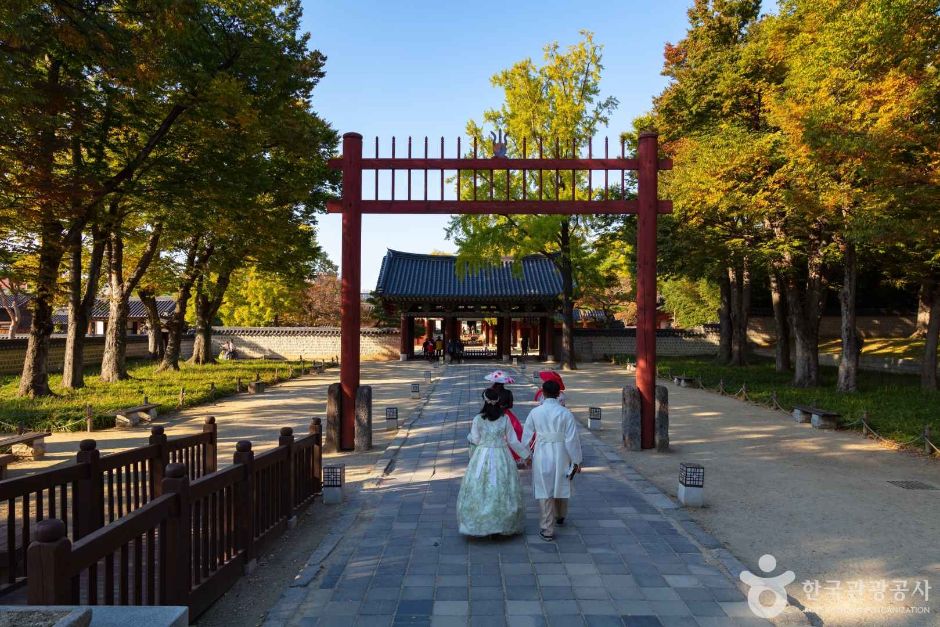
A registered Historic Site, Gyeonggijeon Shrine was founded in 1410 and holds the portrait of King Tae-jo, the founder of the Joseon dynasty. The shrine was originally given the name Eoyongjeon, but was changed to its current name in 1442, the 24th year of King Sejong the Great. The structure was partially destroyed during the Imjin War (1592-1598), and was restored in 1614. Gyeonggijeon Shrine is beloved by the locals and tourists for its elegance and the lush tree groves in the middle of the city.
Gyodonggaon (교동가온)
394.3M 2024-08-05
73-1 , Eunhaeng-ro, Wansan-gu, Jeonju-si, Jeonbuk-do
+82-63-231-2355, +82-10-5106-3355
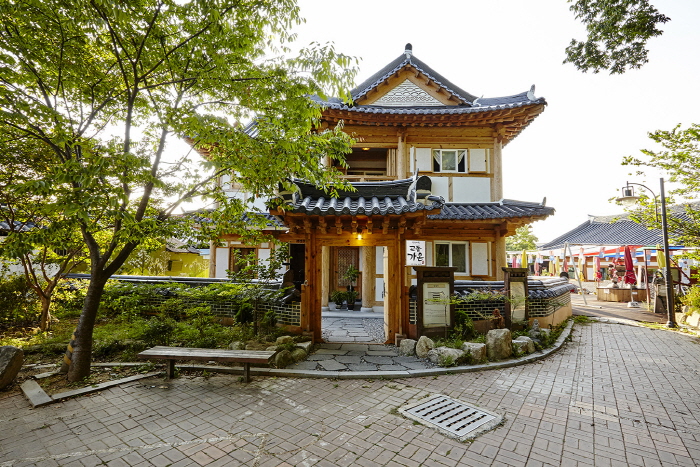
Gyodong Gaon is a two-story hanok stay on the main street of Jeonju Hanok Village, Jeollabuk-do. The yard contains a small garden, a jangdokdae (jar stand), a furnace and a mural that has become a popular place for photos. The upper floor guestroom Numaru (‘Loft’) offers a panorama of the village. The first floor Meomulda (‘Lodging’) guestroom has a door between bedroom and living room. Nanuda (‘Sharing’) on the 2nd floor is the largest room, while Damda (‘Contain’) and Ggumggu (‘Dreaming’) both have attics. Finally, Geurida (’Drawing’) is a room with a fine view. Traditional games such as Hoops and Tuho can be played without charge.
Jeonju Waengi Kongmulgukbap Specialty Restaurant (전주 왱이콩나물국밥전문점)
413.7M 2025-07-14
88 Dongmun-gil, Wansan-gu, Jeonju-si, Jeonbuk-do
063-287-6980
Jeonju Waengi Kongmulgukbap Restaurant, located next to Dongmun Art Street in Jeonju, is a local favorite. The restaurant serves only one dish, kongnamul gukbap, rice soup with bean sprouts. With the crunchy texture of bean sprouts and a rich broth made with anchovy and seafood, this hearty meal is perfect to enjoy after exploring nearby tourist attractions.
Neulbomstay (늘봄스테이)
415.6M 2024-12-23
74-11 , Eunhaeng-ro, Wansan-gu, Jeonju-si, Jeonbuk-do
+82-63-231-3040, +82-10-7742-6738
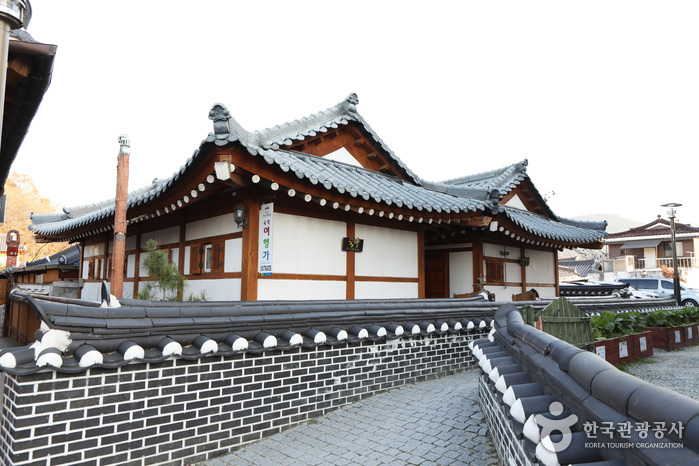
The Traveler, located in Jeonju, Jeollabuk-do, is a pleasant place to stay for families in particular. Apart from the charm of staying in a hanok, visitors can experience traditional games of chance like the Twelve Bridges Game and the Pumpkin Wheel Game. Each room is equipped with a bathroom/toilet, and residents can use the kitchen in the main house to prepare meals.
Veteran Kalguksu (베테랑칼국수)
432.6M 2025-10-28
135 Gyeonggijeon-gil, Wansan-gu, Jeonju-si, Jeonbuk-do
Veteran Kalguksu, located in Jeonju Hanok Village, has been operating since 1977, attesting to the great taste of their broth, made using sesame, meal, and eggs. The noodles are also cut much thinner than other restaurants, while maintaining their chewy texture. Another popular menu at the restaurant is their kongguksu.
◎ Travel information to meet Hallyu’s charm
The restaurant was a favorite spot for the cast of the drama “Twenty Five Twenty One.” Lead actress Kim Tae-ri, who played Na Hee-do, even visited for breakfast during her vlog shoots. She drew attention for enthusiastically finishing a bowl of noodles down to the last strand. Nearby is the private rental house “2521,” which was featured as Hee-do’s home in the drama, making it worth visiting after enjoying a meal at the restaurant.
2521 (이오이일)
453.8M 2025-07-18
5-19 Omokdae-gil, Wansan-gu, Jeonju-si, Jeonbuk-do
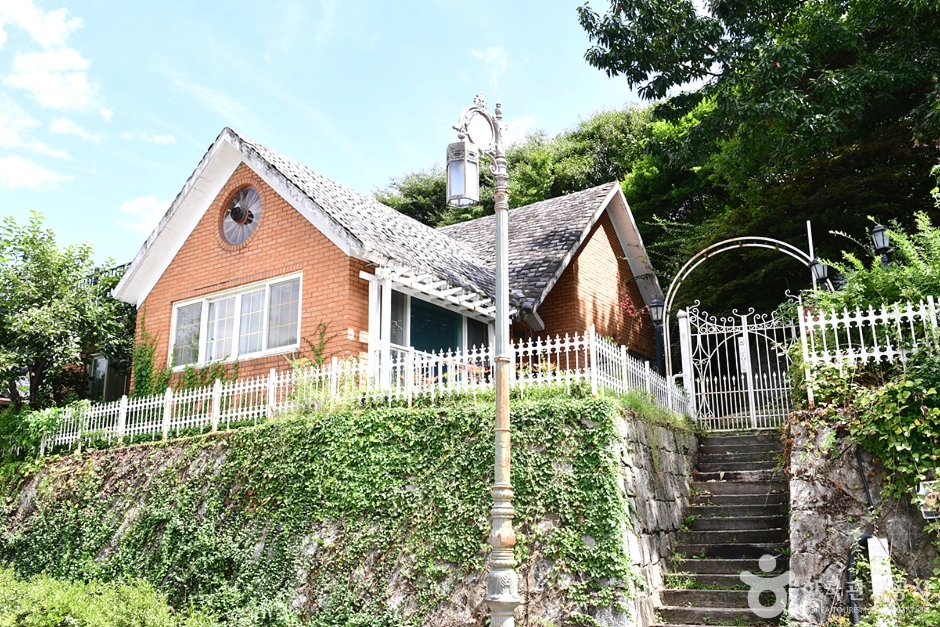
2521, pronounced yi-o-yi-il in Korean, a private guesthouse located in Jeonju Hanok Village. It was made popular as Na Hee-do's house in the drama "Twenty-Five, Twenty-One (2022)." Upon booking, the owner will set the scene just like from the drama. Guests can enjoy a barbeque party at the yard and the view of the hanok village from the rooftop. The guesthouse can accommodate up to eight guests.
 English
 한국어
한국어 日本語
日本語 中文(简体)
 Deutsch
 Français
 Español
 Русский


