
Docfinderkorea (닥파인더코리아)
8.2Km 2025-10-23
(#301, 3rd Floor), 72 Gangnam-daero 94-gil, Gangnam-gu, Seoul
Docfinderkorea is the largest and longest-running patient agency in Korea, chosen by more than 6,500 surgical patients from more than 101 countries.
Through our years of experience and specialized knowledge, we provide detailed information on hospitals and doctors in the aesthetic medical industry such as plastic surgery, dermatology, dentistry, and hair transplantation, as well as booking, interpretation service, price negotiation, and drug prescription. These make us the best medical tourism service provider, not just an agency that connects patients with medical institutions.
We have also received the highest satisfaction ratings from our patients since opening in 2012 thanks to our diverse concierge services, which include providing information on transportation, sightseeing, food, culture, and beauty (hair/nail/cosmetic products, etc.) to keep patients coming back to Korea for more.
With excellent staff members proficient in English, Korean, and third languages (seven languages available), Docfinderkorea strives to make more diverse patients feel comfortable in Korea.
Samsung Miracle Eye Clinic (삼성미라클안과의원)
8.2Km 2025-10-23
(7th,14th Floors), 115 Teheran-ro, Gangnam-gu, Seoul
Miracle in your eyes! World-class refractive surgery center in Seoul, Gangnam!
Samsung Miracle Eye Clinic! We will be in charge of your eye health! We present a new standard for ophthalmic treatment.
Since 2005, through over 20,000 surgical experiences and know-how accumulated for 25 years, we have led the present and future of ophthalmology only by focusing on the healthy eyes of patients.
We provide safe medical services to patients with satisfactory results, personalized medical care, and various genuine medical devices. Everything from appointment and questionnaire to consultations and surgeries is done smoothly in your language at our International Medical Center.
Glory Seoul Eye Clinic (글로리서울안과의원)
8.2Km 2025-10-23
2F, 3 Seocho-daero 74-gil, Seocho-gu, Seoul
At Glory Seoul Eye Clinic, the medical staff members are graduates of Seoul National University and have abundant surgical experiences spanning 15 years. They have also worked on over 100 thousand presbyopia and cataract surgery cases, a first in Korea. The clinic provides safer, skilled medical services with its CATALYS® laser and fourth-generation advanced vision correction equipment.
The top-notch medical staff treats various conditions such as All-Laser LASIK, All-Laser LASEK, lens implantation, presbyopia correction, cataract surgery, and retinal diseases.
The clinic provides services tailored to the needs of medical tourists who prioritize medical technology, service quality, and price. Additionally, convenient transportation access is another merit of the clinic as it is located in the vicinity of Gangnam Station, an area that represents Seoul. Glory Seoul Eye Clinic's priority is to improve the quality of life of medical tourists through vision improvement.
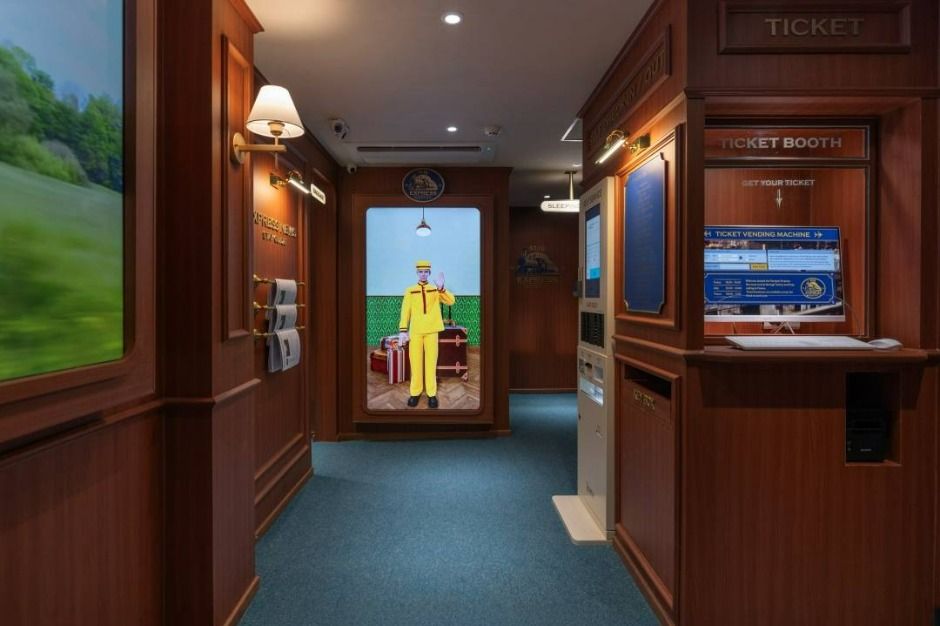
Stay Passport Express Spa Dangsan (스테이 패스포트 익스프레스 스파 당산점)
8.3Km 2025-04-09
92-1 Yangpyeong-ro, Yeongdeungpo-gu, Seoul
Stay Passport Express Spa Dangsan is inspired by European train trip and has a variety of rooms that sticks to the theme. Room types include COUCHETTE, which comes with a wine chiller and a turntable along with vinyl; SLEEPER 4-1 and 4-2, rooms with a turntable and a jacuzzi for four persons; and SLEEPER, a room with a turntable and a jacuzzi for two. The hotel has limited parking space so guests visiting with a vehicle are advised to inquire in advance for a nearby parking lot.
Bright St. Mary’s Eye Center (밝은성모안과의원)
8.3Km 2025-11-28
3rd, 16th, 17th, and 18th Floors, Cambridge Building, 110 Teheran-ro, Gangnam-gu, Seoul
Bright St. Mary’s Eye Center opened in 2000 and has been a trusted leader since the early generation of vision correction surgery in Korea. With decades of experience and a strong clinical track record, we provide safe, precise procedures such as LASIK, LASEK, and SMILE LASIK using advanced technology.
To ensure both surgical accuracy and a satisfying patient experience, we offer state-of-the-art equipment, highly experienced specialists, reasonable procedure costs, and a comprehensive postoperative care system.
Recognized by patients from Korea and around the world,
Bright St. Mary’s Eye Center (Gangnam Branch) invites you to enjoy a brighter, clearer everyday life.
LG Arts Center (LG아트센터)
8.3Km 2024-03-18
(LG Arts Center Seoul), 136, Magokjungang-ro, Gangseo-gu, Seoul
LG Arts Center is a cultural complex space designed by Tadao Ando, a world-renowned architect. Its architectural excellence and design have won great acclaim. The main facilities contain performance halls, Art Lounge, and Studio. The LG SIGNATURE Hall, a multipurpose performance hall, has a capacity of 1,300. Its state-of-the-art facilities and sound design have drawn many visitors and performances to the complex.
 English
 한국어
한국어 日本語
日本語 中文(简体)
 Deutsch
 Français
 Español
 Русский


