16.5Km 2021-05-07
Museom-ro 234-beongil 31-12, Munsu-myeon, Yeongju-si, Gyeongsangbuk-do.
+82-54-638-1127
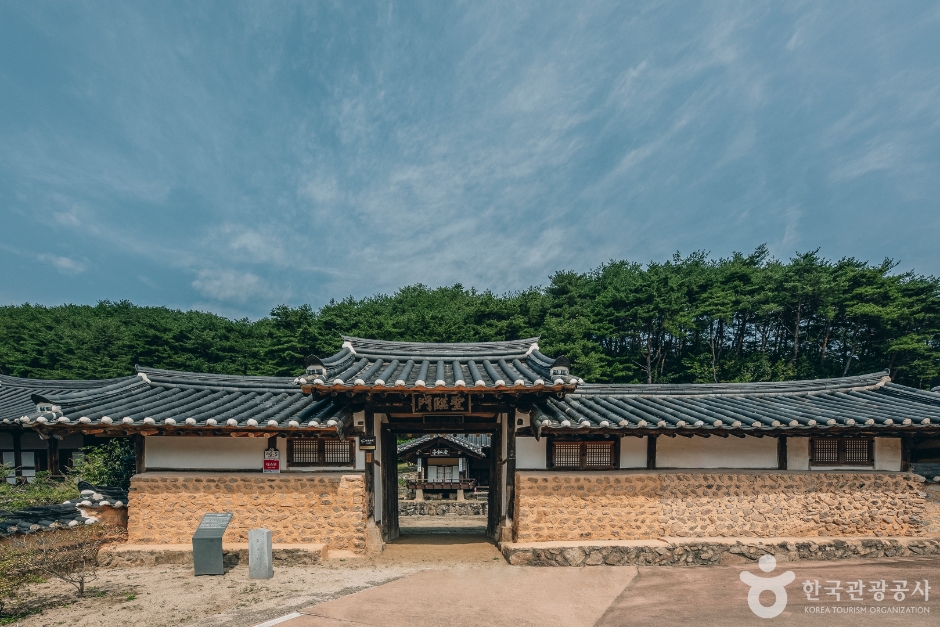
La Aldea Museom de la ciudad de Yeongju es una de las principales aldeas tradicionales de Corea que tienen tres lados rodeados por un río (Aldea Hahoe de Andong, Aldea Seonam de Yeongwol, Hoeryongpo de Yecheon, etc).
La unión de los arroyos Naeseongcheon y Yeongjucheon fluye velozmente por las faldas de los montes Taebaeksan y Sobaeksan; y abraza la aldea haciéndola parecer como una isla sobre tierra. El blanco arenal extendido por todo el río y los frondosos bosques crean fantásticas vistas naturales, y se estima que fue a mediados del siglo XVII cuando la gente empezó a poblar el sitio. La familia Park de Bannam y la familia Kim de Yean son las más predominantes, y en la actualidad se encuentran 48 familias que viven manteniendo las tradiciones.
Nueve casas hanok de esta aldea están registradas como Patrimonio Cultural de Gyeongsangbuk-do. Entre las que más destacadas están Haeudang y Manjukjae. Haeudang, Patrimonio Folclórico de Gyeongsangbuk-do Nº 92, se localiza a la izquierda tras cruzar el puente Sudogyo. La vivienda lleva el nombre poético de su primer dueño Kim Nak-pung. Otro tesoro para visitar sin falta es Manjukjae, una de las casas hanok más viejas de la zona. En el centro está Manungotaek, una edificación del siglo XIX y Tesoro Folclórico Nº 118. Esta es la casa de la familia de la mujer del poeta de renombre Jo Ji-hun, quien a través del poema Byeolli exaltó la belleza natural de la Aldea Museom.
La atracción que complementa el turismo en la Aldea Museom es el puente de árbol que sirvió de conexión entre la aldea y la otra orilla del río durante 350 años. El puente mide aproximadamente 150 metros, aunque su ancho mide apenas 30 cm. Ahora, con la construcción del Puente Sudogyo que es más moderno y seguro, el puente de árbol ha perdido su función, pero cada año los habitantes de la zona organizan diferentes celebraciones para revivir el pasado.
16.7Km 2025-09-09
Sudo-ri 243-1, Munsu-myeon, Yeongju-si, Gyeongsangbuk-do.
054-630-8709
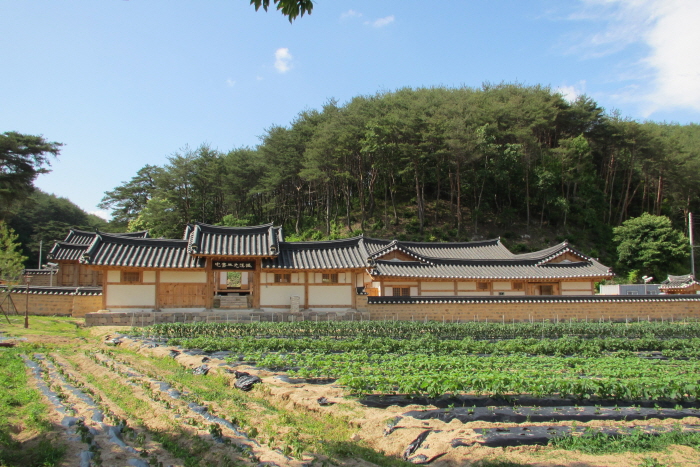
Los arroyos que la rodean dieron nombre a esta aldea: Sudori, o también Museom. Desde lejos se ve como una península, en la que se encuentran 9 tesoros culturales que constituyen una aldea con tradiciones antiguas del país. El Festival del Puente de Troncos es celebrado en cada otoño, y el camino del puente es seleccionado por el gobierno como uno de los 100 Mejores Caminos de Corea. Con la finalidad de levantar otra vez las tradiciones que se perdieron, este festival se celebra cada año con muchas actividades y eventos tradicionales.
17.1Km 2024-11-19
Jeonseo-ro 186, Pungcheon-myeon, Andong-si, Gyeongsangbuk-do.
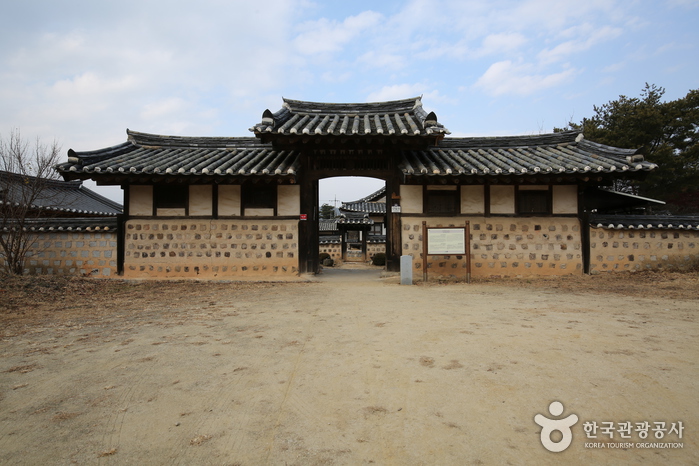
La aldea Hahoe de Andong ha preservado la arquitectura de las casas y la estructura de una aldea tradicional de la dinastía Joseon. Asimismo, hay que destacar que la aldea no fue creada en forma artificial; hay gente que realmente vive allí.
El río Nakdonggang rodea tres de los cuatro flancos de la aldea Hahoe (Material Tradicional de Importancia). La aldea lleva el nombre de Hahoe porque el río forma un remolino alrededor de la misma y también se la conoce con el nombre de Aldea del Río Circular. Al lado de la aldea crecen numerosos pinos y se extiende un llano de suave arena, y frente a este se despliegan bellísimos acantilados. Esta aldea pasó al conocimiento público por una escuela confuciana de la dinastía Joseon (1392-1910), de los maestros Gyeomam (seudónimo de Ryu Un-ryong, 1539-1601) y Seoae (seudónimo de Ryu Seong-ryong, 1542-1607), que realizaron grandes hazañas durante la Guerra de Imjin en 1592.
Gracias a que la aldea está rodeada de las montañas y el río, nunca ha sufrido una invasión. Esta es la razón porque sus casas siguen conservando sus estructuras originales. En la aldea residen 180 familias y son conocidas como el Grupo de la Aldea, pertenecientes a la familia Pungsan Ryu. Dentro de ella, hay casas que fueron designadas Tesoros Nacionales, como por ejemplo Yangjindang y Chunghyodang. Asimismo, hay material importante de tradiciones, como la Casa Hahoe Bukchon, la Casa Hahoe Namchon y Hahoe Juilje. Las casas así designadas calificadas ayudan a preservar el estado original de la aldea de la familia Ryu, especialmente sobre los pilares de referencia de Ryu Un-ryong y Ryu Seong-ryong.
La aldea Hahoe es también famosa por el exorcismo Byeolsingut, la danza de máscara y la Máscara Hahoetal. La Máscara Hahoe-Byeongsantal es la más antigua de Corea y se la usa en la Danza de Máscaras Byeolsingut. La Aldea Hahoe se volvió más popular desde la visita de la Reina Isabel II del Reino Unido en 1999, y durante este tiempo se ejecutaron muchos eventos de Danza de Máscaras.
El Festival Internacional de Danza de Máscaras de Andong tiene lugar entre fin de setiembre y principios de octubre, a lo largo de 10 días aproximadamente, dentro de la Aldea Hahoe y otras áreas designadas.
17.3Km 2024-05-14
Jeonseo-ro 206, Pungcheon-myeon, Andong-si, Gyeongsangbuk-do.
18.2Km 2024-11-18
Gwangdeoksolbat-gil 72, Pungcheon-myeon, Andong-si, Gyeongsangbuk-do
Buyongdae es un acantilado de unos 64 m de altura situado al final de la cordillera Taebaeksan. Desde la cima, se puede obtener una vista panorámica de la Aldea Hahoe de Andong. Su nombre fue tomado de una historia antigua de China y significa "loto". Cerca de este lugar se encuentran los templos Ogyeonjeongsa y Gyeomamjeongsa y la Academia Neoconfuciana Hwacheon Seowon.
18.3Km 2025-08-12
86, Gwangdeoksolbat-gil Pungcheon-myeon, Andong-si, Gyeongsangbuk-do
+82-54-854-2202 / +82-10-4520-3640
Ogyeonjeongsa House was established by Ryu Seong-yong (pen-name: Seoae, 1542-1607), a minister of Joseon, with the help of Buddhist monk Tanhong, as a place to study and educate his students. After building Wonjijeongsa House, Ryu wanted to build another house at the foot of Buyongdae Cliff amid a tranquil environment away from the village, but due to his financial situation he was unable to complete the building by himself. Then, the monk Tanhong helped him build Ogyeonjeongsa House, which took ten years (1576 to 1586) to complete, when Ryu was 45 years old. Later, Ryu Seong-yong was able to share warmth with his brother (Gyeomam), who lived in nearby Gyeomamjeongsa House. Ryu later lost his house in Hahoe in the great flood of the Nakdonggang River in 1605, and retired to Ogyeongjeongsa House where he wrote Jingbirok (The Book of Correction, National Treasure 132), a memoir of the Imjin War (Japanese Invasion of Korea in 1592). The house’s guestrooms include Sesimjae (meaning ‘having a mind to this place to achieve at least one in ten thousand things,’ inspired by the I Ching or The Book of Changes), which was used by Ryu as a schoolhouse and has two small rooms between the maru gamheonrok (wooden floor, meaning ‘looking up at the sky and down at the blue water,’ inspired by Wang Xizhi’s poetic diction); Wonlakjae (meaning ‘waiting for a friend’s visit,’ inspired by the Analects of Confucius), in which Ryu himself resided and wrote Jingbirok; and the maru aeoheon (meaning ‘I also love my hut,’ taken from a poem by Chinese poet Tao Yuanming), which measures two kan (a unit of measurement referring to the distance between two columns).
18.3Km 2024-05-17
Dosanseowon-gil 154, Dosan-myeon, Andong-si, Gyeongsangbuk-do.
La Academia Neoconfuciana Dosan Seowon fue fundada en 1574 (séptimo año del rey Seonjo), por discípulos confucianos y otros que apreciaban las memorias del ministro Lee Hwang. Era una academia donde Lee Hwang, cuyo seudónimo era Toegye, instruyó a sus estudiantes y se concentró en sus estudios académicos. En 1574, ya durante la dinastía Joseon (1392-1910), los eruditos confucianos y otros literatos establecieron un mausoleo denominado Sangdeoksa, que en 1969 fue designado Tesoro Nacional. Después de ubicar el mortuorio y ejecutar los ritos sacrificiales, finalizaron con la construcción de la academia mediante la edificación de Jeongyodang (Tesoro Nacional) y las alas Este y Oeste (donde los estudiantes podían estudiar). Cuando se terminó de edificar la academia, el rey Seonjo hizo entrega de la tabla con el nombre de la institución. Cuando se entra por la puerta principal, se podrá ver a la academia Dosan Seowon sobre la derecha. La estructura de esta construcción es simple con pilares cuadrados y vigas sencillas insertadas perpendiculares a los pilares. Entrando por la puerta Jindomun, hallará la Gwangmyeongsil donde se guardaban los libros. También verá el Jeongyodang, edificio principal, y las alas Este y Oeste. Detrás de Jeongyodang se encuentra el Mausoleo Sangdeoksa y el Jangpangak, un árbol para imprimir las "12 Canciones de Dosan". El Okjingak que fue reconstruido en 1970, funciona actualmente como expositor de las reliquias del maestro Toegye, tales como sus objetos, muebles y libros favoritos, entre otras.
18.4Km 2025-08-12
51, Hahoegangbyeon-gil, Pungcheon-myeon, Andong-si, Gyeongsangbuk-do
+82-54-857-3410
Rakkojae, meaning “a place where one can enjoy ancient traditions and rest one’s soul”, is located near the beautiful ferry on the Nakdonggang River in Hahoe, Andong. After passing by a pine tree decorated with traditional Korean lanterns and entering the cozy courtyard, visitors will find four well-maintained houses with thatched-roofs made with local rice straw. As Rakkojae is some way from the Hahoe Village, and is adjacent to the Nakdonggang River, guests can enjoy walking along the ferry and the walkway while appreciating the beautiful scenery of the river and Buyongdae Cliff with its serene atmosphere. Rakkojae has three guest accommodations – the anchae at the front, the sarangchae and the byeolchae on the sides, and the munganchae. While the anchae has two rooms, a kitchen and a daecheong (main floored room), both the sarangchae and the byeolchae consist of a daecheong and one room. The maximum number of guests per room is ten so that guests can enjoy their stay with ease. Each room is decorated with hanji (traditional Korean paper handmade from mulberry trees) and features a simple built-in closet, ceiling-type air conditioning, and a modern bathroom with a toilet and a bathtub made of Hinoki cypress. In particular, the munganchae has a red clay jjimjilbang (Korean dry sauna) supplied with mugwort that is popular among both domestic and foreign guests. Guests often enjoy relaxing at Rakkojae by appreciating the sunshine and breeze while lying on the daecheong floor, walking barefoot on the earthen ground, and drinking makgeolli (unrefined rice wine)among other activities. The owners of Rakkojae hope that it will be a place where guests can heal their tired body and mind and experience the true atmosphere of Korea. The Pine Wood of Mansongjeong Pavilion (Natural Monument No. 473) situated next to Rakkojae is also a good place for a stroll. Furthermore, the hotel serves a hearty breakfast consisting of heotjesatbap (Andong-style bibimbap with soy sauce) and salted grilled mackerel.
18.6Km 2025-07-01
68, Hahoejongga-gil, Andong-si, Gyeongsangbuk-do
“Andonog Hahoe Yangjindang,” located in the Hahoe Folk Village, is Treasure No 306 and the residence of a family with the surname Pungsan Ryu. A tablet read Ipam Antique House, named after Ipam Ryu Jung Yeong (1515 - 1573), is hung on the entrance. Yangjindang is named after the nickname of Ryu Yeong (1687 - 1761), the sixth generation of Gyeongam Ryu Un Ryong, son of Ipam. The name means “nourishing well one's own nature.” The Hanok stands over the entrance, with a well-polished floor that is grand yet friendly. One of the characteristics of the house is that it includes Sarangcha or detached building, which reflects the architecture from the Goryeo period, and Anchae or main building in the architecture style from the Joseon period.
It is expected that such co-existence was made possible because of the repairs done after Imjin War. How fortiunate that the antique house has been preserved until now! The well-tended garden shows the commitment of the descendants to maintaining the space. Rooms are rather simple compared to the grand exterior of the house. Traditional mother-of-pearl furniture, tableware in the cupboard, randomly ceramics placed draw attention. The house resembles a small folk museum. Why not enjoy some traditional folk games during your stay? There is a variety of play tools such as yut, tuho, jegi, tops, and kites. Experience programs such as gayangju brewing, rice cake and traditional dessert making, and flower tea are conducted by the first daughter-in-law of the house, depending on the season.
19.6Km 2025-08-12
1714-11, Sugogyonggye-ro Imdong-myeon, Andong-si, Gyeongsangbuk-do
+82-54-822-6661
'Suaedang Traditional House was built by Ryu Jin-geol, also known by his pen-name of Suae, in 1939. This hanok-style house consists of three buildings that measure 29-kan (a traditional measurement that corresponds to the space between two columns) in total.
The main room, or jeongchim (7-kan at front and 2-kan at sides), has a half-hipped roof, and forms a‘ㄱ’-shape with the storeroom (10-kan at front), which also has a half-hipped roof. Originally located at 612 Sugok-dong, Andong-si, the house was relocated from a slight slope to a flat piece of land due to the construction of Imha Dam in 1987. Consequently, the Jeongchim was rebuilt at a lower level than before.
The Suaedang was renovated by modernizing the old-style facilities including the kitchen, toilets, and washroom without changing their external features, while the rooms and daecheongmaru (main floored room) were decorated with red clay and natural paint. Suaedang, with its beautiful panoramic view of the lake, was designated as Gyeongsangbuk-do Cultural Property No. 56.