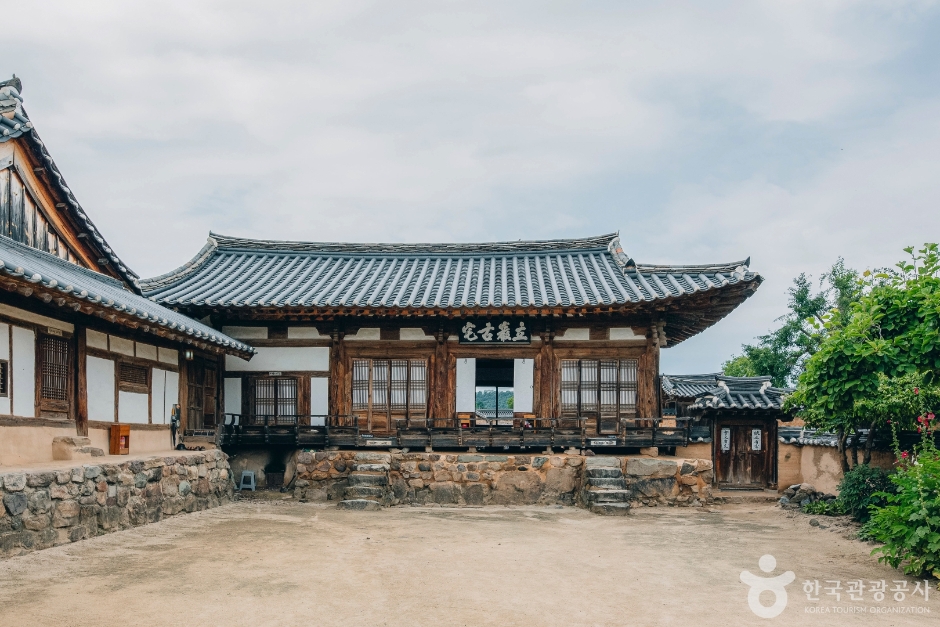
Yangjindang (하회 양진당)
17.7Km 2025-07-01
68, Hahoejongga-gil, Andong-si, Gyeongsangbuk-do
“Andonog Hahoe Yangjindang,” located in the Hahoe Folk Village, is Treasure No 306 and the residence of a family with the surname Pungsan Ryu. A tablet read Ipam Antique House, named after Ipam Ryu Jung Yeong (1515 - 1573), is hung on the entrance. Yangjindang is named after the nickname of Ryu Yeong (1687 - 1761), the sixth generation of Gyeongam Ryu Un Ryong, son of Ipam. The name means “nourishing well one's own nature.” The Hanok stands over the entrance, with a well-polished floor that is grand yet friendly. One of the characteristics of the house is that it includes Sarangcha or detached building, which reflects the architecture from the Goryeo period, and Anchae or main building in the architecture style from the Joseon period.
It is expected that such co-existence was made possible because of the repairs done after Imjin War. How fortiunate that the antique house has been preserved until now! The well-tended garden shows the commitment of the descendants to maintaining the space. Rooms are rather simple compared to the grand exterior of the house. Traditional mother-of-pearl furniture, tableware in the cupboard, randomly ceramics placed draw attention. The house resembles a small folk museum. Why not enjoy some traditional folk games during your stay? There is a variety of play tools such as yut, tuho, jegi, tops, and kites. Experience programs such as gayangju brewing, rice cake and traditional dessert making, and flower tea are conducted by the first daughter-in-law of the house, depending on the season.

Academia Neoconfuciana Dosan Seowon (도산서원) [Patrimonio Cultural de la Humanidad de la Unesco]
18.2Km 2024-05-17
Dosanseowon-gil 154, Dosan-myeon, Andong-si, Gyeongsangbuk-do.
La Academia Neoconfuciana Dosan Seowon fue fundada en 1574 (séptimo año del rey Seonjo), por discípulos confucianos y otros que apreciaban las memorias del ministro Lee Hwang. Era una academia donde Lee Hwang, cuyo seudónimo era Toegye, instruyó a sus estudiantes y se concentró en sus estudios académicos. En 1574, ya durante la dinastía Joseon (1392-1910), los eruditos confucianos y otros literatos establecieron un mausoleo denominado Sangdeoksa, que en 1969 fue designado Tesoro Nacional. Después de ubicar el mortuorio y ejecutar los ritos sacrificiales, finalizaron con la construcción de la academia mediante la edificación de Jeongyodang (Tesoro Nacional) y las alas Este y Oeste (donde los estudiantes podían estudiar). Cuando se terminó de edificar la academia, el rey Seonjo hizo entrega de la tabla con el nombre de la institución. Cuando se entra por la puerta principal, se podrá ver a la academia Dosan Seowon sobre la derecha. La estructura de esta construcción es simple con pilares cuadrados y vigas sencillas insertadas perpendiculares a los pilares. Entrando por la puerta Jindomun, hallará la Gwangmyeongsil donde se guardaban los libros. También verá el Jeongyodang, edificio principal, y las alas Este y Oeste. Detrás de Jeongyodang se encuentra el Mausoleo Sangdeoksa y el Jangpangak, un árbol para imprimir las "12 Canciones de Dosan". El Okjingak que fue reconstruido en 1970, funciona actualmente como expositor de las reliquias del maestro Toegye, tales como sus objetos, muebles y libros favoritos, entre otras.
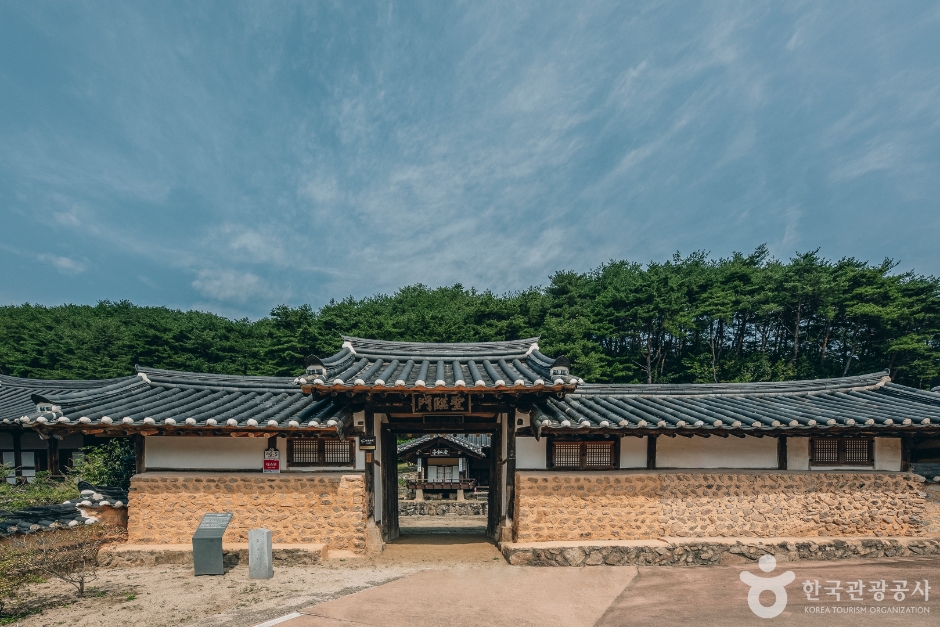
Nosongjeong Head House (노송정종택(퇴계생가))
18.6Km 2025-06-17
46-5, Onhyejungma-gil, Andong-si, Gyeongsangbuk-do
Nosongjeong, also called the “Placenta Chamber of Yi Hwang” (pen-name: Toegye, 1501-1570), is named after the pen-name ‘Nosong’ of Yi Hwang’s grandfather Yi Gye-yang. It is said that Yi Gye-yang abandoned his government position after he fell victim to the Gyeyujeongnan Suppression (a coup d’état instigated by Suyang Prince, who became King Sejo of Joseon, in 1455) and returned to his hometown in Bonghwa, where he devoted himself to teaching students. He built the house in its current location by a coincidence of saving a monk. The Placenta Chamber of Yi Hwang, which is situated deep in the house, consists of an Ondol (Korean floor heating) Room and a small numaru (upper floor) with a unique design. The gate bears a signboard with the word ‘Seonglimmun’ written by Hakbong Kim Seong-il (a direct disciple of Yi Hwang), which derives from the fact that the mother of Yi Hwang, Chuncheon Park, had a conception dream about Confucius entering the main gate with his disciples. Nosongjeong has an Ondol room in the west, with a numaru and a maru (wooden floor) in the east, which could accommodate 20 to 30 students. The signboard of Noseongjeong is believed to have been written by Han Seok-bong (a leading calligrapher of the mid-Joseon period). The structure of Nosongjeong is considered an invaluable resource for studies on the principles of building a half-hipped roof. The shrine is situated east of Nosongjeong, between which there was a juniper aged over 400 years from which the name of Nosongjeong was originated as people called the juniper as an old (no) pine (song). However, the original juniper has been replaced by its younger juniper tree with an umbrella shape of the top.
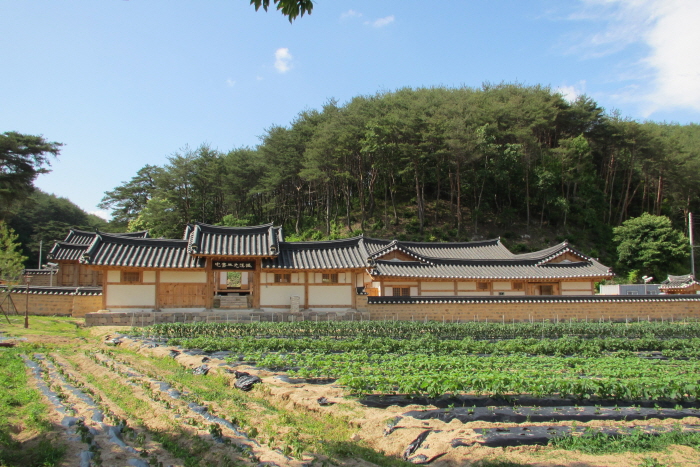
On-gye Jongtaeg (Sambaegdang)/ 온계종택 삼백당
18.7Km 2025-03-04
20, Onhyejungma-gil, Andong-si, Gyeongsangbuk-do
+82-10-2988-3435
Ongyejongtaek Sambaekdang is a hanok restored on the site where Ongye Yihae, older brother of Toegye Yi Hwang, used to live. Being the headquarters of the rightoue army against the Japanese, the house was burned by the Japanese military authority in 1896 but restored with support from the government and others, and it was finally completed in May 2011. It is the 500-year old chestnut tree, symbol of the village, which welcomes guests first. The house itself is not old but the atmosphere of the family dominates the building with dignity. Small decorations such as a wooden table, floor cushions, and mother-of-pearl furniture pieces are all nice to look at. There are 7 rooms altogether with bathrooms or air conditioners depending on the room size. There are a shared shower facility and a laundromat outside the rooms, with shared kitchen, warehouse, and a big floor. Cooking is not allowed in the rooms but outdoor barbecue facilities are available for a group of 10 or more who inquire in advance. Tea ware pouch making or Hanji craft programs are conducted based on the reservation at a charge. In the village where the house is located, there are several historic and natural sites such as Nosongjeongjongtaek where Toegye Yihwang was born, Nongamjongtaek, Toegyejongtaek, Dosanseowon Confucian Academy, Advanced Center for Korean Studies, Cheongryangsa Temple, and Dosan Spa.
 Español
 한국어
한국어 English
 日本語
日本語 中文(简体)
 Deutsch
 Français
 Русский


