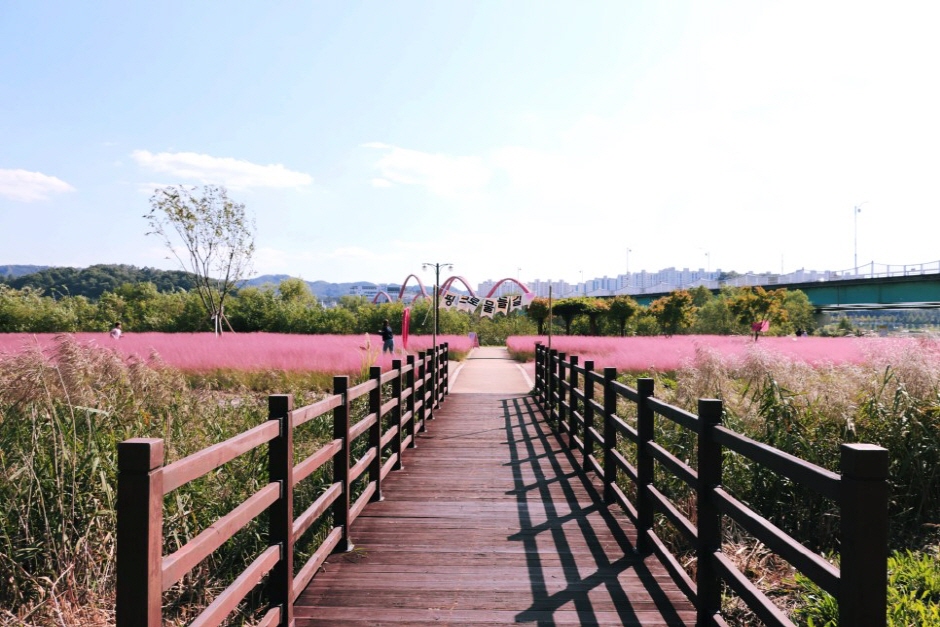
Grass One (그라스원)
14.4Km 2023-07-10
Yuksa-ro 273, Andong-si, Gyeongsangbuk-do
Grass One es un sendero de paseo ribereño que sigue el curso el río Nakdonggang, atravesando la ciudad de Andong. Si se camina por este sendero, al llegar al lado norte del puente Yeonggadaegyo, uno se encuentra con el Parque Temático Grass One, lleno de una diversidad de flores y plantas. Dependiendo de las estaciones, este lugar tiene un encanto diferente. En especial se destaca el otoño, cuando los arbustos rosados pink muhly dominan el paisaje, convirtiéndolo en la mejor zona para fotos. En los alrededores también encontramos el Parque de los Cisnes y un sendero para bicicletas con vistas pintorescas.
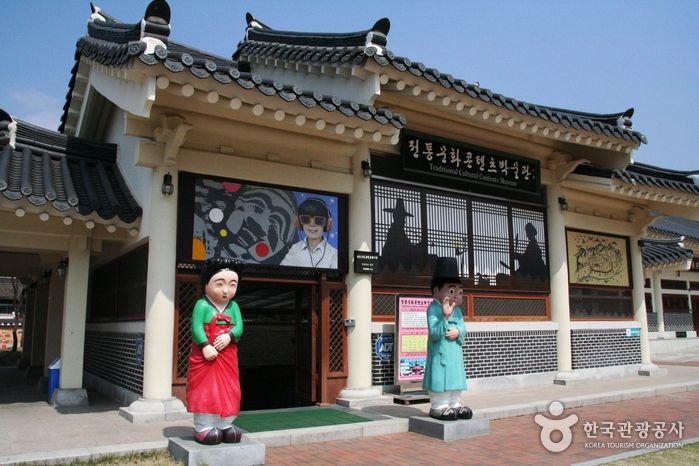
Museo de Contenidos de Cultura Tradicional (전통문화콘텐츠박물관)
14.5Km 2023-07-10
Seodongmun-ro 203, Andong-si, Gyeongsangbuk-do
El Museo de Contenidos de Cultura Tradicional, ubicado en la ciudad de Andong, es el primer museo de cultura digital en Corea, que expone únicamente contenido digitalizado, llamado "reliquias digitales". Este museo digital de última generación ofrece información y actividades prácticas relacionadas con la cultura tradicional coreana, como parte de un nuevo concepto en cuanto a lo que debe brindar este tipo de instituciones. Este museo es una contraparte de NEWSEUM (News+Museum) en EE.UU., y Sigureden, un museo y centro de exposiciones digitales en Japón, y aprovecha la tecnología informática interactiva para interpretar las tradiciones del pasado y dar a los visitantes la oportunidad de aprender los valores y principios fundamentales detrás de las costumbres tradicionales coreanas.
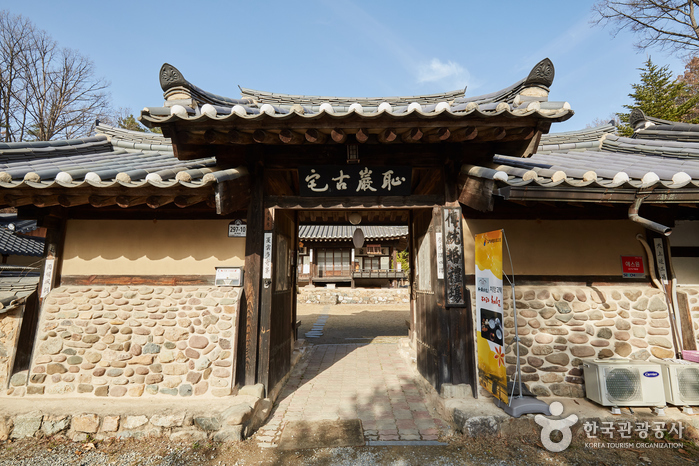
CHIAMGOTAEK / 치암고택
14.6Km 2025-08-12
297-10, Toegye-ro, Andong-si, Gyeongsangbuk-do
+82-54-858-4411, +82-10-3530-4413
Chiam Old House in Anmak-dong, Andong, Gyeongsangbuk-do is an old traditional Korean house once owned by Lee Man-hyeon(pen name Chiam) who was the 11th-generation descendant of “Toegye” Yi Hwang, one of the most prominent Korean Confucian scholars of the Joseon Dynasty and a high-ranking government official during the reign of King Gojong. This house was originally located in Wonchon-ri, Dosan-myeon but was relocated to its current location in 1976 after a flood caused by the collapse of Andong Dam. Chiam Old House consists of 22 rooms, 5 gates, and 1 detached building. The main building is taller than the detached building. One of the unique features of this detached building is that it has both gable roof and gambrel roof on either side. Listed as Gyeongsangbuk-do Folklore Material No. 11, Chiam Old House now serves as a guesthouse for those wishing to experience an old traditional Korean house. The rooms that are open to guests are “Seongmyeongjae,” “Gyeongeopjae,” and “Nakseongdang.” The large room called “Bakkatchae,” or outer building, is the most comfortable one to stay in for a night, since it's furnished with kitchen, TV, air conditioner, and bathroom. “Seongmyeongjae” means “honesty and integrity” in Korean. It’s an “ondol (Korean floor heating system)” room typical of any traditional Korean house, where you have to sleep on the floor. "Gyeongeopjae" is the most popular one among the guests, and its name means “unselfish and reverent.” The rooms next to the gate called “Ilgeonjae,” “Seokcheonjae,” and “Hakgujae” located along the wall are great places to stay if you want to see the surroundings and the old house at the same time. “Jamnyongdang” on the east side of the main building is named after the small pond in the yard, and it means “to strive to be a man of virtue like the dragon flying in the sky.” There are lots of beautiful flowers in the small garden in complete harmony with the old house and surrounding mountains, making it a great place to take a leisurely walk as you experience the history.
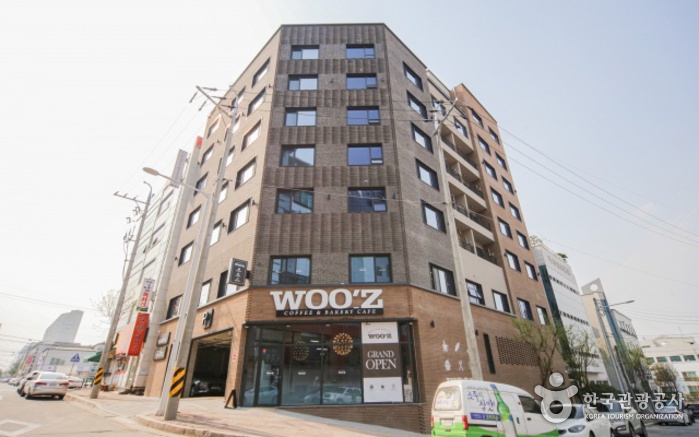
Kase Hotel (formerly Andong Kase) (케이스호텔((주)안동케이스))
14.9Km 2025-07-21
60-16, Gangnam 2-gil, Andong-si, Gyeongsangbuk-do
This 8-story hotel is located about 15 min by car from Andong Station and Andong Terminal. Its riverside location at Nakdonggang River offers guests an opportunity to take a walk along the river. There are 42 rooms in total, in seven types, all furnished with elegance in mind with low-saturation walls, gray curtain, and gold-framed furniture. All rooms have Netflix streaming access. Family Room, Suite Party Room, and Luxury Party Rooms have refrigerators, induction stoves, microwave ovens, and kitchen sinks for cooking. These rooms also have a mini swimming pool for children, making them especially popular in summer. Luxury Party Room, which can accommodate up to 8 guests, has a living room separated from the bedroom, allowing easier management of space. Both rooms also have a TV. Andong’s tourist sites, such as Imcheonggak House, which is Treasure No. 182 of Korea, Andong Jjimdak Alley, and Woryeonggyo Bridge is reachable by car in 10 min.
Gyeongbokgung (경복궁)
15.0Km 2025-06-02
4439, Chunghyo-ro, Andong-si, Gyeongsangbuk-do
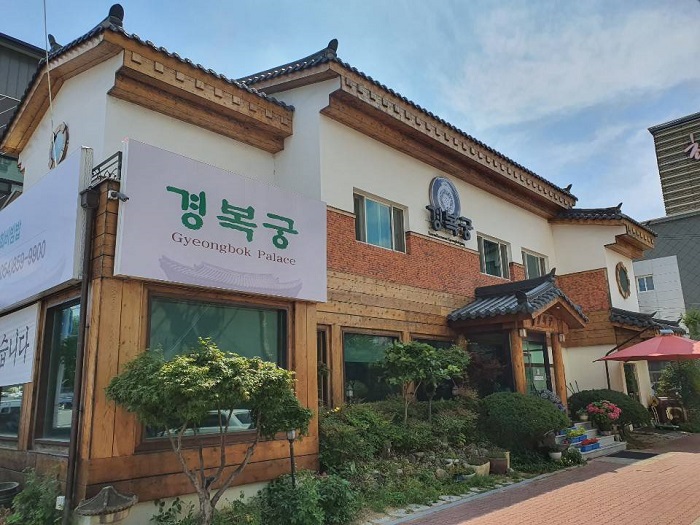
Gyeongbokgung is a restaurant specializing in Korean beef cuisine. Popular menu items include hanu yukhoe bibimbap (Korean beef tartare bibimbap) and hanu gui (grilled Korean beef). They offer neatly prepared side dishes made with fresh seasonal ingredients, and they are renowned for the delicious taste of their food. Located near Andong Hahoe Village and Andong City Hall, there are plenty of attractions nearby.
Residencia Tradicional Imcheonggak en Andong (안동 임청각)
15.5Km 2023-02-22
Imcheonggak-gil 63, Andong-si, Gyeongsangbuk-do.
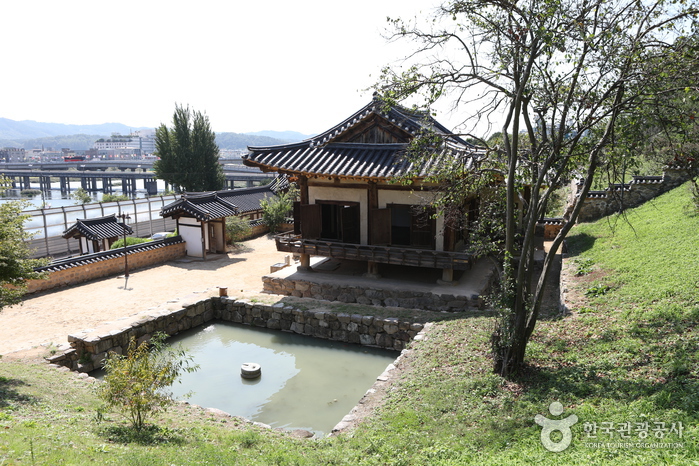
Imcheonggak es una de las casas tradicionales existentes más grandes de Corea, posee una historia de 500 años, y pertenece a la familia Lee de Goseong, en Andong. Es una casa elegante, con el tejado tradicional, que poseía 99 habitaciones, aunque más de la mitad fue derrumbada durante el período de la invasión japonesa. Perteneciendo a una familia de clase alta de la Época Joseon, presenta una amplia variedad de instalaciones anexas, varias subconstrucciones, pabellones, y un hermoso jardín. La casa fue construida por el 6º hijo de un funcionario de importante cargo que correspondía al reinado de Sejong (1418-1450) en la época de Joseon, quien fascinado por la belleza natural de la zona, había decidido instalarse en el lugar. Luego con el tiempo, los hijos de los hijos, han extendido la casa y habían levantado más construcciones anexas, edificaron más instalaciones, pabellones, etc.

Puente Woryeonggyo (월영교)
16.8Km 2024-07-18
Sanga-dong, Andong-si, Gyeongsangbuk-do.
Abierto en 2003, el puente Woryeonggyo (de 387 metros de largo y 3,6 metros de ancho) es el camino pedestre de su tipo en madera más largo de Corea. El puente tiene una leyenda, que habla de una viuda que hizo un par de zapatos de cáñamo a partir de su cabello, mientras sentía la muerte de su esposo. En conmemoración de su pureza y lo noble de su amor, el puente fue designado en el estilo de mituri (cáñamo). En el centro del puente se ubica el pabellón Woryeongjeong.
Museo Folclórico de Andong (안동민속박물관)
17.3Km 2022-10-05
Minsokchon-gil 13, Andong-si, Gyeongsangbuk-do.
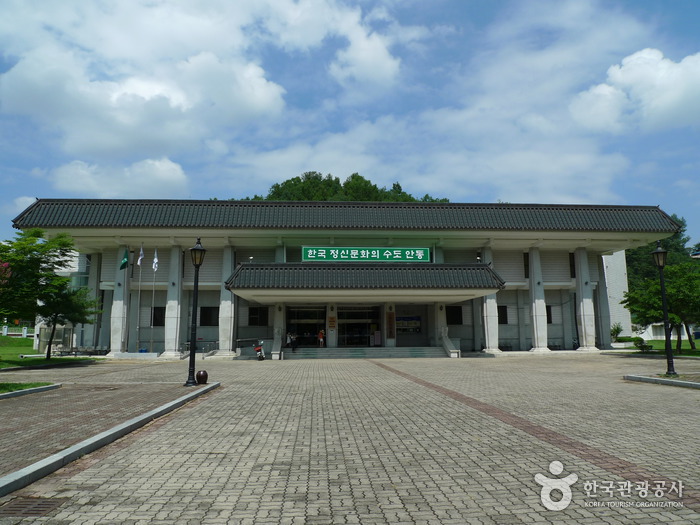
El Museo Folclórico de Andong es donde se pueden experimentar la cultura confuciana y los juegos tradicionales de Corea. La ciudad de Andong es famosa por la cultura confuciana y las cuatro ceremonias tradicionales (las ceremonias de la juventud, el matrimonio, el funeral y el culto a los antepasados). Aquí, los visitantes pueden ver el estilo de vida de los antiguos coreanos. El museo interior se divide en tres salas de exposición. En la Sala de Exhibición 1, se proyecta un vídeo que explica el nacimiento de un ser humano hasta su infancia. En la 2, el proceso de cómo se llega a ser adulto, hasta su muerte. En la Sala de Exhibición 3, la vida cotidiana y los juegos tradicionales se muestran a través de miniaturas. Incluyendo herramientas de labranza antiguas y el proceso de toma de tela, las reliquias populares de este museo se suman a 3.700 artefactos. También hay un sistema visual de vídeos. Después de ver las exposiciones interiores, la exposición al aire libre es un complejo de parques, con casas rurales tradicionales y bienes culturales. También podrá ver una muestra que representa el estilo de vida de Andong, con casas de piedras con techo de paja y un molino de agua.
Pueblo Folclórico de Andong (안동민속촌)
17.3Km 2024-05-09
Seonggok-dong, Andong-si, Gyeongsangbuk-do.
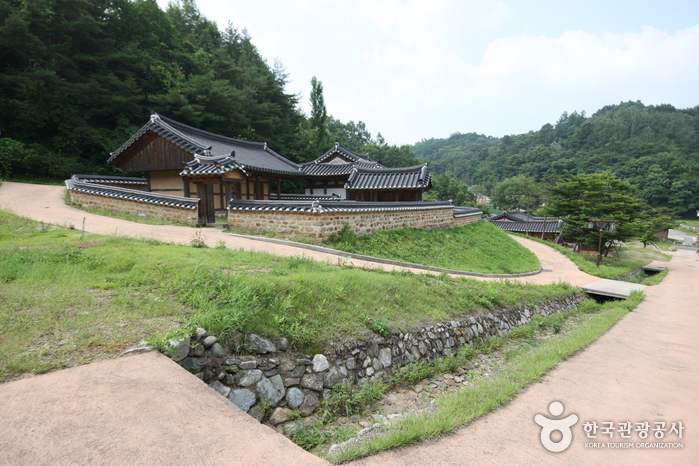
Originariamente, el Pueblo Folclórico de Andong fue parte del Museo Tradicional de Andong, que quedó sumergido bajo agua después de la construcción de la represa de Andong. Las casas tradicionales cubiertas de paja fueron transferidas a la ubicación actual. Ahora, la entrada de la aldea son dos enormes postes de tótem con tallados de expresiones cómicas. Junto a la entrada se ubica un monumento donde está grabado el poema Gwangya del famoso poeta de Andong y demócrata activista Yuk-Sa Lee (1904-1944). Una colina tras este monumento lleva el camino al lugar de filmación del popular K-Drama Taejo Wanggeon, basada en la historia de la vida el rey Taejo. Debido a sus raíces históricas, el área de Andong se volvió muy popular como lugar de filmación de diferentes novelas. Cuando el rey Taejo fundó la dinastía de Goryeo (918-1392), los líderes de la aldea local y parientes apoyaron su liderazgo, provocando una gran influencia en la región de Andong. Aproximadamente se utilizaron 20 edificios de la era de Goryeo durante la filmación de la novela Taejo Wanggeon, incluyendo las oficinas gubermantales y residencias privadas.
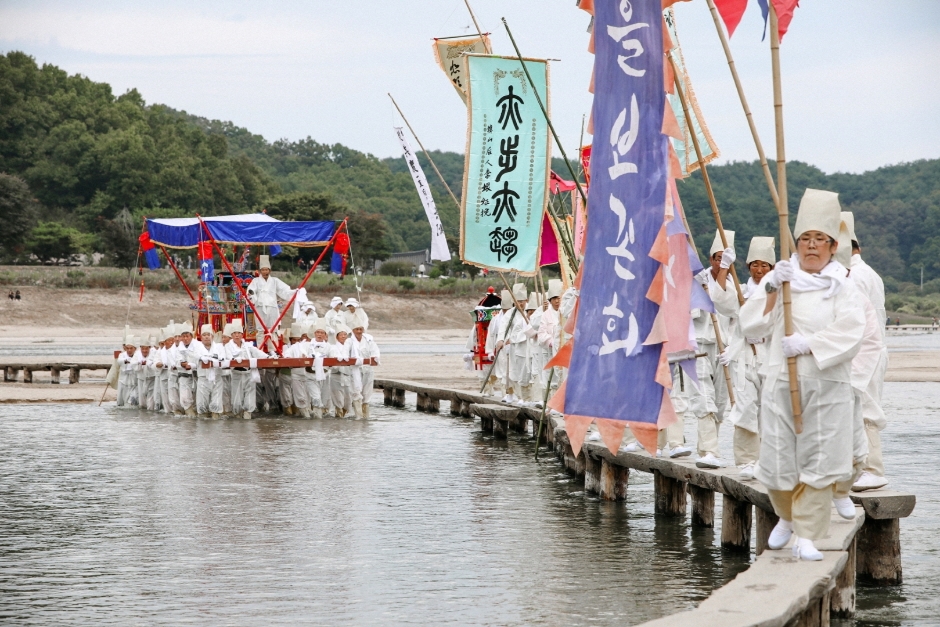
Festival del Puente de Troncos de Museom en Yeongju (영주무섬외나무다리축제)
17.6Km 2025-09-09
Sudo-ri 243-1, Munsu-myeon, Yeongju-si, Gyeongsangbuk-do.
054-630-8709
Los arroyos que la rodean dieron nombre a esta aldea: Sudori, o también Museom. Desde lejos se ve como una península, en la que se encuentran 9 tesoros culturales que constituyen una aldea con tradiciones antiguas del país. El Festival del Puente de Troncos es celebrado en cada otoño, y el camino del puente es seleccionado por el gobierno como uno de los 100 Mejores Caminos de Corea. Con la finalidad de levantar otra vez las tradiciones que se perdieron, este festival se celebra cada año con muchas actividades y eventos tradicionales.
 Español
 한국어
한국어 English
 日本語
日本語 中文(简体)
 Deutsch
 Français
 Русский


