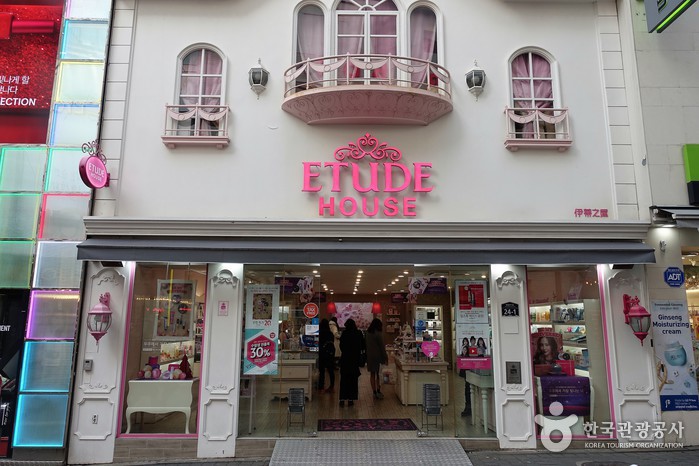
Etude house myeongdong chungmuro / 에뛰드하우스(명동충무로점)
6.7Km 2025-08-11
24-1, Myeongdong 8na-gil, Jung-gu, Seoul
Etude House is a cosmetics brand that sells makeup, hair, and fragrance products. The Etude House Myeongdong Chungmuro Branch, located in the heart of a major shopping district, carries a wide selection of cosmetics that customers may test before purchasing. Moreover, the brightly lit store interior, designed with a princess bedroom decor, adds fun to the experience.
It is visited largely by foreign customers from Japan, Thailand, China and other East Asian countries. To facilitate an easy shopping experience, the shop always has foreign staff available to assist. The most popular items include creams made using snail extract, lipsticks and eye shadows. Etude House also has many sales on facial mask packs, and tax refunds are available.
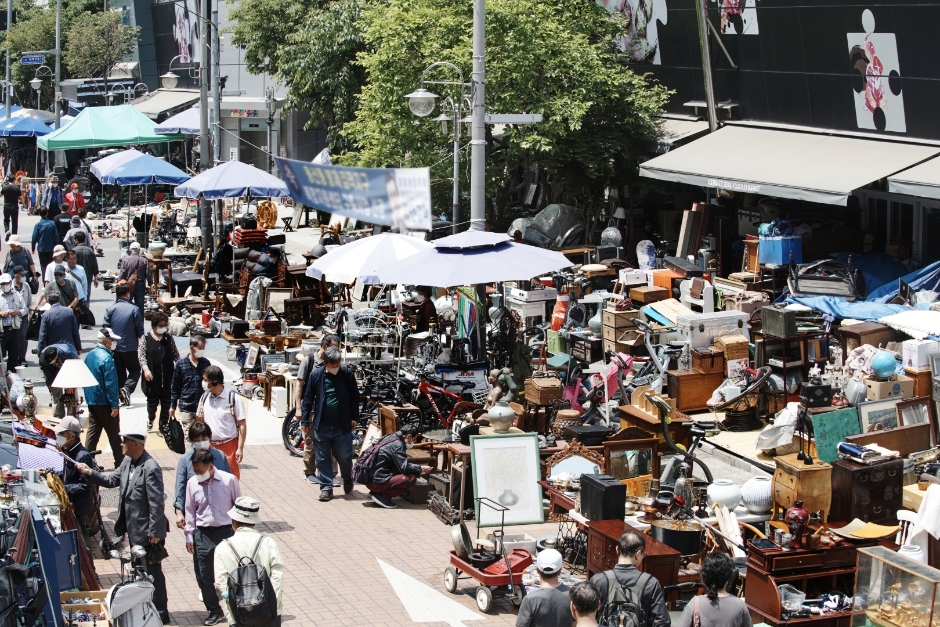
Seoul Folk Flea Market (서울 풍물시장)
6.7Km 2025-04-11
21 Cheonho-daero 4-gil, Dongdaemun-gu, Seoul
The Seoul Folk Flea Market is located around Cheonggyecheon Stream's Hwanghakgyo Bridge and Sinseol-dong Station and is on its way to becoming a famous tourist attraction along with the already famous Cheonggyeocheon Stream. The Seoul Folk Flea Market is one of the major folk flea markets preserving the culture of the traditional Korean marketplace and drawing in visitors with a range of folk items that embody the unique charm of Korea. Folk items include everyday items, souvenirs, traditional goods and even traditional foods, allowing visitors to enjoy shopping and eating all under the same roof.
The Seoul Folk Flea Market originated from the flea market in Hwanghak-dong where many street shops and vendors gathered around Cheonggyecheon Stream before it was restored and modernized into its current state. The market was relocated to the Dongdaemun History & Culture Park (Formerly Dongdaemun Stadium) while the Cheonggyecheon Stream was undergoing restorations, and was moved back to Cheonggyecheon Stream sometime later. Seoul City aims to market Seoul Folk Flea Market as a new shopping spot at its current location, the former site of Sungin Girls' Middle School on Cheonggyeo 8-ga Street, near Cheonggyeocheon Stream to develop the Korean representative folk flea market-related tourism industry.
The main items of the Seoul Folk Flea Market include a diverse range of folk items, traditional crafts, local specialties and fashion items. You may also enjoy a range of foods and snacks including traditional Korean food and fusion cuisine from all over the world. What is special about the market is that you can find rare goods and authentic traditional items that cannot be found at other markets. The market atmosphere is a mix of old, revered traditions and modern aspects, providing visitors with a great shopping experience. The Seoul Folk Flea Market is truly a traditional flea market well worth visiting.
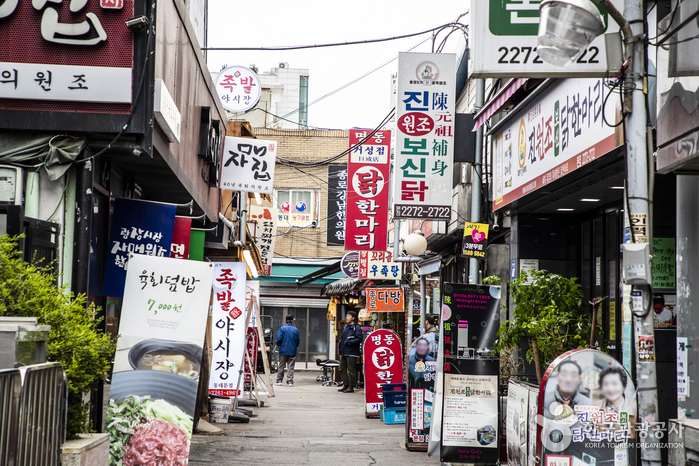
Dongdaemun Dak Hanmari Alley (서울 동대문 닭한마리 골목)
6.7Km 2024-03-04
37-7, Jongno 5(o)-ga, Jongno-gu, Seoul
Located near the Dongdaemun Market, Dongdaemun Dak Hanmari Alley gets its name from the restaurants serving dak hanmari (whole chicken soup) that line the alley. Dak hanmari (whole chicken soup), literally “one whole chicken” in Korean, is a dish where a whole chicken is boiled in a soup and served with the alley’s special sauce. After the diners eat the meat, the broth is used to make kalguksu (noodle soup). Because the area is home to large-scale apparel and fashion material markets of the Dongdaemun Market, the district is always lively and bustling.
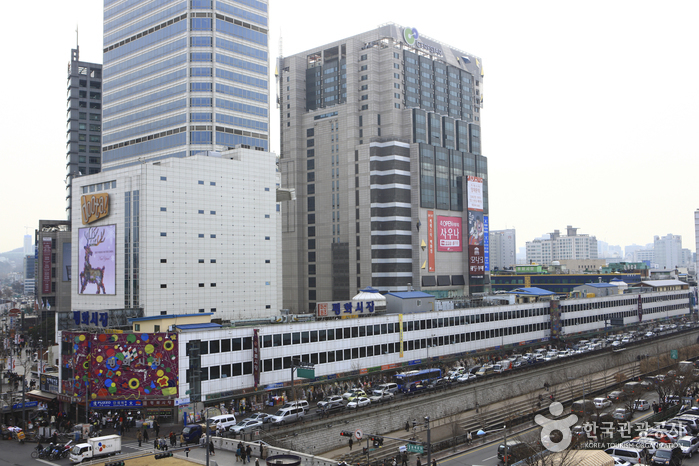
Dongdaemun Shopping Complex·Dongdaemun Shopping Town (동대문 종합시장·동대문 쇼핑타운)
6.7Km 2025-06-30
266 Jong-ro, Jongno-gu, Seoul
Dongdaemun Shopping Complex is one of Korea’s most well-known markets. It was founded in December 1970 as the largest of its kind in Asia and has maintained that status for the last 40 years. Browsing the plethora of shops, you can find fabric and clothing following all the latest global fashion trends. Dongdaemun Shopping Complex continues to build up its reputation as a hub of international design.
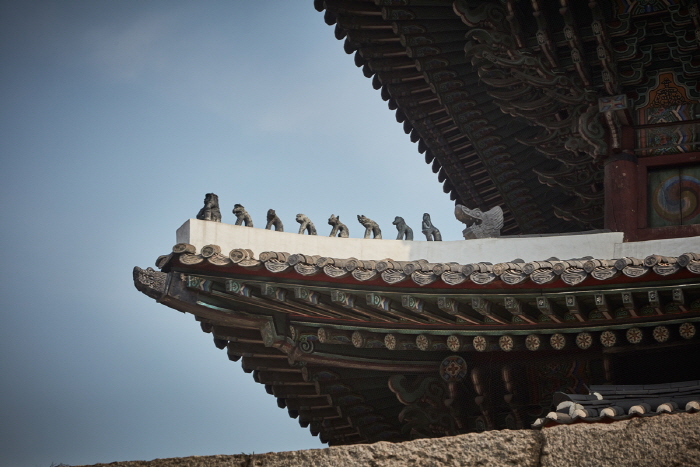
Heunginjimun Gate - Dongdaemun Gate (흥인지문)
6.7Km 2025-10-23
288, Jong-ro, Jongno-gu, Seoul
Heunginjimun Gate was built to protect Hanseongbu, which historically housed essential government facilities. Heunginjimun Gate was the gate on the east side of the outer wall of Seoul Fortress among eight gates. It is referred to as Dongdaemun Gate as well. The gate was constructed during King Taejo’s 5th year in 1396, remodeled during the reign of King Danjong in 1453, and was newly built in 1869 during the sixth year of King Gojong’s reign in 1869.
The gate features a hipped roof with five front and two side compartments on a two-storied building. The thin and weak bracket system supports the eaves and is excessively decorated, reflecting the construction features of the late Joseon period. Also, outside of the fortress is the half-circle-shaped Ongseong, a small wall, to protect the gate.
One of the unique factors of Heunginjimun Gate is that it is the only gate among Seoul’s eight to have Ongseong, further exhibiting the style of construction used during the late Joseon period.

Lotte World Tower & Mall (롯데월드타워&롯데월드몰)
6.7Km 2024-11-28
300 Olympic-ro, Songpa-gu, Seoul
Lotte World Tower was designed with a conceptual motif inspired by Korean ceramics and writing brushes. With 123 floors total, the tower is the fifth tallest building in the world, standing at 555 meters. The tower contains galleries, cafés, and a luxury hotel, in addition to a skywalk and an observation deck. It is one of the best spots to appreciate the breathtaking view of Seoul's vibrant city lights.
Lotte World Mall, located next to the tower, features Avenuel, a complex of luxury department stores. The multi-leveled mall draws in many visitors as one of the top shopping attractions in Seoul, with a variety of domestic and foreign brands. The mall also offers a wide-range of entertainment facilities, such as a movie theater, aquarium, concert hall, and more.
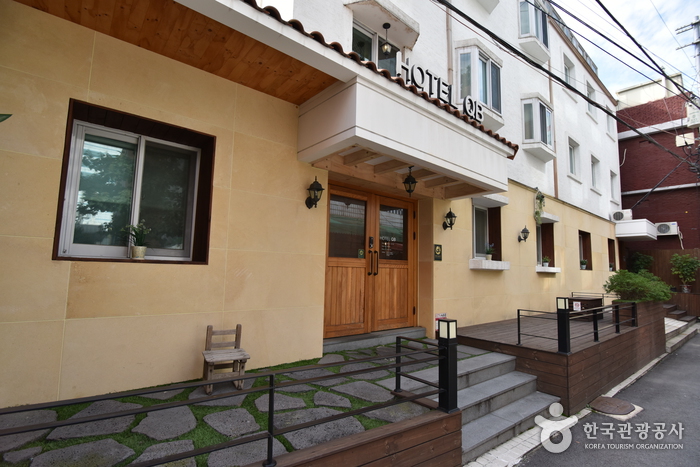
HOTEL QB (호텔큐비(호텔QB))
6.7Km 2024-12-23
322-10 , Jong-ro, Jongno-gu, Seoul
Hotel QB in Jongno-gu, Seoul, is conveniently located a 3-minute walk from Dongdaemun subway station and close to the airport bus stop. Rooms range from single rooms for individual travelers to a quad room, and there is a studio and fitting room where selfies and photos can be taken. The hotel cafe has a microwave, water purifier and refrigerator, and customized travel consulting and free luggage storage are provided in the lobby. Dongdaemun History and Culture Park, Dongmyo Flea Market and a variety of fashion wholesalers are all nearby.
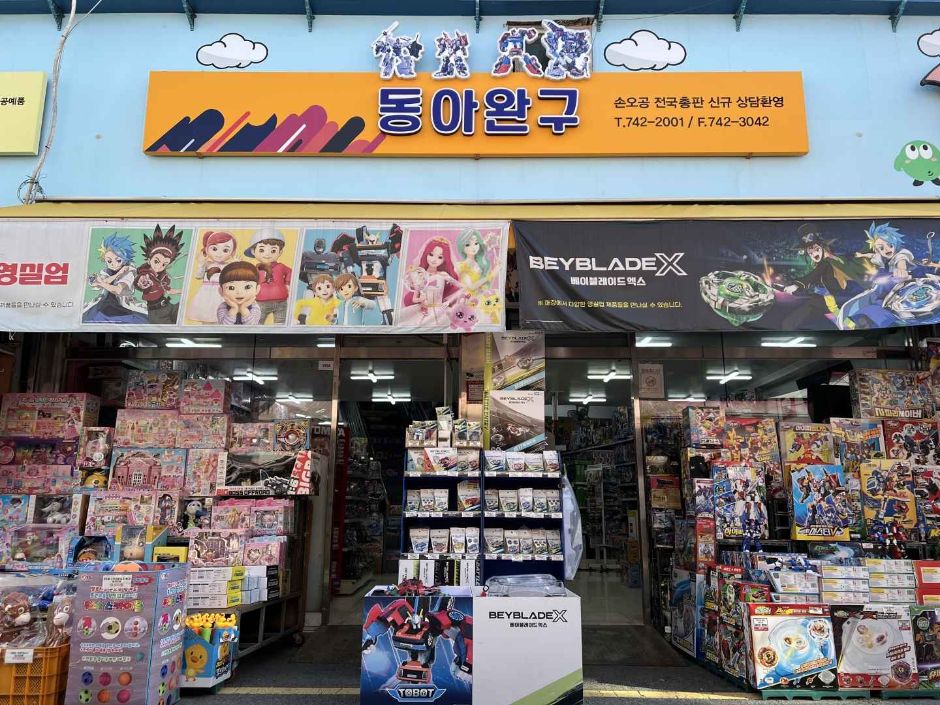
Donga Stationery (동아완구)
6.7Km 2024-09-11
5 Jong-ro 52-gil, Jongno-gu, Seoul
Donga Stationery is a stationery store located along Changsin-dong Stationery Street. The stop offers a full range of stationery and character goods and is popular among children and adults alike. The shop is located right by Dongdaemun Station (Seoul Subway Line 1), Exit 4, making it easily accessible.
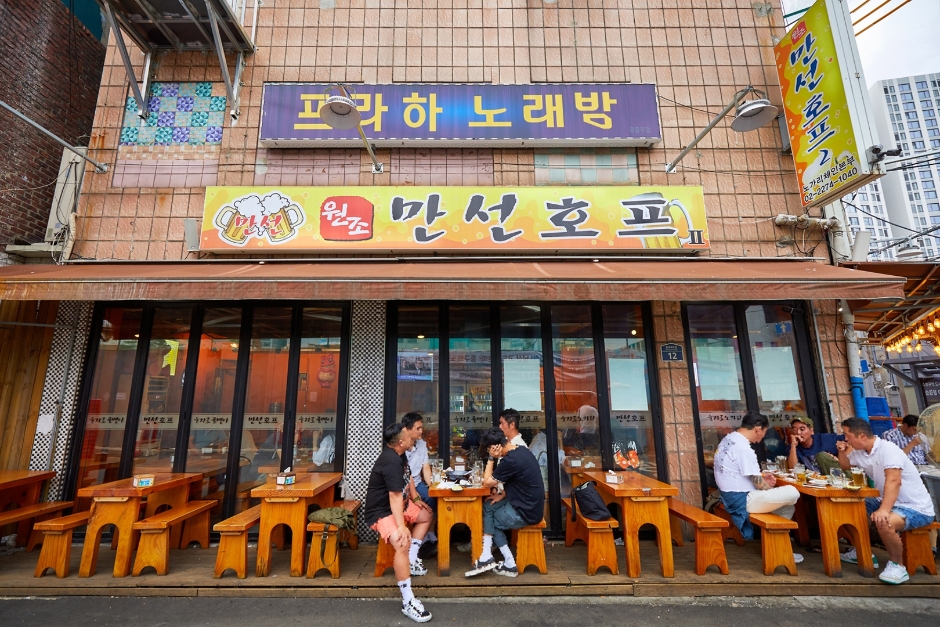
Euljiro Nogari Alley (을지로 노가리골목)
6.7Km 2025-11-06
Eulji-ro 129, Jung-gu, Seoul
Going out of Exit 3 of Euljiro 3-ga Station on Seoul Metro Line 3 and turning to the alley, you will find many pubs selling Nogari/Dried Young Pollack (Korean people grill and dip it in red pepper paste to eat as a side dish with alcohol) and restaurants specializing in Golbaengi/Sea Snails (It is a kind of conch shell, and Korea people made it a seasoned dish and enjoy it with Somyeon/Thin Noodles or use it as a bar sack). People gather in small groups at every outdoor table and sit in every alley to enjoy beer and snacks on weekday evenings and weekends, so it isn't easy to find a seat.
Originally, this area was lined with various company buildings and shops selling tools. However, in 1980, the pub 'Eulji OB Bear' opened, and as similar pubs opened nearby, it naturally came to be called 'Euljiro Nogari Alley.' As the affordable prices of snacks and beer attracted nearby office workers and college students, it has become increasingly popular, leading to its current status.
Here, along with a cold draft beer, let's try the K-snacks only available in Korea, such as Nogari/Dried Young Pollack and Golbaengi/Sea Snails. In addition, snacks such as chicken and fried dishes are also available, so try various snacks.

Seoul Hyochang Park (서울 효창공원)
6.7Km 2024-07-09
177-18 Hyochangwon-ro, Yongsan-gu, Seoul
Hyochang Park covers 122,245 square meters spanning across Hyochang-dong and Cheongpa 2-dong. It is a historic landmark that once contained several royal tombs, and was known at that time as Hyochangwon. The cemeteries that were originally located in Hyochangwon belonged to Crown Prince Munhyo, King Jeongjo’s first son who died at the age of five; Royal Noble Consort Uibin of the Seong Clan, King Jeongjo’s royal concubine and Crown Prince Munhyo’s mother; Royal Noble Consort Sugui of the Park Clan, King Sunjo’s royal concubine; and her daughter Princess Yeongon. The royal tombs were moved to Seooreung Tombs in the waning months of the Japanese colonial period. The Japanese empire began the development of Hyochangwon into a park in 1924, and the Japanese governor-general officially assigned the site as a park in 1940.
Presently, several of Korea’s greatest leaders are buried in Hyochang Park. The remains mostly belong to independence activists including Yoon Bong-gil, Lee Bong-chang, and Baek Jeong-gi, whose graves are collectively known as Samuisa Tomb. A statue of Lee Bong-chang has been built in the graveyard. Among the other patriotic martyrs who are interred in the park are Kim Gu and some of the key figures of the provisional government such as Lee Dong-nyeong, Cha I-seok, and Cho Seong-hwan. An ancestral shrine named Uiyeolsa has been built along the main gate and holds the portraits of the deceased independence activists.
 English
 한국어
한국어 日本語
日本語 中文(简体)
 Deutsch
 Français
 Español
 Русский


